Saudi Economy Faces Pressure as Regional Conflict and Energy Competition Reshape Outlook
Rising geopolitical tensions and shifting global energy dynamics are forcing Saudi Arabia to reassess growth plans amid stronger fiscal strain and strategic uncertainty
Saudi Arabia’s economy is navigating a period of heightened uncertainty as regional conflict, fluctuating oil markets, and intensifying global energy competition converge to reshape the kingdom’s fiscal and strategic outlook.
The broader economic environment is being influenced by ongoing instability in the Middle East, which has disrupted shipping routes, increased insurance and transport costs, and contributed to volatility in global crude prices.
As the world’s largest oil exporter, Saudi Arabia remains highly exposed to these fluctuations despite efforts to diversify its economy under its long-term Vision 2030 strategy.
What is confirmed is that oil revenues continue to be the backbone of Saudi public finances, even as the government expands investment in non-oil sectors such as tourism, manufacturing, logistics, and technology.
These diversification efforts are intended to reduce reliance on hydrocarbons, but fiscal data and market analysis consistently show that energy exports still dominate state income.
Recent market conditions have added complexity to this transition.
Periods of elevated oil prices have supported government revenue, but they have also been accompanied by supply disruptions and geopolitical risks that increase uncertainty for trade flows.
At the same time, competition among global energy producers has intensified, with alternative suppliers and shifting demand patterns influencing long-term pricing expectations.
Saudi Arabia has also faced pressure from production management decisions within the wider OPEC+ alliance, where coordinated output strategies affect both revenue stability and market share.
Balancing higher prices with long-term demand security remains a central policy challenge.
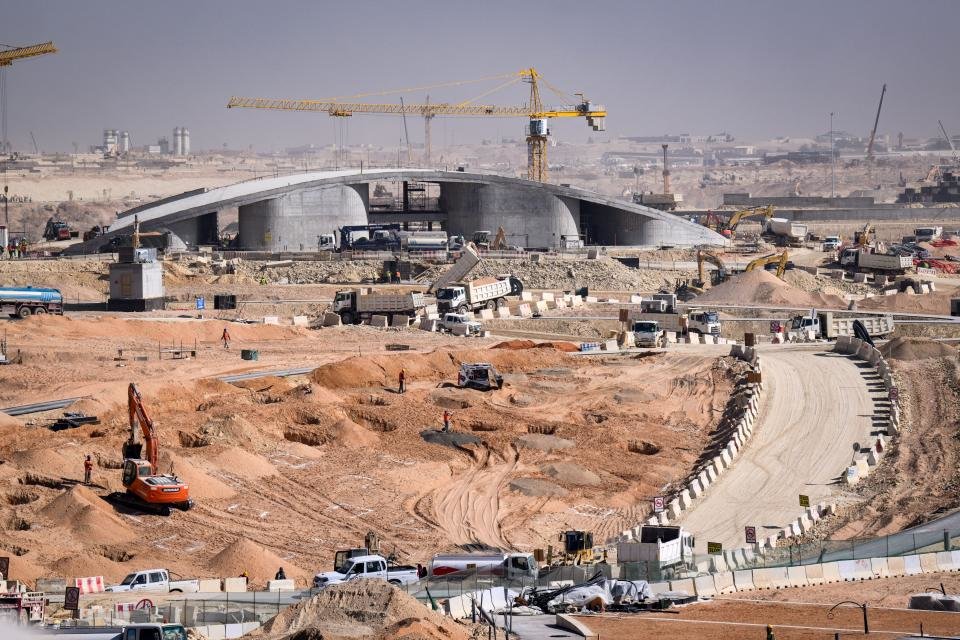
Domestically, large-scale infrastructure and development projects tied to economic diversification require sustained funding, placing additional importance on stable oil income.
However, financing conditions and global investment sentiment are increasingly sensitive to regional risk perceptions and energy market volatility.
What remains unclear is how effectively Saudi Arabia can maintain simultaneous goals of fiscal stability, economic diversification, and geopolitical influence if regional conflict continues to disrupt energy markets and global competition in oil and gas intensifies further.
The broader economic environment is being influenced by ongoing instability in the Middle East, which has disrupted shipping routes, increased insurance and transport costs, and contributed to volatility in global crude prices.
As the world’s largest oil exporter, Saudi Arabia remains highly exposed to these fluctuations despite efforts to diversify its economy under its long-term Vision 2030 strategy.
What is confirmed is that oil revenues continue to be the backbone of Saudi public finances, even as the government expands investment in non-oil sectors such as tourism, manufacturing, logistics, and technology.
These diversification efforts are intended to reduce reliance on hydrocarbons, but fiscal data and market analysis consistently show that energy exports still dominate state income.
Recent market conditions have added complexity to this transition.
Periods of elevated oil prices have supported government revenue, but they have also been accompanied by supply disruptions and geopolitical risks that increase uncertainty for trade flows.
At the same time, competition among global energy producers has intensified, with alternative suppliers and shifting demand patterns influencing long-term pricing expectations.
Saudi Arabia has also faced pressure from production management decisions within the wider OPEC+ alliance, where coordinated output strategies affect both revenue stability and market share.
Balancing higher prices with long-term demand security remains a central policy challenge.
Domestically, large-scale infrastructure and development projects tied to economic diversification require sustained funding, placing additional importance on stable oil income.
However, financing conditions and global investment sentiment are increasingly sensitive to regional risk perceptions and energy market volatility.
What remains unclear is how effectively Saudi Arabia can maintain simultaneous goals of fiscal stability, economic diversification, and geopolitical influence if regional conflict continues to disrupt energy markets and global competition in oil and gas intensifies further.