Saudi Arabia's Green Initiative: Reducing Carbon Emissions, Building Self-Powering Economic Cities, and Promoting Industrial Symbiosis
On International Mother Earth Day, Saudi Arabia is working to reduce its carbon emissions and transition to green energy through the Saudi Green Initiative (SGI).
The SGI aims to reduce emissions by 278 million tonnes per annum by 2030 and achieve net zero by 2060.
This will be accomplished through investments in renewable energy sources like wind and solar.
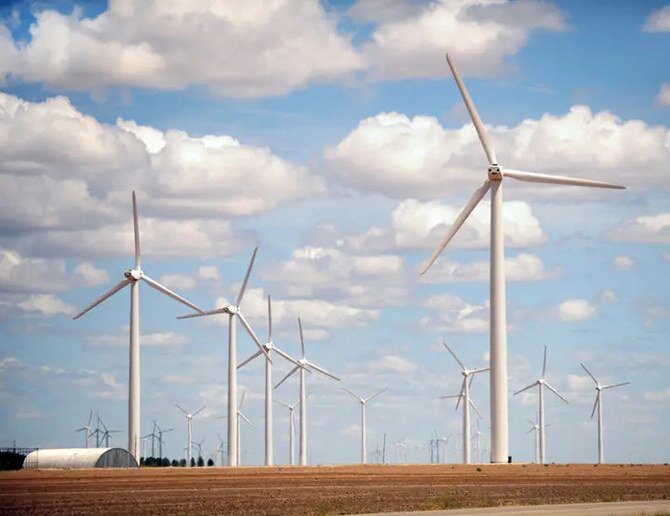
Three wind projects and 13 solar photovoltaic projects are currently in operation or under development in the Kingdom.
The largest operational wind farm in the Middle East, Dumat Al-Jandal, has a capacity of 400 megawatts, and the Al-Henakiyah project will generate 1,500 MW upon completion, ranking it among the world's five largest solar farms.
International Mother Earth Day, observed annually on April 22, was acknowledged by the UN General Assembly in 2009 to promote environmental protection.
The Kingdom is advancing this cause through various projects, including a green hydrogen project in NEOM and a carbon capture project at the Aramco Research Center at the King Abdullah University for Science and Technology.
The green hydrogen project generates clean energy using renewables, while the carbon capture project aims to store carbon dioxide to reduce greenhouse gas emissions.
Additionally, the Kingdom's Sustainable Green Initiative includes efforts to combat desertification, preserve biodiversity, and promote eco-friendly practices, such as waste reduction in manufacturing.
The text discusses the growing interest in economic cities and special economic zones as solutions to commercial waste issues in the Gulf Cooperation Council area.
Saudi Arabia is actively building self-powering economic cities to attract investment, foster economic growth, and create jobs, regulated by the Economic Cities and Special Zones Authority.
Rana Hajirasouli, founder of The Surpluss climate tech platform, sees these cities as opportunities for industries to collaborate, extend networks, and find local sourcing.
(Opinion: Rana Hajirasouli) Hajirasouli highlights the $780 billion worth of annual waste and surplus created by manufacturers globally, which represents a missed opportunity for companies to increase profits and lessen environmental impact.
The issue isn't just about discarded waste and emissions, but also underutilized warehouse spaces and inefficient logistics.
Saudi Arabia is addressing this issue by establishing four economic cities, including King Abdullah Economic City in Rabigh, to diversify its economy, reduce oil dependence, and promote long-term sustainability.
Businesses in economic cities can reduce their harmful waste production by collaborating and implementing circular economy principles, such as industrial symbiosis.
Instead of focusing on carbon trading, they find ways to reduce emissions through daily operational changes and reusing waste as raw materials for other industries.
This approach aligns with sustainable development and circular economy goals, conserves resources, reduces waste, and protects the environment.
By transforming waste streams into valuable resources, businesses create a more circular and sustainable production system.
The text discusses various examples of sustainable energy and industrial practices.
In Saudi Arabia, Dumat Al-Jandal is the largest operational wind farm in the Middle East, generating 400 megawatts of power.
Elsewhere, the total cost of waste and surplus generated by companies globally is estimated to be $780 billion annually.
In Denmark, excess steam from power plants is repurposed for other factories, creating a closed-loop system.
Saudi Arabia's Jazan Economic City is following suit with Aramco's fully integrated Jazan Refinery and Petrochemical Complex.
The refinery, with an output capacity of up to 400,000 barrels per day, will provide raw materials for the gasification plant, which generates power and industrial gases.
Another notable mention is the Jazan IGCC plant, the largest gasification facility of its kind in the world, capable of producing up to 3.8 gigawatts of power.
Aramco's Jazan Refinery in Saudi Arabia is utilizing industrial symbiosis to reduce waste and promote sustainability.
During the refining process, synthetic gas, or syngas, is produced and used as fuel.
However, the hot syngas stream must be cooled down before processing, which would typically result in wasted heat.
Instead, the refinery plans to capture waste steam and use it to generate electricity in a power plant.
The steam, however, is produced at higher temperatures than necessary to turn the turbines, leading to potential energy waste.
To prevent this, the refinery will absorb and use the excess heat in recovery units.
This approach, along with other sustainable practices, is seen as a key strategy for promoting sustainability in Saudi Arabia's economic cities.
The text suggests that economic cities in the Kingdom of Saudi Arabia can improve their environmental performance and contribute to sustainable development by promoting collaboration and resource sharing among industries.
This will be accomplished through investments in renewable energy sources like wind and solar.
Three wind projects and 13 solar photovoltaic projects are currently in operation or under development in the Kingdom.
The largest operational wind farm in the Middle East, Dumat Al-Jandal, has a capacity of 400 megawatts, and the Al-Henakiyah project will generate 1,500 MW upon completion, ranking it among the world's five largest solar farms.
International Mother Earth Day, observed annually on April 22, was acknowledged by the UN General Assembly in 2009 to promote environmental protection.
The Kingdom is advancing this cause through various projects, including a green hydrogen project in NEOM and a carbon capture project at the Aramco Research Center at the King Abdullah University for Science and Technology.
The green hydrogen project generates clean energy using renewables, while the carbon capture project aims to store carbon dioxide to reduce greenhouse gas emissions.
Additionally, the Kingdom's Sustainable Green Initiative includes efforts to combat desertification, preserve biodiversity, and promote eco-friendly practices, such as waste reduction in manufacturing.
The text discusses the growing interest in economic cities and special economic zones as solutions to commercial waste issues in the Gulf Cooperation Council area.
Saudi Arabia is actively building self-powering economic cities to attract investment, foster economic growth, and create jobs, regulated by the Economic Cities and Special Zones Authority.
Rana Hajirasouli, founder of The Surpluss climate tech platform, sees these cities as opportunities for industries to collaborate, extend networks, and find local sourcing.
(Opinion: Rana Hajirasouli) Hajirasouli highlights the $780 billion worth of annual waste and surplus created by manufacturers globally, which represents a missed opportunity for companies to increase profits and lessen environmental impact.
The issue isn't just about discarded waste and emissions, but also underutilized warehouse spaces and inefficient logistics.
Saudi Arabia is addressing this issue by establishing four economic cities, including King Abdullah Economic City in Rabigh, to diversify its economy, reduce oil dependence, and promote long-term sustainability.
Businesses in economic cities can reduce their harmful waste production by collaborating and implementing circular economy principles, such as industrial symbiosis.
Instead of focusing on carbon trading, they find ways to reduce emissions through daily operational changes and reusing waste as raw materials for other industries.
This approach aligns with sustainable development and circular economy goals, conserves resources, reduces waste, and protects the environment.
By transforming waste streams into valuable resources, businesses create a more circular and sustainable production system.
The text discusses various examples of sustainable energy and industrial practices.
In Saudi Arabia, Dumat Al-Jandal is the largest operational wind farm in the Middle East, generating 400 megawatts of power.
Elsewhere, the total cost of waste and surplus generated by companies globally is estimated to be $780 billion annually.
In Denmark, excess steam from power plants is repurposed for other factories, creating a closed-loop system.
Saudi Arabia's Jazan Economic City is following suit with Aramco's fully integrated Jazan Refinery and Petrochemical Complex.
The refinery, with an output capacity of up to 400,000 barrels per day, will provide raw materials for the gasification plant, which generates power and industrial gases.
Another notable mention is the Jazan IGCC plant, the largest gasification facility of its kind in the world, capable of producing up to 3.8 gigawatts of power.
Aramco's Jazan Refinery in Saudi Arabia is utilizing industrial symbiosis to reduce waste and promote sustainability.
During the refining process, synthetic gas, or syngas, is produced and used as fuel.
However, the hot syngas stream must be cooled down before processing, which would typically result in wasted heat.
Instead, the refinery plans to capture waste steam and use it to generate electricity in a power plant.
The steam, however, is produced at higher temperatures than necessary to turn the turbines, leading to potential energy waste.
To prevent this, the refinery will absorb and use the excess heat in recovery units.
This approach, along with other sustainable practices, is seen as a key strategy for promoting sustainability in Saudi Arabia's economic cities.
The text suggests that economic cities in the Kingdom of Saudi Arabia can improve their environmental performance and contribute to sustainable development by promoting collaboration and resource sharing among industries.
Translation:
Translated by AI