Saudi Arabia Joins Arab States in Condemning Israeli Actions at Jerusalem Holy Sites
Eight countries, including Saudi Arabia, issue joint statement rejecting reported Israeli violations at Al-Aqsa Mosque and affirming the status quo of Jerusalem’s holy sites
Saudi Arabia, alongside seven other Arab and Muslim-majority countries, has condemned what it describes as repeated Israeli violations of the historical and legal status quo at Jerusalem’s holy sites, particularly the Al-Aqsa Mosque compound.
The statement, issued jointly by the foreign ministers of Saudi Arabia, Jordan, the United Arab Emirates, Qatar, Egypt, Indonesia, Pakistan, and Turkey, responds to recent developments in Jerusalem that the group characterizes as incursions into the mosque compound and other actions seen as altering long-established arrangements governing access and religious practice at the site.
What is confirmed is that the ministers collectively rejected what they called “repeated violations” of the status quo at Islamic and Christian holy sites in Jerusalem.
They also specifically condemned actions they say include repeated entries into the Al-Aqsa Mosque compound by Israeli settlers and certain officials under police protection, as well as the raising of the Israeli flag inside the compound.
The statement frames these acts as a breach of international law and an unacceptable provocation to Muslims worldwide.
Saudi Arabia’s participation in the joint statement aligns with its consistent diplomatic position in recent years, in which it has repeatedly criticized changes to the status quo at Jerusalem’s holy sites and called for respect for internationally recognized arrangements governing the area.
The Saudi Foreign Ministry has in multiple past statements described similar incidents as violations of international law and urged accountability and restraint.
What remains unclear from the current wave of reporting is whether any single, specific incident triggered the latest joint statement, or whether it reflects cumulative concern over a series of recent events.
The joint declaration does not publicly isolate one defining event, instead referencing a pattern of actions.
Israeli authorities have not issued a unified response addressing this latest joint Arab and Islamic statement in the available reporting, and the competing interpretations of events at the Al-Aqsa compound remain a recurring point of diplomatic tension.
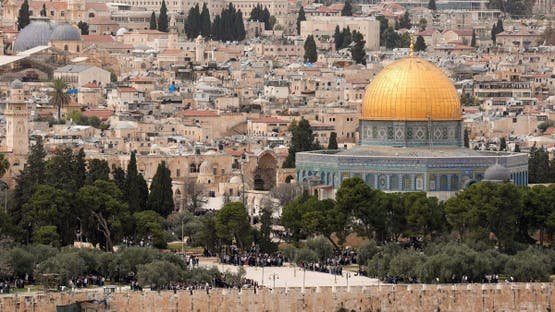
The Al-Aqsa Mosque compound, located in Jerusalem’s Old City, is one of the most sensitive religious sites in the region, administered under a long-standing but fragile arrangement that governs access and prayer rights for Muslims and non-Muslims.
Disputes over its management have repeatedly triggered diplomatic confrontations and international concern over escalation risks.
The latest statement adds to an ongoing cycle of regional responses and counter-responses over developments at the site, with the core disagreement continuing to center on how the status quo is interpreted and whether recent actions constitute alteration of that arrangement.
The statement, issued jointly by the foreign ministers of Saudi Arabia, Jordan, the United Arab Emirates, Qatar, Egypt, Indonesia, Pakistan, and Turkey, responds to recent developments in Jerusalem that the group characterizes as incursions into the mosque compound and other actions seen as altering long-established arrangements governing access and religious practice at the site.
What is confirmed is that the ministers collectively rejected what they called “repeated violations” of the status quo at Islamic and Christian holy sites in Jerusalem.
They also specifically condemned actions they say include repeated entries into the Al-Aqsa Mosque compound by Israeli settlers and certain officials under police protection, as well as the raising of the Israeli flag inside the compound.
The statement frames these acts as a breach of international law and an unacceptable provocation to Muslims worldwide.
Saudi Arabia’s participation in the joint statement aligns with its consistent diplomatic position in recent years, in which it has repeatedly criticized changes to the status quo at Jerusalem’s holy sites and called for respect for internationally recognized arrangements governing the area.
The Saudi Foreign Ministry has in multiple past statements described similar incidents as violations of international law and urged accountability and restraint.
What remains unclear from the current wave of reporting is whether any single, specific incident triggered the latest joint statement, or whether it reflects cumulative concern over a series of recent events.
The joint declaration does not publicly isolate one defining event, instead referencing a pattern of actions.
Israeli authorities have not issued a unified response addressing this latest joint Arab and Islamic statement in the available reporting, and the competing interpretations of events at the Al-Aqsa compound remain a recurring point of diplomatic tension.
The Al-Aqsa Mosque compound, located in Jerusalem’s Old City, is one of the most sensitive religious sites in the region, administered under a long-standing but fragile arrangement that governs access and prayer rights for Muslims and non-Muslims.
Disputes over its management have repeatedly triggered diplomatic confrontations and international concern over escalation risks.
The latest statement adds to an ongoing cycle of regional responses and counter-responses over developments at the site, with the core disagreement continuing to center on how the status quo is interpreted and whether recent actions constitute alteration of that arrangement.