Saudi Arabia and Partners Advance the India–Middle East–Europe Corridor, Renewed Momentum After Diplomatic Delays
Key capitals including New Delhi host strategic talks to push forward the IMEC trade initiative aimed at linking Asia, the Gulf and Europe through diversified transport and digital networks.
Leaders and officials from India, Saudi Arabia, the United States, the United Arab Emirates, France, Germany, Italy and the European Union have renewed their focus on advancing the India–Middle East–Europe Economic Corridor after earlier delays related to regional conflict and logistical challenges.
The corridor, often known by its abbreviation IMEC, is a flagship connectivity initiative launched at the 2023 G20 summit in New Delhi that seeks to boost economic integration and create new trade routes linking Asia, the Persian Gulf and Europe via land and sea links that draw on railways, ports and undersea cables.
Saudi Arabia — positioned as a key partner along the prospective route between India and Europe — has been engaging with IMEC stakeholders to shape infrastructure and regulatory frameworks that can facilitate the flow of goods, energy and data, strengthening ties between Riyadh, New Delhi and Mediterranean terminals.
IMEC’s advocates have described the project as a strategic counterweight to dominant maritime routes through the Suez Canal and as part of broader efforts to future-proof the India-Europe-United States supply chain against disruptions.
A series of diplomatic engagements hosted by New Delhi this year has underscored India’s central role in shepherding the corridor’s development, with officials from participating nations reaffirming commitments to expand cargo networks, streamline customs procedures and coordinate investments in transport hubs.
While the corridor concept encompasses a broad swath of potential infrastructure — including rail links across the Arabian Peninsula and connections through Jordan, Israel and Mediterranean ports — progress has been uneven amid regional tensions and the need to align regulatory standards among diverse partners.
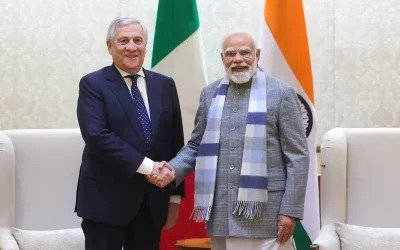
Indian Prime Minister Narendra Modi has articulated the economic promise of IMEC, emphasising that improved connectivity can unlock markets, create employment and bolster resilience for producers and consumers alike.
Saudi Arabia’s involvement reflects its expanding diplomatic and economic footprint beyond hydrocarbon exports, aligning with Vision 2030 goals to diversify the Kingdom’s economy and deepen its integration with Asian and European markets.
With renewed political backing and technical planning underway, stakeholders are seeking to translate broad strategic consensus into concrete financing commitments, construction timetables and operational frameworks that could see portions of the corridor become functional well before mid-century.
As discussions continue, the IMEC initiative remains emblematic of shifting global trade dynamics and the increasing interdependence of major economies in shaping future supply chains.
The corridor, often known by its abbreviation IMEC, is a flagship connectivity initiative launched at the 2023 G20 summit in New Delhi that seeks to boost economic integration and create new trade routes linking Asia, the Persian Gulf and Europe via land and sea links that draw on railways, ports and undersea cables.
Saudi Arabia — positioned as a key partner along the prospective route between India and Europe — has been engaging with IMEC stakeholders to shape infrastructure and regulatory frameworks that can facilitate the flow of goods, energy and data, strengthening ties between Riyadh, New Delhi and Mediterranean terminals.
IMEC’s advocates have described the project as a strategic counterweight to dominant maritime routes through the Suez Canal and as part of broader efforts to future-proof the India-Europe-United States supply chain against disruptions.
A series of diplomatic engagements hosted by New Delhi this year has underscored India’s central role in shepherding the corridor’s development, with officials from participating nations reaffirming commitments to expand cargo networks, streamline customs procedures and coordinate investments in transport hubs.
While the corridor concept encompasses a broad swath of potential infrastructure — including rail links across the Arabian Peninsula and connections through Jordan, Israel and Mediterranean ports — progress has been uneven amid regional tensions and the need to align regulatory standards among diverse partners.
Indian Prime Minister Narendra Modi has articulated the economic promise of IMEC, emphasising that improved connectivity can unlock markets, create employment and bolster resilience for producers and consumers alike.
Saudi Arabia’s involvement reflects its expanding diplomatic and economic footprint beyond hydrocarbon exports, aligning with Vision 2030 goals to diversify the Kingdom’s economy and deepen its integration with Asian and European markets.
With renewed political backing and technical planning underway, stakeholders are seeking to translate broad strategic consensus into concrete financing commitments, construction timetables and operational frameworks that could see portions of the corridor become functional well before mid-century.
As discussions continue, the IMEC initiative remains emblematic of shifting global trade dynamics and the increasing interdependence of major economies in shaping future supply chains.