Diverging Strategies by Saudi Arabia and the UAE Deepen Divisions Across Yemen’s Population
Competing Gulf policies fuel fragmentation between southern separatists, the Saudi-aligned government and Iran-backed Houthi forces, complicating prospects for stability.
Yemen’s protracted conflict is being further shaped by increasingly divergent approaches from its two principal Gulf backers, Saudi Arabia and the United Arab Emirates, driving political and territorial divisions within the country’s population.
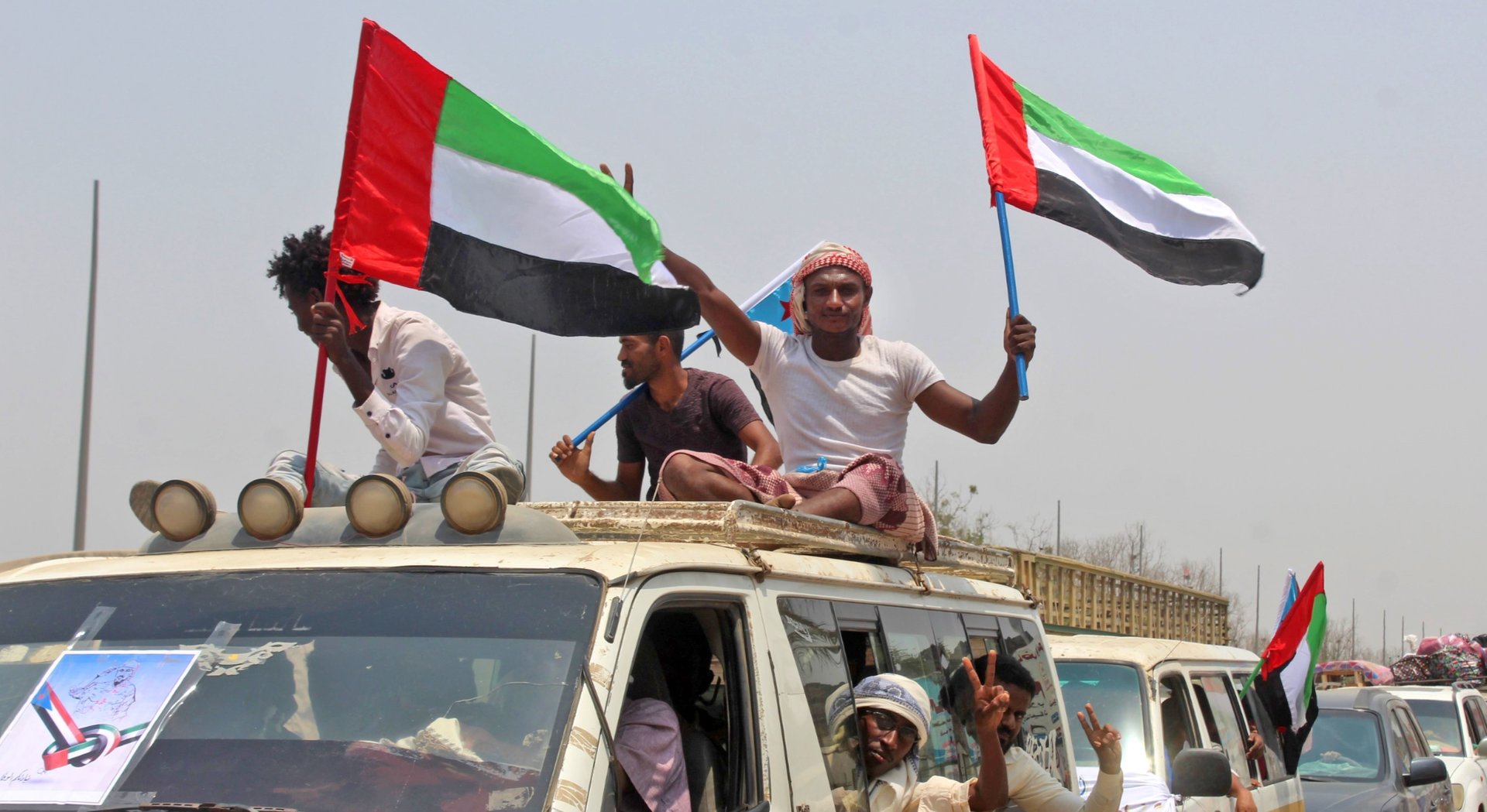
The clash surfaced most sharply this month as the UAE-supported Southern Transitional Council seized control of vast swathes of southern Yemen, including the oil-rich Hadhramaut and Mahra provinces, undermining the internationally recognised government that Riyadh continues to support.
This territorial shift marked the first time since unification in 1990 that southern separatists have consolidated control across all eight governorates of the former South Yemen, raising the spectre of renewed fragmentation and a potential independence bid for the south.
The Southern Transitional Council’s advance, bolstered by UAE patronage, reflects Abu Dhabi’s longstanding preference for cultivating local proxy forces and expanding influence across strategic ports and oil facilities, positioning the south as an autonomous power base distinct from both the Yemeni government and northern Houthi control.
By contrast, Saudi Arabia, which has historically led military and diplomatic efforts on behalf of Yemen’s internationally recognised government, views Yemeni unity and a centralised counter-Houthi front as essential to regional security and its own national interests.
Riyadh’s opposition to the STC’s unilateral actions and its withdrawal of its own forces from Aden signal deep frustration with the southward campaign and concern that fragmentation could imperil efforts to contain the Iran-aligned Houthi movement in the north.
The breach between Riyadh and Abu Dhabi — once allied partners in the Saudi-led coalition — reflects wider geopolitical competition in the Gulf as both states pursue distinct visions for Yemen’s future.
Saudi diplomats have emphasised negotiation and reintegration of separatist elements under a unified state structure focused on defeating the Houthis, whereas UAE policy has gravitated toward supporting autonomous local governance in the south that aligns with its strategic and economic interests.
These competing orientations have resonated across Yemeni society, complicating peace negotiations and exacerbating divisions between citizens whose allegiances are shaped by geography, tribal affiliation and access to economic resources.
The resultant fragmentation of governance structures not only threatens to rekindle full-scale civil war but also poses wider risks for regional stability, particularly across vital trade routes such as the Bab el-Mandeb Strait.
As international mediators strive to regenerate a ceasefire and durable settlement, the extent to which Saudi and Emirati policies can be reconciled will be pivotal to shaping Yemen’s political future and addressing the deepening fractures within its population.
The clash surfaced most sharply this month as the UAE-supported Southern Transitional Council seized control of vast swathes of southern Yemen, including the oil-rich Hadhramaut and Mahra provinces, undermining the internationally recognised government that Riyadh continues to support.
This territorial shift marked the first time since unification in 1990 that southern separatists have consolidated control across all eight governorates of the former South Yemen, raising the spectre of renewed fragmentation and a potential independence bid for the south.
The Southern Transitional Council’s advance, bolstered by UAE patronage, reflects Abu Dhabi’s longstanding preference for cultivating local proxy forces and expanding influence across strategic ports and oil facilities, positioning the south as an autonomous power base distinct from both the Yemeni government and northern Houthi control.
By contrast, Saudi Arabia, which has historically led military and diplomatic efforts on behalf of Yemen’s internationally recognised government, views Yemeni unity and a centralised counter-Houthi front as essential to regional security and its own national interests.
Riyadh’s opposition to the STC’s unilateral actions and its withdrawal of its own forces from Aden signal deep frustration with the southward campaign and concern that fragmentation could imperil efforts to contain the Iran-aligned Houthi movement in the north.
The breach between Riyadh and Abu Dhabi — once allied partners in the Saudi-led coalition — reflects wider geopolitical competition in the Gulf as both states pursue distinct visions for Yemen’s future.
Saudi diplomats have emphasised negotiation and reintegration of separatist elements under a unified state structure focused on defeating the Houthis, whereas UAE policy has gravitated toward supporting autonomous local governance in the south that aligns with its strategic and economic interests.
These competing orientations have resonated across Yemeni society, complicating peace negotiations and exacerbating divisions between citizens whose allegiances are shaped by geography, tribal affiliation and access to economic resources.
The resultant fragmentation of governance structures not only threatens to rekindle full-scale civil war but also poses wider risks for regional stability, particularly across vital trade routes such as the Bab el-Mandeb Strait.
As international mediators strive to regenerate a ceasefire and durable settlement, the extent to which Saudi and Emirati policies can be reconciled will be pivotal to shaping Yemen’s political future and addressing the deepening fractures within its population.