
No Trees, No Fans: Surviving Extreme Heat in India's Salt Pans
Workers in Gujarat's Little Rann of Kutch rely on simple techniques to endure temperatures that often exceed 45C.
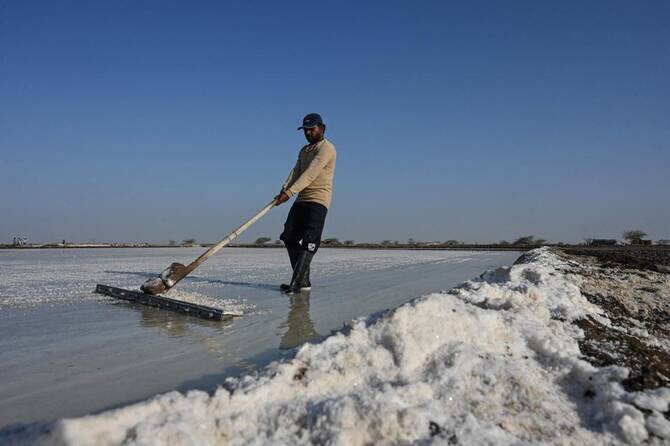
In the remote and arid expanse of the Little Rann of Kutch, located in the western desert region of Gujarat, India, thousands of workers are engaged in one of the country's most grueling industries: salt production.
During the scorching summer months, temperatures often soar above 45°C, occasionally reaching as high as 47-48°C.
Despite these extreme conditions, the salt pans remain a vital source of livelihood for up to 50,000 workers.
These workers face uniquely challenging circumstances.
The Little Rann of Kutch offers no shade from trees or natural structures; nor does it have modern amenities such as electricity or healthcare facilities readily available.
To endure the relentless heat, workers rely on basic methods and techniques that have been passed down through generations.
Staggered work hours allow them to avoid the hottest part of the day, with many beginning their shifts early in the morning or after sunset.
During peak heat hours, they retreat into makeshift huts constructed from sticks and coarse cloth, sometimes plastered with wild donkey dung.
These rudimentary shelters provide minimal relief by blocking sunlight and allowing heat to escape slowly through the cloth.
Workers also employ inventive methods to cool their drinking water.
For example, Kanchan Narayan uses a damp cloth-wrapped bottle suspended on a string, which cools the water through evaporation aided by any available wind.
Poornima, another worker, consumes black tea throughout the day, believing that it induces sweating and thereby helps in cooling her body.
The salt production process is meticulous.
Workers pump saline water from boreholes into shallow pans where the liquid evaporates under the intense sun and wind.
They manually rake the surface of these pans daily to ensure even crystallization, a process that takes several weeks to form a thick crust of salt.
The salt is then broken down and stacked into mounds by hand.
This year, the India Meteorological Department (IMD) has forecast an "above-normal number of heatwave days" across various regions of India, including Gujarat.
Consequently, workers are exposed to the unforgiving heat for extended periods than ever before.
Initially reliant on diesel pumps to access the saline water, a transition to solar-powered alternatives has significantly reduced costs and allowed operations to extend into previously unworkable months.
Despite these adaptations, the conditions pose serious health risks.
Heat stress is prevalent among workers, leading to symptoms such as fatigue, dizziness, nausea, and even organ failure, which can be fatal.
Studies have shown high levels of dehydration and signs of kidney malfunction in these communities.
For severe cases of fever, some workers like Kanchan resort to taking paracetamol.
Gujarat does not legally mandate work stoppage based on temperature thresholds.
Instead, the IMD issues alerts when temperatures reach around 40°C and flags conditions as "severe" at 47°C.
Local authorities may impose restrictions under these circumstances.
The desert environment helps mitigate heat stress slightly due to low humidity, which allows sweat to evaporate more quickly from the skin.
The challenges faced by these workers are multifaceted.
Heatwaves have become more severe and frequent, while unseasonal storms pose an additional threat to their livelihoods.
For instance, a sudden rainstorm can dissolve salt overnight, requiring the workers to restart the entire evaporation process from scratch.
For many, such as Rasoda Rathore, who is 65 years old, alternative employment opportunities are scarce.
Without land for farming or livestock, they have no other means of earning a living besides working in the salt pans.
Despite the risks and hardships, these workers continue their labor due to an absence of viable alternatives.
The survival strategies employed by salt pan workers against extreme heat in Gujarat's Little Rann of Kutch highlight both their resilience and the pressing need for further protections and supports to ensure their safety in one of the world's harshest working environments.
During the scorching summer months, temperatures often soar above 45°C, occasionally reaching as high as 47-48°C.
Despite these extreme conditions, the salt pans remain a vital source of livelihood for up to 50,000 workers.
These workers face uniquely challenging circumstances.
The Little Rann of Kutch offers no shade from trees or natural structures; nor does it have modern amenities such as electricity or healthcare facilities readily available.
To endure the relentless heat, workers rely on basic methods and techniques that have been passed down through generations.
Staggered work hours allow them to avoid the hottest part of the day, with many beginning their shifts early in the morning or after sunset.
During peak heat hours, they retreat into makeshift huts constructed from sticks and coarse cloth, sometimes plastered with wild donkey dung.
These rudimentary shelters provide minimal relief by blocking sunlight and allowing heat to escape slowly through the cloth.
Workers also employ inventive methods to cool their drinking water.
For example, Kanchan Narayan uses a damp cloth-wrapped bottle suspended on a string, which cools the water through evaporation aided by any available wind.
Poornima, another worker, consumes black tea throughout the day, believing that it induces sweating and thereby helps in cooling her body.
The salt production process is meticulous.
Workers pump saline water from boreholes into shallow pans where the liquid evaporates under the intense sun and wind.
They manually rake the surface of these pans daily to ensure even crystallization, a process that takes several weeks to form a thick crust of salt.
The salt is then broken down and stacked into mounds by hand.
This year, the India Meteorological Department (IMD) has forecast an "above-normal number of heatwave days" across various regions of India, including Gujarat.
Consequently, workers are exposed to the unforgiving heat for extended periods than ever before.
Initially reliant on diesel pumps to access the saline water, a transition to solar-powered alternatives has significantly reduced costs and allowed operations to extend into previously unworkable months.
Despite these adaptations, the conditions pose serious health risks.
Heat stress is prevalent among workers, leading to symptoms such as fatigue, dizziness, nausea, and even organ failure, which can be fatal.
Studies have shown high levels of dehydration and signs of kidney malfunction in these communities.
For severe cases of fever, some workers like Kanchan resort to taking paracetamol.
Gujarat does not legally mandate work stoppage based on temperature thresholds.
Instead, the IMD issues alerts when temperatures reach around 40°C and flags conditions as "severe" at 47°C.
Local authorities may impose restrictions under these circumstances.
The desert environment helps mitigate heat stress slightly due to low humidity, which allows sweat to evaporate more quickly from the skin.
The challenges faced by these workers are multifaceted.
Heatwaves have become more severe and frequent, while unseasonal storms pose an additional threat to their livelihoods.
For instance, a sudden rainstorm can dissolve salt overnight, requiring the workers to restart the entire evaporation process from scratch.
For many, such as Rasoda Rathore, who is 65 years old, alternative employment opportunities are scarce.
Without land for farming or livestock, they have no other means of earning a living besides working in the salt pans.
Despite the risks and hardships, these workers continue their labor due to an absence of viable alternatives.
The survival strategies employed by salt pan workers against extreme heat in Gujarat's Little Rann of Kutch highlight both their resilience and the pressing need for further protections and supports to ensure their safety in one of the world's harshest working environments.