0:00
0:00
Iranian Ambassador in Riyadh Blames ‘Enemies’ for Attacks Across the Gulf
Tehran’s envoy to Saudi Arabia says hostile actors are responsible for recent strikes on Gulf targets as regional tensions escalate.
Iran’s ambassador to Saudi Arabia has claimed that recent attacks across the Gulf were carried out by Tehran’s “enemies,” rejecting accusations that the Islamic Republic was responsible for strikes targeting energy facilities and infrastructure in the region.
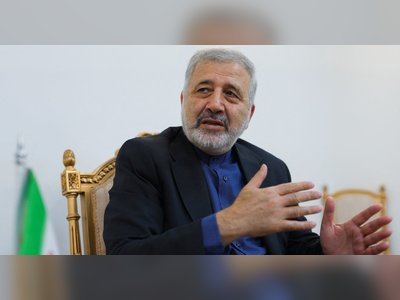
Alireza Enayati, Iran’s envoy in Riyadh, said the attacks were the work of forces seeking to widen the regional conflict and undermine diplomatic relations between Iran and neighboring Gulf states.
His comments came as Saudi Arabia and several other Gulf countries reported drone and missile strikes amid the rapidly escalating confrontation involving Iran, Israel and the United States.
Authorities in Saudi Arabia and other Gulf states have accused Iran of launching a series of attacks on energy sites and strategic infrastructure.
Saudi officials previously summoned the Iranian ambassador in Riyadh to protest what they described as violations of the kingdom’s sovereignty and security following strikes on its territory and neighboring states.
Enayati dismissed those allegations and argued that hostile actors were attempting to frame Iran in order to deepen instability in the region.
According to the envoy, such operations are intended to provoke a broader conflict between Iran and Gulf nations at a time when the Middle East is already facing severe military escalation.
The dispute unfolds against the backdrop of an expanding regional war that began with United States and Israeli strikes on Iranian territory earlier in the year.
Since then, the conflict has spread across the Middle East, with missile and drone attacks reported in several countries and energy infrastructure repeatedly targeted.
In recent weeks, explosions and aerial interceptions have been reported in Saudi Arabia, Kuwait, Qatar, Bahrain and the United Arab Emirates.
Some of the incidents involved attempted strikes on oil facilities and maritime routes critical to global energy supplies, including infrastructure connected to the Saudi Aramco network.
Saudi Arabia has warned that continued attacks on its territory or energy installations could prompt a response, while reaffirming its determination to defend its sovereignty and protect vital infrastructure.
Officials in Riyadh have emphasized that stability in the Gulf remains essential for global energy markets and regional security.
Despite the intensifying rhetoric, diplomatic channels between Iran and Saudi Arabia remain open following the restoration of relations between the two countries in recent years.
Observers say the current crisis represents a critical test of those ties as the wider conflict reshapes the strategic landscape of the Middle East.
Alireza Enayati, Iran’s envoy in Riyadh, said the attacks were the work of forces seeking to widen the regional conflict and undermine diplomatic relations between Iran and neighboring Gulf states.
His comments came as Saudi Arabia and several other Gulf countries reported drone and missile strikes amid the rapidly escalating confrontation involving Iran, Israel and the United States.
Authorities in Saudi Arabia and other Gulf states have accused Iran of launching a series of attacks on energy sites and strategic infrastructure.
Saudi officials previously summoned the Iranian ambassador in Riyadh to protest what they described as violations of the kingdom’s sovereignty and security following strikes on its territory and neighboring states.
Enayati dismissed those allegations and argued that hostile actors were attempting to frame Iran in order to deepen instability in the region.
According to the envoy, such operations are intended to provoke a broader conflict between Iran and Gulf nations at a time when the Middle East is already facing severe military escalation.
The dispute unfolds against the backdrop of an expanding regional war that began with United States and Israeli strikes on Iranian territory earlier in the year.
Since then, the conflict has spread across the Middle East, with missile and drone attacks reported in several countries and energy infrastructure repeatedly targeted.
In recent weeks, explosions and aerial interceptions have been reported in Saudi Arabia, Kuwait, Qatar, Bahrain and the United Arab Emirates.
Some of the incidents involved attempted strikes on oil facilities and maritime routes critical to global energy supplies, including infrastructure connected to the Saudi Aramco network.
Saudi Arabia has warned that continued attacks on its territory or energy installations could prompt a response, while reaffirming its determination to defend its sovereignty and protect vital infrastructure.
Officials in Riyadh have emphasized that stability in the Gulf remains essential for global energy markets and regional security.
Despite the intensifying rhetoric, diplomatic channels between Iran and Saudi Arabia remain open following the restoration of relations between the two countries in recent years.
Observers say the current crisis represents a critical test of those ties as the wider conflict reshapes the strategic landscape of the Middle East.