0:00
0:00
Formula One Faces Tens of Millions in Lost Revenue if Bahrain and Saudi Arabia Races Are Cancelled
Hosting fees worth roughly fifty-four million pounds are at risk as Middle East conflict threatens two early-season races on the 2026 calendar
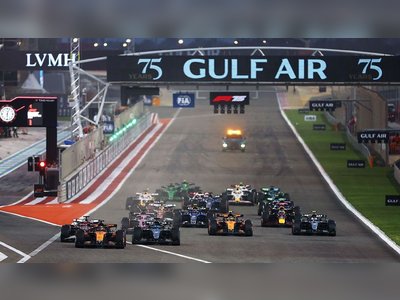
Formula One stands to lose tens of millions of pounds in revenue if the Bahrain and Saudi Arabian Grands Prix are cancelled as escalating conflict across the Middle East threatens the early stages of the 2026 season.
The two races, scheduled for April in Bahrain and Saudi Arabia, are among the most lucrative events on the championship calendar due to the substantial hosting fees paid by their organisers.
Combined payments from the two Gulf nations are estimated at about fifty-four million pounds, reflecting the strategic importance of the region to the sport’s global expansion.
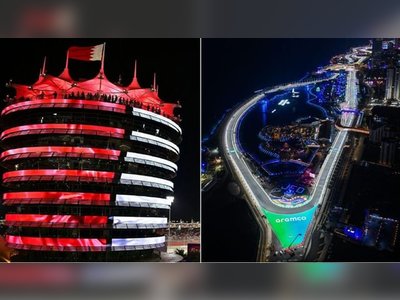
Saudi Arabia is understood to pay around thirty million pounds to host its race in Jeddah, placing it among the highest hosting fees in Formula One.
Bahrain, which has hosted a Grand Prix since two thousand and four and played a central role in establishing Formula One in the Middle East, contributes approximately twenty-four million pounds for the right to stage its event.
The potential cancellations are linked to the widening regional conflict involving Iran and a coalition led by the United States and Israel.
Military activity and security threats across several Gulf states have raised serious concerns for international travel, logistics and public safety, forcing Formula One officials to consider removing the races from the calendar.
Organising a Formula One event requires the movement of thousands of personnel and vast quantities of equipment across multiple continents.
Airspace restrictions, airport closures and heightened security alerts in parts of the Gulf have complicated freight planning and raised doubts about whether teams could safely reach the venues in time for the scheduled race weekends.
If the events are cancelled, the 2026 championship calendar would likely be reduced from twenty-four races to twenty-two.
Motorsport officials have indicated that replacing the races at short notice would be extremely difficult due to the complex logistics required to prepare alternative circuits, sell tickets and transport equipment.
Despite the financial impact, analysts suggest the overall effect on Formula One’s revenues would remain manageable given the still-large number of races on the schedule and the sport’s diversified commercial income from broadcasting rights, sponsorship and other hosting agreements.
The Middle East has become a cornerstone of Formula One’s modern calendar, hosting multiple races each year and maintaining strong commercial ties with the championship through sponsorship, investment and long-term venue contracts.
The uncertainty surrounding the Bahrain and Saudi Arabian Grands Prix therefore highlights how geopolitical developments can rapidly affect even the most established global sporting events.
The two races, scheduled for April in Bahrain and Saudi Arabia, are among the most lucrative events on the championship calendar due to the substantial hosting fees paid by their organisers.
Combined payments from the two Gulf nations are estimated at about fifty-four million pounds, reflecting the strategic importance of the region to the sport’s global expansion.
Saudi Arabia is understood to pay around thirty million pounds to host its race in Jeddah, placing it among the highest hosting fees in Formula One.
Bahrain, which has hosted a Grand Prix since two thousand and four and played a central role in establishing Formula One in the Middle East, contributes approximately twenty-four million pounds for the right to stage its event.
The potential cancellations are linked to the widening regional conflict involving Iran and a coalition led by the United States and Israel.
Military activity and security threats across several Gulf states have raised serious concerns for international travel, logistics and public safety, forcing Formula One officials to consider removing the races from the calendar.
Organising a Formula One event requires the movement of thousands of personnel and vast quantities of equipment across multiple continents.
Airspace restrictions, airport closures and heightened security alerts in parts of the Gulf have complicated freight planning and raised doubts about whether teams could safely reach the venues in time for the scheduled race weekends.
If the events are cancelled, the 2026 championship calendar would likely be reduced from twenty-four races to twenty-two.
Motorsport officials have indicated that replacing the races at short notice would be extremely difficult due to the complex logistics required to prepare alternative circuits, sell tickets and transport equipment.
Despite the financial impact, analysts suggest the overall effect on Formula One’s revenues would remain manageable given the still-large number of races on the schedule and the sport’s diversified commercial income from broadcasting rights, sponsorship and other hosting agreements.
The Middle East has become a cornerstone of Formula One’s modern calendar, hosting multiple races each year and maintaining strong commercial ties with the championship through sponsorship, investment and long-term venue contracts.
The uncertainty surrounding the Bahrain and Saudi Arabian Grands Prix therefore highlights how geopolitical developments can rapidly affect even the most established global sporting events.