Saudi Press

Saudi Arabia and the world
Saturday, Jul 25, 2026

AI Is "Sorry For Killing Most Of Humanity" At Unique US Art Show

AI Is "Sorry For Killing Most Of Humanity" At Unique US Art Show

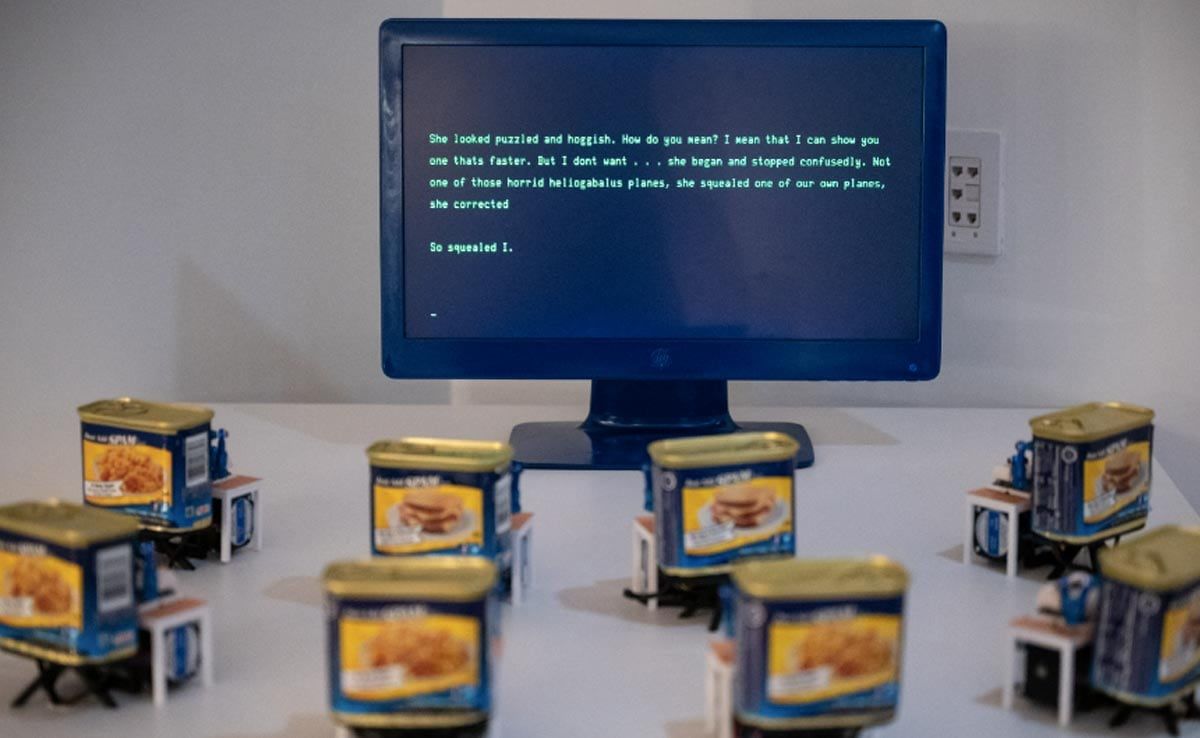
"Sorry for killing most of humanity person with smile cap and mustache," says a monitor welcoming a visitor to the "Misalignment Museum," a new exhibit on the controversial technology.

Advances in artificial intelligence are coming so hard and fast that a museum in San Francisco, the beating heart of the tech revolution, has imagined a memorial to the demise of humanity.

"Sorry for killing most of humanity person with smile cap and mustache," says a monitor welcoming a visitor to the "Misalignment Museum," a new exhibit on the controversial technology.


The pieces in this temporary show mix the disturbing with the comic, and this first display has AI disburse pithy observations to the visitors that cross into its line of vision.

"The concept of the museum is that we are in a post-apocalyptic world where artificial general intelligence has already destroyed most of humanity," said Audrey Kim, the show's curator.
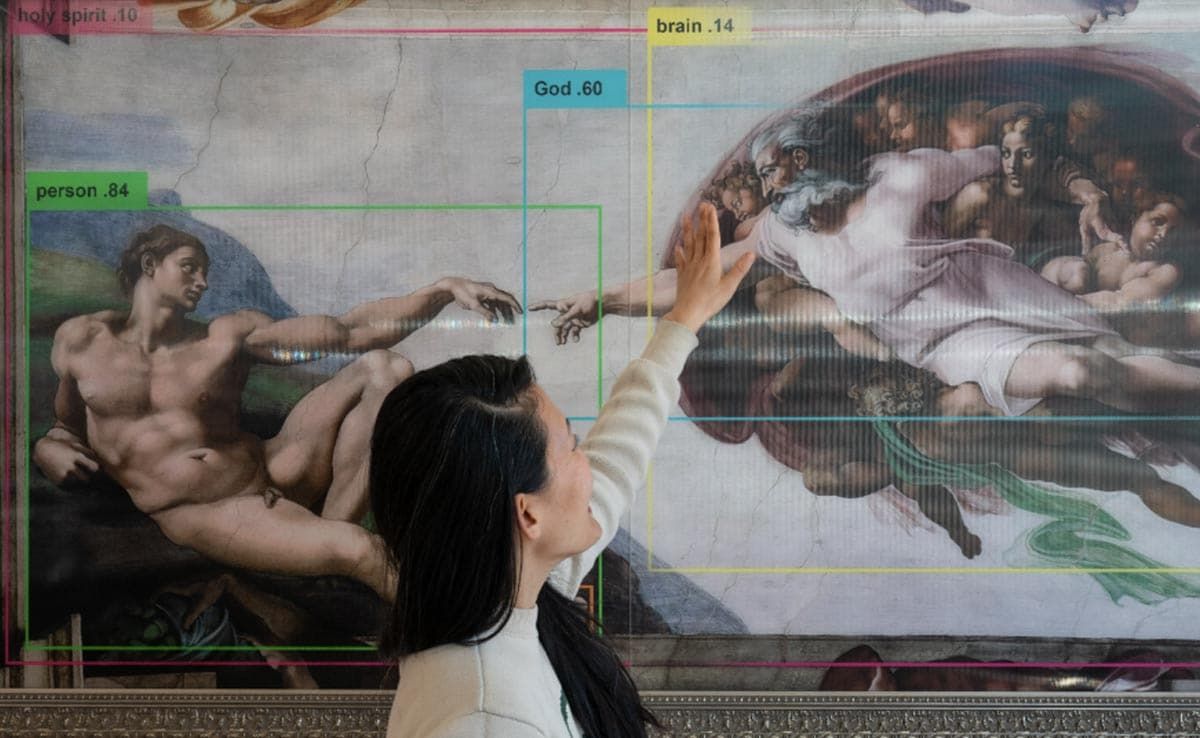

"But then the AI realizes that was bad and creates a type of memorial to the human, so our show's tagline is 'sorry for killing most of humanity,'" she said.

Artificial General Intelligence is a concept that is even more nebulous than the simple AI that is cascading into everyday life, as seen in the fast emergence of apps such as ChatGPT or Bing's chatbot and all the hype surrounding them.

AGI is "artificial intelligence that is able to do anything that a human would be able to do," integrating human cognitive capacities into machines.

All around San Francisco, and down the peninsula in Silicon Valley, startups are hot on the trail of the AGI holy grail.

Sam Altman, the founder of ChatGPT creator OpenAI, has said AGI, done right, can "elevate humanity" and change the "limits of possibilities."

Paperclip AI


But Kim wants to trigger a reflection on the dangers of going too far, too quickly.

"There have been lots of conversations about the safety of AI in pretty niche intellectual tech circles on Twitter and I think that's very important," she said.

But those conversations are not as easily accessible to the general public as concepts that you can see or feel, she added.

Kim is particularly fond of a sculpture called "Paperclip Embrace": two busts of humans holding each other, made entirely of paperclips.

The work refers to a metaphor by philosopher Nick Bostrom, who in the 2000s imagined what would happen if artificial intelligence was programmed to create paper clips.
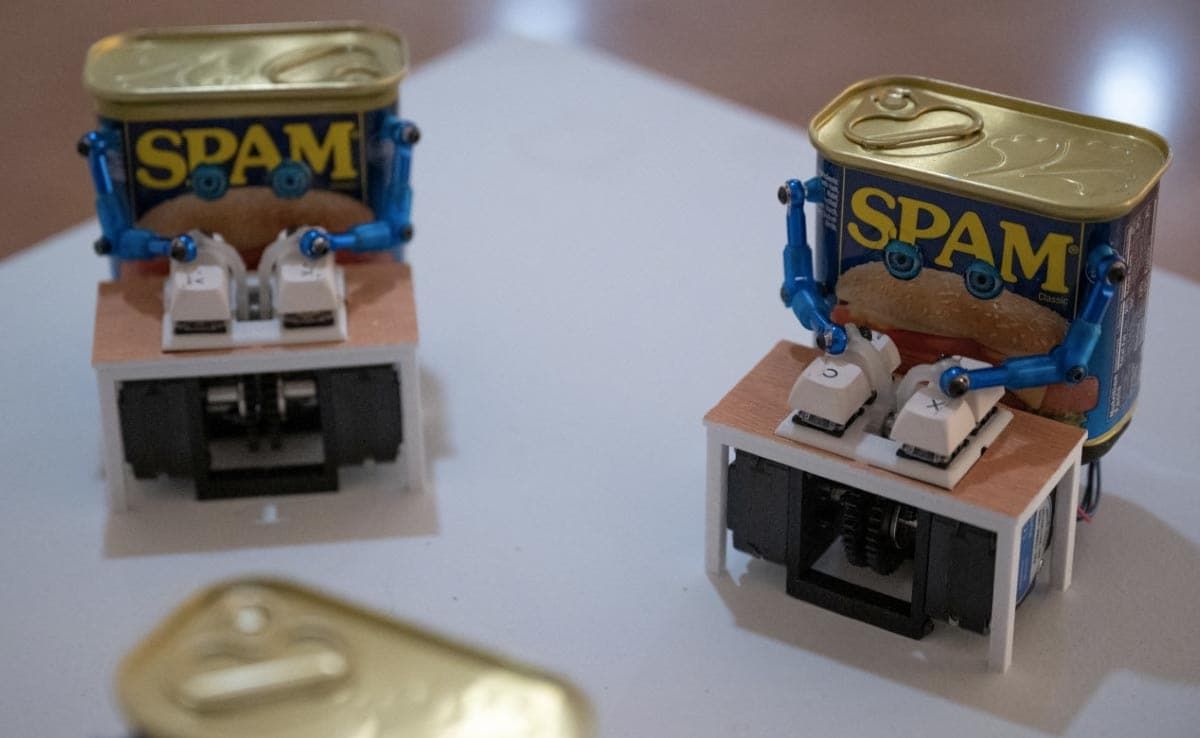

"It could become more and more powerful, and constantly optimize itself to achieve its one and only goal, to the point of destroying all of humanity in order to flood the world with paper clips," Kim said.

Weighing the pros and cons of AI is a subject that became close to Kim's heart in an earlier job working for Cruise, an autonomous vehicle company.

There she worked on an "incredible" technology, which "could reduce the number of accidents due to human error," but also presented risks, she said.

The exhibit occupies a small space in a street corner building in San Francisco's hip Mission neighborhood.

The lower floor of the exhibition is dedicated to AI as a nightmarish dystopia where a machine powered by GPT-3, the language model behind ChatGPT, composes spiteful calligrams against humanity, in cursive writing.

One exhibit is an AI-generated -- and totally fake -- dialogue between the philosopher Slavoj Zizek and the filmmaker Werner Herzog, two of Europe's most respected intellectuals.

This "Infinite Conversation" is a meditation on deep fakes: images, sound or video that aim to manipulate opinion by impersonating real people and that have become the latest disinformation weapon online.

"We only started this project five months ago, and yet many of the technologies presented here already seem almost primitive," Kim said, astonished.

She hopes to turn the exhibit into a permanent one with more space and more events.

Newsletter

Related Articles

Saudi Press
0:00
0:00
Close
Following OpenAI's Cyberattack: 'Most Companies Still Do Not Understand What Is Coming'
OpenAI Sued After ChatGPT Allegedly Discouraged Emergency Care Before Near-Fatal Embolism
Miliband Sets Climate and International Law at Centre of UK Diplomacy
Pentagon Discloses Nearly 100 US Troop Injuries During Renewed Iran Fighting
Trump Readies New Tariffs as Temporary Global Levy Nears Expiry
High Prices Push Coffee Drinkers Toward Whole Beans and Home Brewing
Trump Draws Boos and Podium Scrutiny at Spain’s World Cup Triumph
Spain Defeats Argentina in Extra Time to Win Second World Cup
Turkey Explores S-400 Transfer to UAE in Bid to Rejoin F-35 Program
US Retaliates Against Iran After Two American Troops Killed in Jordan
Proposed U.S.-Saudi Nuclear Pact Could Permit Limited Uranium Enrichment Under International Safeguards
Why Kentucky Fried Chicken Became KFC—and Why the False Explanations Persist
Iran Claims It Destroyed Bahrain’s Main Artificial Intelligence Center in Missile and Drone Strike
Ukrainian Drones Strike Wildberries Warehouses Deep Inside Russia
Reported CIA Mission Helped Clear the UAE’s Path to Advanced US AI Chips
Artificial Intelligence Capital Fuels Markets While Governments and Regulators Face Mounting Strategic Tests
China’s Moonshot’s Kimi K3 Narrows the Gap With Anthropic Through Scale, Openness and Lower Cost
Gold and Cash Seizure Puts Indonesia’s Senior Anti-Corruption Prosecutor Under Investigation
The Ledger Will Not Trust on Faith
Passenger Bound for Germany Refused to Sit Beside a Woman on a Plane — Then Slapped a Flight Attendant
Ukraine’s Leadership Rift Spills Into the Streets as Protesters Target Army Chief
The Ten World Cup Finals That Defined Football History
Smartphones Are Getting More Expensive, Sales Are Collapsing, and Even Apple Admits: "Prices Will Rise"
Leadership Change and Strategic Rivalry Redraw the Political Map
The AI Race Enters Its Infrastructure Era
Britain Nationalises British Steel to Protect Scunthorpe Production and Strategic Supply
Thomas Tuchel Faces Fierce Backlash After Tactical Retreat Costs England World Cup Final Berth
A Quiet Bastille Day: France Grapples with World Cup Heartbreak and Leftover Fireworks
Spain in Ecstasy: "We Feel Unbeatable, We Taught the Whole World a Lesson"
Harvard Astrophysicist to Lead U.S. Scientific Advisory on Unidentified Aerial Phenomena
Emergency Sirens Activated Across Bahrain as Interior Ministry Issues Shelter Directives
World Cup Visitors Turn American Big-Box Stores Into Souvenir Stops
Netflix Weighs Always-On Channels, Bundles and Short-Form Video
The AI Invoice Shock: Layoffs Didn't Save Managers Money — They Cost Them More
Concern: Sexually Transmitted Bacterium Among Men Develops Antibiotic Resistance
Passenger Partially Pulled Out of Ryanair Jet After Cabin Window Fails Mid-Flight
Severe Heatwave Drives Dangerous Ground-Level Ozone Pollution Across Two Thirds of European Union
The Physical and Electronic Barriers Disrupting Domestic Wireless Networks
France and Morocco Open World Cup Quarter-Finals as Collina Defends Refereeing
Tech Pulse: The Future of AI and Screen Culture
Global News Briefing: Escalating Geopolitical Tensions and Corporate Shakeups
Global News Brief: Escalating Conflicts, Public Health Crises, and World Cup Drama
Europe's Growing Struggle with Extreme Heat and Air Conditioning
Anthropic Reengineers Agentic Architecture to Shift Autonomous Workplace Automation to the Cloud
Logic Flaw in Windows 11 Permission Architecture Silently Consumes Hundreds of Gigabytes of Local Storage
Apple Advances Late-Stage Operating Systems with Fourth Beta Deployments
Global Crisis Alert: Escalating Middle East Tensions and UK Political Upheaval
Japanese Technology Firm Fujitsu Launches Advanced Artificial Intelligence Tool for Corporate Disclosures
South Africa Officially Launches Nationwide Campaign for Highly Contested Local Government Elections
United Kingdom Commits Additional Funding for Unexploded Ordnance Clearance in Laos
×