Guterres Calls for UN Reform to Boost African Representation
Secretary-General Antonio Guterres emphasizes the need for institutional change to enhance African representation within the United Nations.
NAIROBI: In a move aimed at promoting greater equity in global governance, Secretary-General Antonio Guterres has underscored the necessity of UN reform to increase African representation.
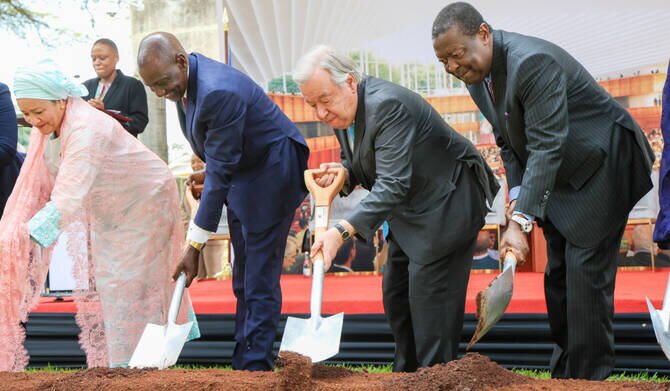
This call was made during the groundbreaking ceremony for an expansion project at the UN's Kenyan campus on Monday.
Guterres has consistently advocated for change over the years, advocating for a more inclusive composition within the United Nations.
However, the process towards reform, particularly concerning the Security Council, remains challenging due to the requirement of consensus among the five permanent members.
These include Britain, China, France, Russia, and the U.S., who would need to agree to any dilution of their power.
The Secretary-General expressed his views on the current state of global institutions, stating that they should reflect contemporary realities rather than historical configurations.
He specifically pointed out the 'historic injustice' within the Security Council in denying Africa permanent seats.
Guterres acknowledged that while progress towards reform has been slow, steps in the right direction have been taken.
Among these measures, he cited efforts by Britain and France to limit the use of the veto power by the permanent members in extreme situations such as genocide.
He argued that the current geopolitical landscape makes achieving peace and security increasingly challenging, thus necessitating an effective Security Council.
These comments were delivered during a summit co-hosted by France and Kenya, which brought together African leaders and business executives to discuss the reform of the Security Council.
The expansion of the UN's Nairobi campus, part of cost-cutting measures involving relocating staff from New York and Geneva, was also announced by Guterres.
The campus, originally serving as a regional hub for the UN's environmental and housing arms, now houses over 80 offices and more than 4,000 staff members.
The relocation initiative is part of broader efforts to reduce operational costs, especially in light of significant cuts to the UN budget from the U.S. under President Donald Trump.
In related news, French President Emmanuel Macron stated on Monday that the process of returning African artworks looted during the colonial era has gained momentum.
This announcement follows the unanimous approval by the French parliament of a law facilitating the return of such artifacts.
France possesses tens of thousands of artworks and valuable artifacts acquired from Africa during its colonial rule.
Macron made a pledge in 2017 to facilitate the return of these works within five years, addressing young Africans.
He expressed confidence that the process has become irreversible and unstoppable, despite opposition to the law.
Macron's commitment stands out against the backdrop of other former colonial powers, which have been gradually returning acquired artworks.
However, France's approach has faced legal hurdles, requiring individual votes for each item returned.
Despite a growing number of restitution requests, France has only returned a few artifacts thus far.
The approval of the law in 2025 enabling bulk returns marks a significant step towards rectifying historical injustices.
The return to Ivory Coast of a talking drum, taken from the Ebrie tribe in 1916, set a precedent.
Macron views this as the beginning of an exchange, emphasizing a broader commitment to restitution.
This article provides a factual overview of Guterres's call for UN reform and related developments concerning African representation and the return of colonial-era artifacts without offering any conclusions or recommendations.
This call was made during the groundbreaking ceremony for an expansion project at the UN's Kenyan campus on Monday.
Guterres has consistently advocated for change over the years, advocating for a more inclusive composition within the United Nations.
However, the process towards reform, particularly concerning the Security Council, remains challenging due to the requirement of consensus among the five permanent members.
These include Britain, China, France, Russia, and the U.S., who would need to agree to any dilution of their power.
The Secretary-General expressed his views on the current state of global institutions, stating that they should reflect contemporary realities rather than historical configurations.
He specifically pointed out the 'historic injustice' within the Security Council in denying Africa permanent seats.
Guterres acknowledged that while progress towards reform has been slow, steps in the right direction have been taken.
Among these measures, he cited efforts by Britain and France to limit the use of the veto power by the permanent members in extreme situations such as genocide.
He argued that the current geopolitical landscape makes achieving peace and security increasingly challenging, thus necessitating an effective Security Council.
These comments were delivered during a summit co-hosted by France and Kenya, which brought together African leaders and business executives to discuss the reform of the Security Council.
The expansion of the UN's Nairobi campus, part of cost-cutting measures involving relocating staff from New York and Geneva, was also announced by Guterres.
The campus, originally serving as a regional hub for the UN's environmental and housing arms, now houses over 80 offices and more than 4,000 staff members.
The relocation initiative is part of broader efforts to reduce operational costs, especially in light of significant cuts to the UN budget from the U.S. under President Donald Trump.
In related news, French President Emmanuel Macron stated on Monday that the process of returning African artworks looted during the colonial era has gained momentum.
This announcement follows the unanimous approval by the French parliament of a law facilitating the return of such artifacts.
France possesses tens of thousands of artworks and valuable artifacts acquired from Africa during its colonial rule.
Macron made a pledge in 2017 to facilitate the return of these works within five years, addressing young Africans.
He expressed confidence that the process has become irreversible and unstoppable, despite opposition to the law.
Macron's commitment stands out against the backdrop of other former colonial powers, which have been gradually returning acquired artworks.
However, France's approach has faced legal hurdles, requiring individual votes for each item returned.
Despite a growing number of restitution requests, France has only returned a few artifacts thus far.
The approval of the law in 2025 enabling bulk returns marks a significant step towards rectifying historical injustices.
The return to Ivory Coast of a talking drum, taken from the Ebrie tribe in 1916, set a precedent.
Macron views this as the beginning of an exchange, emphasizing a broader commitment to restitution.
This article provides a factual overview of Guterres's call for UN reform and related developments concerning African representation and the return of colonial-era artifacts without offering any conclusions or recommendations.