Saudi Press

Saudi Arabia and the world
Monday, Jan 05, 2026

Will we be hailing taxis from the sky by 2025?

Flying cars sound like something out of a science fiction film, but money is pouring into the development of human-sized drones and cargo-carrying airships. Will flying taxis soon be stopping outside our doors?

There are few things more frustrating than being stuck in a traffic jam. Just five minutes of standstill during rush hour can get you dreaming of flying cars like the ones from the 1960s cartoon 'The Jetsons'. But could these cars soon be a reality?

Flying car technology


Electric vertical take-off and landing aircraft or eV-TOL, as their name suggests, lift off the ground, hover and land vertically. They are ecologically friendly as they are all-electric and built to produce no direct carbon dioxide emissions.

According to IBA, a company that provides aviation data and analytics for aviation finance and airlines, the market for these aircraft is expected to rise to over 21 billion euros by 2035. It's a figure keeping investors with their eyes in the sky.

More than 50 firms are currently developing several prototype aircraft with the capacity to transport up to 20 passengers. One such company is the Turkish start-up AirCar.

Self-driving taxis


Since it was founded in 2017, AirCar has been looking for ways out of the traffic gridlock. Based in Turkey’s version of Silicon Valley, AirCar is partnered with the country’s largest software maker. Instead of waiting for governments to slowly build bigger roads and better public transportation, the company has set its sights higher. Its ultimate goal is to have a network of flying taxis that are entirely electric-powered and self-driving.
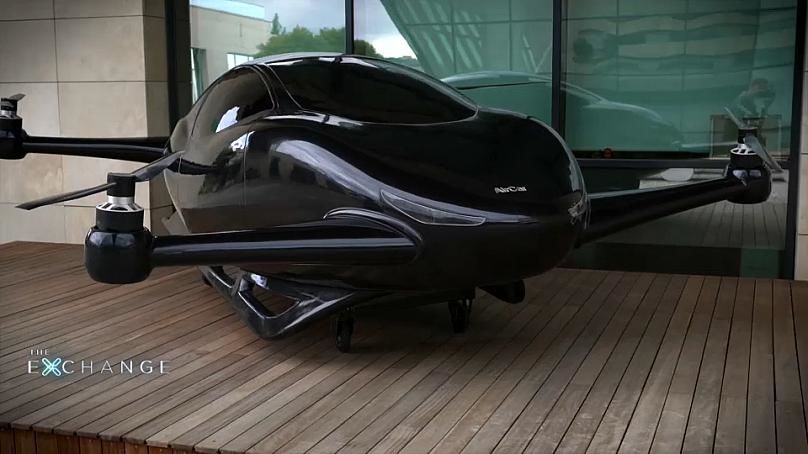
An AirCar prototype


After conducting more than a thousand small-scale trials, testing on a full-sized prototype began this year. AirCar’s CEO, Eray Altunbozar, says the company expects to start carrying passengers by early 2025. But there are still barriers to overcome. One of these is the size of today's public transport.

The challenges


As Dr. Andreas Bardenhagen, a professor at the Technical University of Berlin, explains, if you compare the number of passengers a train or a bus can transport to a modern-day helicopter, it's much less. If you want to transport hundreds of people in flying taxis, for example, "you’ll get a very crowded air space". Dr. Bardenhagen is not sure whether the public will accept this.

Another complication is the national and international regulations regarding things that fly. Phil Seymour is the president of IBA. He says that all "the countries around the world have regulators that follow strict manufacturing design guidelines." To him, this ensures that there is a safety and regulation network in place. However, it could slow down plans for a mainstream flying taxi service.

A sustainable option


Despite these difficulties, AirCar wants to be an industry disruptor and it is willing to take the road less travelled to build a new flying future. To its CEO, Altunbozar, this project is also about sustainable technologies, an industry he worked in previously. It was working on current technologies like lithium-ion batteries, composites, drone technologies and AI that he realised it was possible to get into the flying car business.

The promise of heli-cars is to transport humans over shorter distances, but what about bigger deliveries? The French company, Flying Whales, says its huge blimp-like airships cannot only transport 60-tonne payloads over long distances, but it can do so sustainably.

An airship made by Flying Whales


Its CEO, Sebastien Bougon, even says that the company could revolutionise the healthcare industry. According to him, this is possible using large capacity airships to deliver hospitals to remote areas or islands. Once the hospitals have helped the people for the time they need, they can then be moved to other remote areas so that they can get the same quality healthcare as big cities.

Flying cars and new modes of air transport are no longer a fantasy. Billions of euros are already fuelling dozens of start-ups worldwide. But will it remain a novelty for the rich or can it truly transform how we all travel? Only one thing is for sure, a change is in the air.

Newsletter

Related Articles

Saudi Press
0:00
0:00
Close
The U.S. State Department’s account in Persian: “President Trump is a man of action. If you didn’t know it until now, now you do—do not play games with President Trump.”
CNN’s Ranking of Israel’s Women’s Rights Sparks Debate After Misleading Global Index Comparison
Saudi Arabia’s Shifting Regional Alignment Raises Strategic Concerns in Jerusalem
OPEC+ Holds Oil Output Steady Amid Member Tensions and Market Oversupply
Iranian Protests Intensify as Another Revolutionary Guard Member Is Killed and Khamenei Blames the West
President Trump Says United States Will Administer Venezuela Until a Secure Leadership Transition
Delta Force Identified as Unit Behind U.S. Operation That Captured Venezuela’s President
Trump Announces U.S. Large-Scale Strike on Venezuela, Declares President Maduro and Wife Captured
Saudi-UAE Rift Adds Complexity to Middle East Diplomacy as Trump Signals Firm Leadership
OPEC+ to Keep Oil Output Policy Unchanged Despite Saudi-UAE Tensions Over Yemen
Saudi Arabia and UAE at Odds in Yemen Conflict as Southern Offensive Deepens Gulf Rift
Abu Dhabi ‘Capital of Capital’: How Abu Dhabi Rose as a Sovereign Wealth Power
Diamonds Are Powering a New Quantum Revolution
Trump Threatens Strikes Against Iran if Nuclear Programme Is Restarted
Why Saudi Arabia May Recalibrate Its US Spending Commitments Amid Rising China–America Rivalry
Riyadh Air’s First Boeing 787-9 Dreamliner Completes Initial Test Flight, Advancing Saudi Carrier’s Launch
Saudi Arabia’s 2025: A Pivotal Year of Global Engagement and Domestic Transformation
Saudi Arabia to Introduce Sugar-Content Based Tax on Sweetened Drinks from January 2026
Saudi Hotels Prepare for New Hospitality Roles as Alcohol Curbs Ease
Global Airports Forum Highlights Saudi Arabia’s Emergence as a Leading Aviation Powerhouse
Saudi Arabia Weighs Strategic Choice on Iran Amid Regional Turbulence
Not Only F-35s: Saudi Arabia to Gain Access to the World’s Most Sensitive Technology
Saudi Arabia Condemns Sydney Bondi Beach Shooting and Expresses Solidarity with Australia
Washington Watches Beijing–Riyadh Rapprochement as Strategic Balance Shifts
Saudi Arabia Urges Stronger Partnerships and Efficient Aid Delivery at OCHA Donor Support Meeting in Geneva
Saudi Arabia’s Vision 2030 Drives Measurable Lift in Global Reputation and Influence
Alcohol Policies Vary Widely Across Muslim-Majority Countries, With Many Permitting Consumption Under Specific Rules
Saudi Arabia Clarifies No Formal Ban on Photography at Holy Mosques for Hajj 2026
Libya and Saudi Arabia Sign Strategic MoU to Boost Telecommunications Cooperation
Elon Musk’s xAI Announces Landmark 500-Megawatt AI Data Center in Saudi Arabia
Israel Moves to Safeguard Regional Stability as F-35 Sales Debate Intensifies
Cardi B to Make Historic Saudi Arabia Debut at Soundstorm 2025 Festival
U.S. Democratic Lawmakers Raise National Security and Influence Concerns Over Paramount’s Hostile Bid for Warner Bros. Discovery
Hackers Are Hiding Malware in Open-Source Tools and IDE Extensions
Traveling to USA? Homeland Security moving toward requiring foreign travelers to share social media history
Wall Street Analysts Clash With Riyadh Over Saudi Arabia’s Deficit Outlook
Trump and Saudi Crown Prince Cement $1 Trillion-Plus Deals in High-Profile White House Summit
Saudi Arabia Opens Alcohol Sales to Wealthy Non-Muslim Residents Under New Access Rules
U.S.–Saudi Rethink Deepens — Washington Moves Ahead Without Linking Riyadh to Israel Normalisation
Saudi Arabia and Israel Deprioritise Diplomacy: Normalisation No Longer a Middle-East Priority
Saudi Arabia Positions Itself as the Backbone of the Global AI Era
As Trump Deepens Ties with Saudi Arabia, Push for Israel Normalization Takes a Back Seat
Thai Food Village Debuts at Saudi Feast Food Festival 2025 Under Thai Commerce Minister Suphajee’s Lead
Saudi Arabia Sharpens Its Strategic Vision as Economic Transformation Enters New Phase
Saudi Arabia Projects $44 Billion Budget Shortfall in 2026 as Economy Rebalances
OPEC+ Unveils New Capacity-Based System to Anchor Future Oil Output Levels
Will Saudi Arabia End Up Bankrolling Israel’s Post-Ceasefire Order in Lebanon?
Saudi Arabia’s SAMAI Initiative Surpasses One-Million-Citizen Milestone in National AI Upskilling Drive
Saudi Arabia’s Specialty Coffee Market Set to Surge as Demand Soars and New Exhibition Drops in December
Saudi Arabia Moves to Open Two New Alcohol Stores for Foreigners Under Vision 2030 Reform
×