Why Saudi Arabia Is Investing Billions in Syria’s Economy
Riyadh’s expanding economic engagement with Damascus reflects strategic recalibration, regional stability goals, and reconstruction opportunities after years of conflict
Saudi Arabia is moving to invest billions of dollars in Syria’s economy as part of a broader shift in regional policy that seeks to support stability, foster reconstruction and deepen bilateral ties after more than a decade of war and isolation.
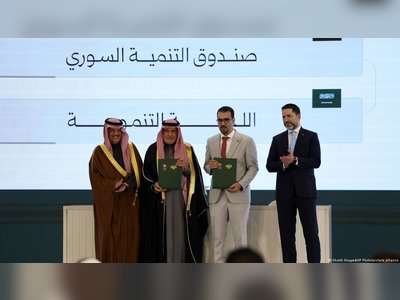
The kingdom’s decision to pursue significant economic engagement with Damascus follows the restoration of formal diplomatic relations and accords with Riyadh’s stated aim of bolstering economic recovery in conflict-affected neighbours while advancing its wider interests in regional security and development.
The investment push focuses on infrastructure, energy, logistics and housing, and is expected to bring Saudi capital and expertise into sectors that are critical to Syria’s rebuilding.
Saudi officials and business groups argue that private sector involvement and foreign direct investment can help revive local industry, create jobs and improve living conditions for ordinary Syrians.
This economic approach aligns with broader initiatives by Gulf states to transition from humanitarian aid to sustainable development models in countries that have endured long-term instability.
Analysts say Saudi Arabia’s investments are also shaped by strategic considerations.
A more economically stable Syria is viewed in Riyadh as a potential contributor to regional stability, reducing the risk of renewed conflict spillover and diminishing the influence of non-Arab external actors.
By fostering reconstruction, the kingdom aims to reinforce state institutions and align Syria more closely with Arab diplomatic frameworks, potentially strengthening collective efforts on security and economic cooperation.
The timing of Saudi investment plans coincides with diplomatic rapprochement between Damascus and several Arab capitals, diminishing Syria’s isolation and reintegrating it into regional economic discussions.
Saudi officials have described the engagement as part of a long-term vision for economic cooperation across the Middle East, where reconstruction is linked to shared prosperity and mutual interests.
Critics of the investments caution that concrete progress will require clear governance frameworks, transparency and safeguards to ensure that capital flows benefit the broader population rather than entrenched elites.
Riyadh and Damascus have responded by highlighting project oversight mechanisms and commitments to international standards.
As implementation begins, Saudi Arabia’s economic involvement in Syria is set to be both a test of regional diplomatic realignment and a measure of the kingdom’s role in supporting post-conflict recovery through investment.
The kingdom’s decision to pursue significant economic engagement with Damascus follows the restoration of formal diplomatic relations and accords with Riyadh’s stated aim of bolstering economic recovery in conflict-affected neighbours while advancing its wider interests in regional security and development.
The investment push focuses on infrastructure, energy, logistics and housing, and is expected to bring Saudi capital and expertise into sectors that are critical to Syria’s rebuilding.
Saudi officials and business groups argue that private sector involvement and foreign direct investment can help revive local industry, create jobs and improve living conditions for ordinary Syrians.
This economic approach aligns with broader initiatives by Gulf states to transition from humanitarian aid to sustainable development models in countries that have endured long-term instability.
Analysts say Saudi Arabia’s investments are also shaped by strategic considerations.
A more economically stable Syria is viewed in Riyadh as a potential contributor to regional stability, reducing the risk of renewed conflict spillover and diminishing the influence of non-Arab external actors.
By fostering reconstruction, the kingdom aims to reinforce state institutions and align Syria more closely with Arab diplomatic frameworks, potentially strengthening collective efforts on security and economic cooperation.
The timing of Saudi investment plans coincides with diplomatic rapprochement between Damascus and several Arab capitals, diminishing Syria’s isolation and reintegrating it into regional economic discussions.
Saudi officials have described the engagement as part of a long-term vision for economic cooperation across the Middle East, where reconstruction is linked to shared prosperity and mutual interests.
Critics of the investments caution that concrete progress will require clear governance frameworks, transparency and safeguards to ensure that capital flows benefit the broader population rather than entrenched elites.
Riyadh and Damascus have responded by highlighting project oversight mechanisms and commitments to international standards.
As implementation begins, Saudi Arabia’s economic involvement in Syria is set to be both a test of regional diplomatic realignment and a measure of the kingdom’s role in supporting post-conflict recovery through investment.