US and Iran Play Down Hopes for Quick End to War
Efforts to end the three-month-old conflict between Iran and the US face skepticism as both sides remain at odds over several key issues.
Iran and the United States downplayed expectations of an immediate breakthrough in efforts to end their ongoing war, despite reports suggesting progress.
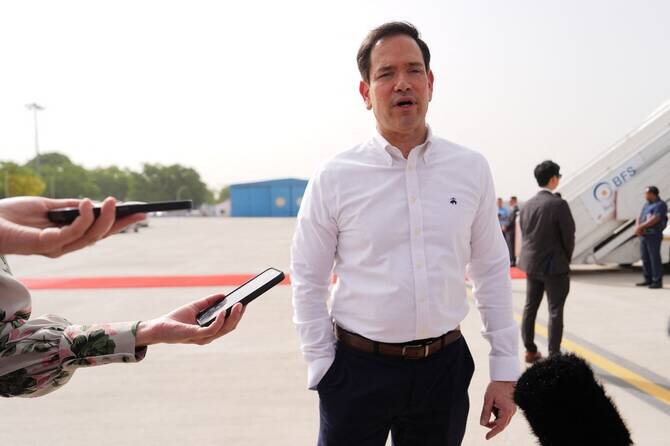
The top US diplomat, Secretary of State Marco Rubio, stated that while diplomacy is being given a chance, alternative measures could be employed if necessary.
The potential agreement under discussion includes 14 points, with a focus on ending the conflict and ensuring safe passage through the Strait of Hormuz in exchange for Iran taking steps to facilitate this.
The nuclear issue, however, is not currently part of the talks, which are expected to last for 60 days if a framework accord is reached.
Iran's foreign ministry spokesperson, Esmaeil Baghaei, indicated that while some progress has been made, it is not yet close to signing an agreement.
He emphasized that specific details regarding the management of the Strait of Hormuz have not been finalized, and Iran will not charge tolls for ships passing through.
The closure of the Strait of Hormuz, which began on February 28th, has led to increased oil prices and a broader energy crisis.
In response, global oil prices declined by 5% on Monday, reflecting growing optimism over potential peace developments.
Despite these signs of progress, significant challenges remain in achieving a comprehensive agreement between Iran and the US.
These include unresolved issues such as Iran's nuclear ambitions, ongoing conflicts involving Israel and Iranian-backed militias, and demands for the lifting of sanctions and release of frozen oil revenues.
US President Donald Trump has faced criticism for his handling of the negotiations and remains committed to reaching a "good and proper" agreement with Iran.
The top US diplomat, Secretary of State Marco Rubio, stated that while diplomacy is being given a chance, alternative measures could be employed if necessary.
The potential agreement under discussion includes 14 points, with a focus on ending the conflict and ensuring safe passage through the Strait of Hormuz in exchange for Iran taking steps to facilitate this.
The nuclear issue, however, is not currently part of the talks, which are expected to last for 60 days if a framework accord is reached.
Iran's foreign ministry spokesperson, Esmaeil Baghaei, indicated that while some progress has been made, it is not yet close to signing an agreement.
He emphasized that specific details regarding the management of the Strait of Hormuz have not been finalized, and Iran will not charge tolls for ships passing through.
The closure of the Strait of Hormuz, which began on February 28th, has led to increased oil prices and a broader energy crisis.
In response, global oil prices declined by 5% on Monday, reflecting growing optimism over potential peace developments.
Despite these signs of progress, significant challenges remain in achieving a comprehensive agreement between Iran and the US.
These include unresolved issues such as Iran's nuclear ambitions, ongoing conflicts involving Israel and Iranian-backed militias, and demands for the lifting of sanctions and release of frozen oil revenues.
US President Donald Trump has faced criticism for his handling of the negotiations and remains committed to reaching a "good and proper" agreement with Iran.