US Agrees to Modify Sanctions to Allow Venezuela to Pay Maduro's Lawyer in Drug Trafficking Case
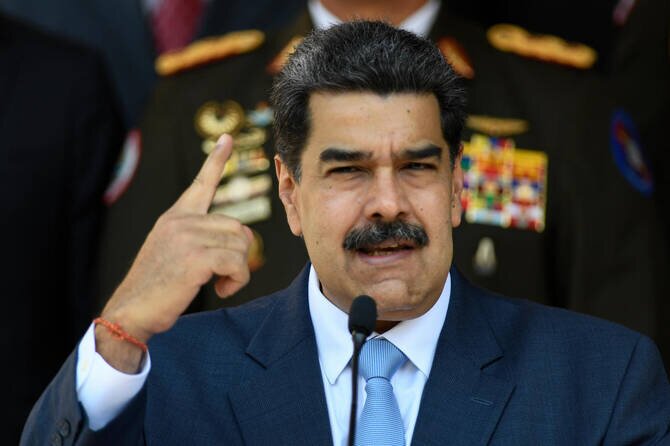
The United States has agreed to modify its sanctions on Venezuela, allowing the South American country's government to pay for President Nicolás Maduro's defense lawyer. This decision comes after a court filing revealed that the modification was necessary to avoid derailing the drug trafficking case against the ousted Venezuelan president.
Maduro, along with his wife Cilia Flores, were arrested by US special forces on January 3 and brought to New York to face criminal charges including narcoterrorism conspiracy.
Both have pleaded not guilty and are currently jailed in Brooklyn pending trial.
Maduro's lawyer, Barry Pollack, had requested the dismissal of the case due to US sanctions preventing the Venezuelan government from paying his legal fees.
Pollack argued that this restriction violated Maduro's constitutional right to choose his counsel.
The Venezuelan government has offered to pay for their legal fees as they cannot afford lawyers on their own.
In a court hearing held on March 26, Judge Alvin Hellerstein of Manhattan-based US District Court expressed skepticism about the justification for blocking the payments but did not intend to dismiss the case.
Prosecutors stated that the sanctions were based on legitimate national security and foreign policy interests, with responsibility for modifying them falling within the executive branch's authority.
The court acknowledged that relations between Caracas and Washington have improved since Maduro's ouster, with Delcy Rodriguez leading Venezuela on an interim basis.
Judge Hellerstein emphasized that both defendants are currently in the US and no longer pose a national security threat.
During former President Donald Trump's tenure, sanctions were intensified against Venezuela over allegations of government corruption and undermining democratic institutions.
Maduro dismissed these claims, as well as accusations of his involvement in drug trafficking, as justifications for what he considers a US attempt to seize control of Venezuela's vast oil reserves.
Both have pleaded not guilty and are currently jailed in Brooklyn pending trial.
Maduro's lawyer, Barry Pollack, had requested the dismissal of the case due to US sanctions preventing the Venezuelan government from paying his legal fees.
Pollack argued that this restriction violated Maduro's constitutional right to choose his counsel.
The Venezuelan government has offered to pay for their legal fees as they cannot afford lawyers on their own.
In a court hearing held on March 26, Judge Alvin Hellerstein of Manhattan-based US District Court expressed skepticism about the justification for blocking the payments but did not intend to dismiss the case.
Prosecutors stated that the sanctions were based on legitimate national security and foreign policy interests, with responsibility for modifying them falling within the executive branch's authority.
The court acknowledged that relations between Caracas and Washington have improved since Maduro's ouster, with Delcy Rodriguez leading Venezuela on an interim basis.
Judge Hellerstein emphasized that both defendants are currently in the US and no longer pose a national security threat.
During former President Donald Trump's tenure, sanctions were intensified against Venezuela over allegations of government corruption and undermining democratic institutions.
Maduro dismissed these claims, as well as accusations of his involvement in drug trafficking, as justifications for what he considers a US attempt to seize control of Venezuela's vast oil reserves.