Saudi–Pakistan Defence Pact Raises Stakes as Nuclear Ambiguity Clouds Middle East Security
New agreement promises joint response to attack, but murky references to Pakistan’s nuclear deterrent unsettle regional stability calculations
Saudi Arabia and Pakistan on September 17, 2025 formalised a Strategic Mutual Defence Agreement (SMDA) that commits both states to treat any aggression against one as an attack on both, marking the first time an Arab Gulf country has signed a binding defence accord with a nuclear-armed partner.
The move cements decades of cooperation between Riyadh and Islamabad, while signalling a shift in Gulf security architecture as Gulf states reassess long-standing reliance on the United States.
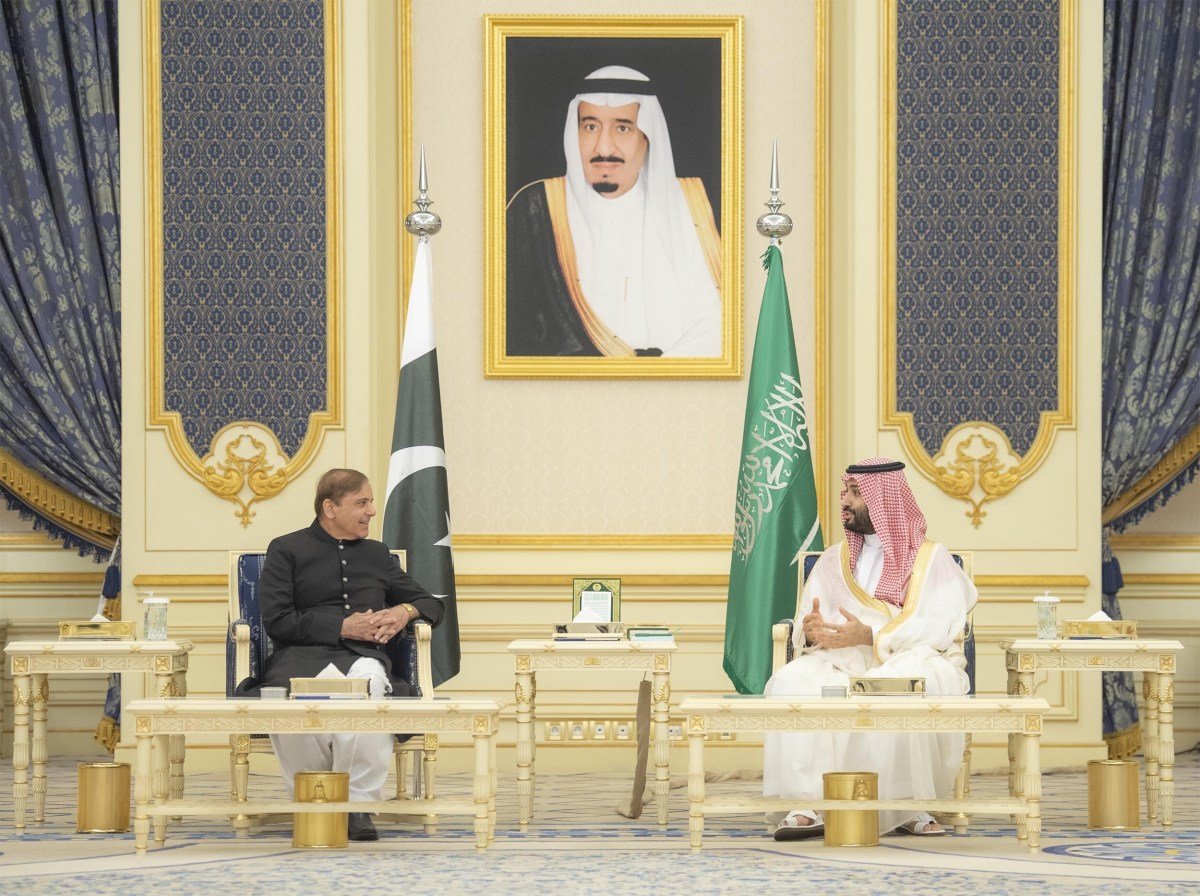
In Riyadh, Saudi Crown Prince Mohammed bin Salman and Pakistan Prime Minister Shehbaz Sharif signed the pact, as top military and civil-political leadership from both sides looked on.
The agreement pledges to broaden defence cooperation across the full spectrum of military means and aims to deepen joint deterrence against threats to either country.
Despite the pact’s ostensibly conventional framing, remarks by a senior Saudi official — that the agreement covers “all military means” — and initial comments by Pakistan’s Defence Minister suggesting Pakistan’s nuclear capability could be extended to Saudi Arabia have sparked widespread speculation about a possible nuclear umbrella.
Yet several defence analysts caution that this interpretation may exaggerate the pact’s practical scope.
The accord appears to codify existing ties — including longstanding Saudi hosting of Pakistani military trainers and advisers — rather than establish new nuclear-sharing mechanisms.
Pakistan’s nuclear doctrine remains heavily focused on its historic rivalry with India; the country’s minimal deterrent strategy is not structured around power projection beyond South Asia.
Extending credible nuclear deterrence to a distant Gulf neighbour would demand a substantial expansion of Pakistan’s arsenal, command-and-control infrastructure, and logistic capacity — investments the country has not committed publicly.
Saudi Arabia, for its part, appears to view the pact as a strategic hedge: a demonstration of autonomy from external powers and a step toward a self-crafted defence architecture.
Gulf states have increasingly questioned the reliability of traditional security guarantees, especially after recent regional incidents that exposed shifting fault lines.
The SMDA provides Riyadh a publicly declared mutual-defence partner in Islamabad rather than anonymous assurances.
However, the ambiguity surrounding the agreement — and in particular whether it formally encompasses nuclear deterrence — carries serious risks.
The opacity may fuel misperceptions among regional actors, possibly provoking arms races or destabilising security calculations.
Rivals such as Iran or Israel, already sensitive to shifts in Gulf military-political alignments, may view the pact as a latent threat, especially if they assume a nuclear dimension.
For Islamabad, the pact offers diplomatic upside and renewed regional relevance — but may also draw Pakistan deeper into Middle Eastern geopolitics, complicating its primary security focus in South Asia.
For Riyadh, the deal reflects a desire to anchor its security through regional partnerships rather than reliance on external patrons alone.
As the SMDA enters its implementation phase, both capitals face a test: whether they can manage strategic ambiguity without triggering escalation in a volatile region.
The move cements decades of cooperation between Riyadh and Islamabad, while signalling a shift in Gulf security architecture as Gulf states reassess long-standing reliance on the United States.
In Riyadh, Saudi Crown Prince Mohammed bin Salman and Pakistan Prime Minister Shehbaz Sharif signed the pact, as top military and civil-political leadership from both sides looked on.
The agreement pledges to broaden defence cooperation across the full spectrum of military means and aims to deepen joint deterrence against threats to either country.
Despite the pact’s ostensibly conventional framing, remarks by a senior Saudi official — that the agreement covers “all military means” — and initial comments by Pakistan’s Defence Minister suggesting Pakistan’s nuclear capability could be extended to Saudi Arabia have sparked widespread speculation about a possible nuclear umbrella.
Yet several defence analysts caution that this interpretation may exaggerate the pact’s practical scope.
The accord appears to codify existing ties — including longstanding Saudi hosting of Pakistani military trainers and advisers — rather than establish new nuclear-sharing mechanisms.
Pakistan’s nuclear doctrine remains heavily focused on its historic rivalry with India; the country’s minimal deterrent strategy is not structured around power projection beyond South Asia.
Extending credible nuclear deterrence to a distant Gulf neighbour would demand a substantial expansion of Pakistan’s arsenal, command-and-control infrastructure, and logistic capacity — investments the country has not committed publicly.
Saudi Arabia, for its part, appears to view the pact as a strategic hedge: a demonstration of autonomy from external powers and a step toward a self-crafted defence architecture.
Gulf states have increasingly questioned the reliability of traditional security guarantees, especially after recent regional incidents that exposed shifting fault lines.
The SMDA provides Riyadh a publicly declared mutual-defence partner in Islamabad rather than anonymous assurances.
However, the ambiguity surrounding the agreement — and in particular whether it formally encompasses nuclear deterrence — carries serious risks.
The opacity may fuel misperceptions among regional actors, possibly provoking arms races or destabilising security calculations.
Rivals such as Iran or Israel, already sensitive to shifts in Gulf military-political alignments, may view the pact as a latent threat, especially if they assume a nuclear dimension.
For Islamabad, the pact offers diplomatic upside and renewed regional relevance — but may also draw Pakistan deeper into Middle Eastern geopolitics, complicating its primary security focus in South Asia.
For Riyadh, the deal reflects a desire to anchor its security through regional partnerships rather than reliance on external patrons alone.
As the SMDA enters its implementation phase, both capitals face a test: whether they can manage strategic ambiguity without triggering escalation in a volatile region.