Saudi Arabia’s Credit Strength Holds Firm Despite Hormuz Closure Risk
Moody’s affirms Aa3 sovereign rating, signaling resilience in fiscal buffers and oil capacity even under extreme Gulf disruption scenarios
A sovereign credit rating assessment of Saudi Arabia’s fiscal and external stability is being shaped by a SYSTEM-DRIVEN risk framework centered on energy exports, geopolitical chokepoints, and state-led economic transformation, with the Strait of Hormuz emerging as a key stress-test variable in global risk modeling.
What is confirmed is that Moody’s has affirmed Saudi Arabia’s Aa3 sovereign credit rating, maintaining a relatively high investment-grade position despite scenario analysis that considers severe disruptions, including the theoretical closure of the Strait of Hormuz.
The rating reflects continued confidence in the kingdom’s fiscal capacity, institutional stability, and external financial buffers even under extreme geopolitical stress conditions.
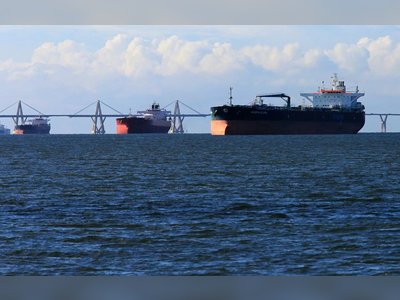
The Strait of Hormuz is one of the world’s most strategically sensitive maritime chokepoints, through which a significant portion of global oil and liquefied natural gas exports pass.
Any disruption to its operation would have immediate consequences for global energy prices, shipping insurance costs, and supply chain stability.
Saudi Arabia’s exposure to this risk is indirect but substantial due to its role as a leading global oil exporter and its reliance on maritime export routes in the Gulf.
Moody’s assessment is based on a combination of structural strengths and vulnerabilities.
On the strength side, Saudi Arabia retains large foreign exchange reserves, relatively low debt compared to many advanced economies, and strong control over its hydrocarbon production capacity through its state energy system.
These factors provide fiscal flexibility during periods of volatility in oil markets or geopolitical stress.
At the same time, the rating agency continues to evaluate the risks associated with regional security dynamics, oil price volatility, and the long-term transition away from fossil fuels.
The closure of the Strait of Hormuz is treated not as a baseline expectation but as a tail-risk scenario used to test the resilience of sovereign balance sheets under extreme conditions.
The implications of the affirmation are significant for global capital markets.
A stable Aa3 rating supports Saudi Arabia’s ability to borrow at favorable rates to finance its ongoing economic diversification program, including large-scale infrastructure, industrial, and tourism investments under its long-term development strategy.
It also signals continued investor confidence in the kingdom’s capacity to manage geopolitical risk without immediate deterioration in credit fundamentals.
More broadly, the decision reflects how credit rating methodologies now integrate geopolitical risk as a structural component of sovereign analysis rather than a temporary shock factor.
Energy-exporting economies in the Gulf are increasingly evaluated not only on fiscal metrics but also on their resilience to systemic disruptions in global maritime trade routes.
The affirmation effectively reinforces a baseline judgment in global finance: despite elevated regional tensions and the theoretical risk of major shipping disruptions, Saudi Arabia retains sufficient macroeconomic and institutional strength to preserve its investment-grade status while continuing its long-term economic transformation agenda.
What is confirmed is that Moody’s has affirmed Saudi Arabia’s Aa3 sovereign credit rating, maintaining a relatively high investment-grade position despite scenario analysis that considers severe disruptions, including the theoretical closure of the Strait of Hormuz.
The rating reflects continued confidence in the kingdom’s fiscal capacity, institutional stability, and external financial buffers even under extreme geopolitical stress conditions.
The Strait of Hormuz is one of the world’s most strategically sensitive maritime chokepoints, through which a significant portion of global oil and liquefied natural gas exports pass.
Any disruption to its operation would have immediate consequences for global energy prices, shipping insurance costs, and supply chain stability.
Saudi Arabia’s exposure to this risk is indirect but substantial due to its role as a leading global oil exporter and its reliance on maritime export routes in the Gulf.
Moody’s assessment is based on a combination of structural strengths and vulnerabilities.
On the strength side, Saudi Arabia retains large foreign exchange reserves, relatively low debt compared to many advanced economies, and strong control over its hydrocarbon production capacity through its state energy system.
These factors provide fiscal flexibility during periods of volatility in oil markets or geopolitical stress.
At the same time, the rating agency continues to evaluate the risks associated with regional security dynamics, oil price volatility, and the long-term transition away from fossil fuels.
The closure of the Strait of Hormuz is treated not as a baseline expectation but as a tail-risk scenario used to test the resilience of sovereign balance sheets under extreme conditions.
The implications of the affirmation are significant for global capital markets.
A stable Aa3 rating supports Saudi Arabia’s ability to borrow at favorable rates to finance its ongoing economic diversification program, including large-scale infrastructure, industrial, and tourism investments under its long-term development strategy.
It also signals continued investor confidence in the kingdom’s capacity to manage geopolitical risk without immediate deterioration in credit fundamentals.
More broadly, the decision reflects how credit rating methodologies now integrate geopolitical risk as a structural component of sovereign analysis rather than a temporary shock factor.
Energy-exporting economies in the Gulf are increasingly evaluated not only on fiscal metrics but also on their resilience to systemic disruptions in global maritime trade routes.
The affirmation effectively reinforces a baseline judgment in global finance: despite elevated regional tensions and the theoretical risk of major shipping disruptions, Saudi Arabia retains sufficient macroeconomic and institutional strength to preserve its investment-grade status while continuing its long-term economic transformation agenda.