Saudi Arabia Expands Alcohol Access for Wealthy Non-Muslim Residents in Quiet Policy Shift
For the first time in decades, select expatriates in Riyadh can legally purchase alcohol under tightly controlled conditions, reflecting cautious reform
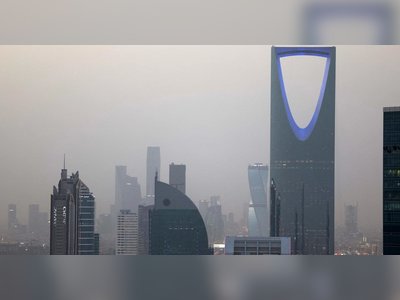
Saudi Arabia has discreetly broadened access to its only legal alcohol outlet, allowing certain non-Muslim foreign residents to purchase alcoholic beverages under new eligibility rules, marking a subtle but notable change in the kingdom’s longstanding prohibition policy.
Previously restricted to accredited foreign diplomats, the store in Riyadh’s Diplomatic Quarter now admits non-Muslim expatriates who hold premium residency status and meet stringent income criteria.
This expansion has taken place without any formal government announcement, becoming known through resident experiences and informal reports.
Under the new arrangements, high-earning expatriates must demonstrate a minimum monthly income of 50,000 Saudi riyals, roughly thirteen thousand three hundred dollars, and present verified salary documentation before gaining entry to the authorised store.
Purchases are regulated through a capped, point-based system that tracks how much alcohol an individual may buy in a given period.
Despite increased access for this small group, alcohol remains banned for the general population and Muslim residents, a prohibition rooted in decades of religious law that remains central to Saudi Arabia’s legal framework.
The move is widely seen as part of Crown Prince Mohammed bin Salman’s broader Vision 2030 agenda to diversify the economy, attract international professionals and investment, and expand tourism by easing select social restrictions.
For years, Saudi Arabia has incrementally relaxed other conservative norms, including lifting the ban on women driving, permitting public entertainment events, and hosting music festivals.
In parallel with the expansion of alcohol access for certain resident categories, authorities are reportedly planning additional outlets in cities such as Jeddah and Dhahran to serve non-Muslim expatriates and foreign workers in major corporate compounds.
While hotels and entertainment venues remain dry for most visitors, these controlled steps indicate a carefully calibrated approach to social reform that seeks to balance tradition with economic imperatives.
Despite the growing practical availability for a narrow segment of the expatriate community, many Saudis and other residents still travel to neighbouring Gulf states for broader access to alcohol, and illicit markets and private home brews continue to meet some demand.
Saudi officials have not publicly elaborated on the policy changes, and the expansion remains a low-profile experiment in liberalisation rather than a full overhaul of the kingdom’s alcohol laws, which have been strictly enforced for more than seventy years.
Previously restricted to accredited foreign diplomats, the store in Riyadh’s Diplomatic Quarter now admits non-Muslim expatriates who hold premium residency status and meet stringent income criteria.
This expansion has taken place without any formal government announcement, becoming known through resident experiences and informal reports.
Under the new arrangements, high-earning expatriates must demonstrate a minimum monthly income of 50,000 Saudi riyals, roughly thirteen thousand three hundred dollars, and present verified salary documentation before gaining entry to the authorised store.
Purchases are regulated through a capped, point-based system that tracks how much alcohol an individual may buy in a given period.
Despite increased access for this small group, alcohol remains banned for the general population and Muslim residents, a prohibition rooted in decades of religious law that remains central to Saudi Arabia’s legal framework.
The move is widely seen as part of Crown Prince Mohammed bin Salman’s broader Vision 2030 agenda to diversify the economy, attract international professionals and investment, and expand tourism by easing select social restrictions.
For years, Saudi Arabia has incrementally relaxed other conservative norms, including lifting the ban on women driving, permitting public entertainment events, and hosting music festivals.
In parallel with the expansion of alcohol access for certain resident categories, authorities are reportedly planning additional outlets in cities such as Jeddah and Dhahran to serve non-Muslim expatriates and foreign workers in major corporate compounds.
While hotels and entertainment venues remain dry for most visitors, these controlled steps indicate a carefully calibrated approach to social reform that seeks to balance tradition with economic imperatives.
Despite the growing practical availability for a narrow segment of the expatriate community, many Saudis and other residents still travel to neighbouring Gulf states for broader access to alcohol, and illicit markets and private home brews continue to meet some demand.
Saudi officials have not publicly elaborated on the policy changes, and the expansion remains a low-profile experiment in liberalisation rather than a full overhaul of the kingdom’s alcohol laws, which have been strictly enforced for more than seventy years.