Rising Regional Tensions Test Israel-Saudi Alignment in Shifting Global Order
Evolving geopolitical pressures highlight strategic recalibration across the Middle East amid broader global uncertainty
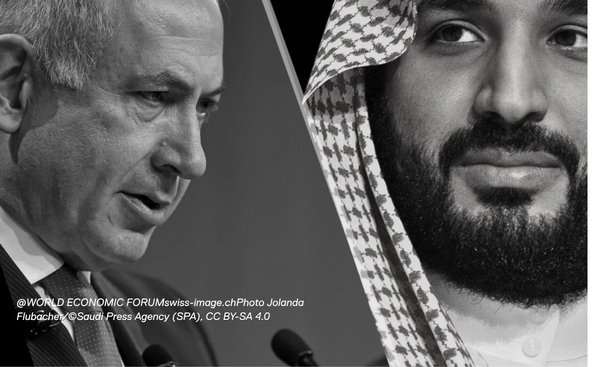
Growing geopolitical tensions in the Middle East are placing increased focus on the evolving relationship between Israel and Saudi Arabia, as regional dynamics shift within a rapidly changing global order.
Developments linked to ongoing conflicts and strategic competition have prompted both countries to reassess aspects of their regional positioning, even as underlying interests in stability and cooperation remain significant.
Israel continues to emphasise its role as a central pillar of regional security, maintaining a strong posture in response to emerging threats and reinforcing its commitment to safeguarding national and allied interests.
Saudi Arabia, meanwhile, has pursued a careful diplomatic approach, balancing security concerns with broader economic and strategic objectives.
The situation reflects a complex interplay of factors, including shifting alliances, economic considerations and the broader impact of global power competition.
Analysts note that while tensions may arise on specific issues, both countries retain overlapping priorities in areas such as economic development, regional stability and countering shared challenges.
Efforts to build closer ties between Israel and Saudi Arabia in recent years have underscored the potential for cooperation, particularly in sectors such as technology, investment and security.
However, the current environment highlights the challenges of sustaining momentum amid evolving geopolitical pressures.
The broader context points to a transformation in the international system, where regional powers are increasingly shaping outcomes through independent strategies while navigating complex relationships with global partners.
As developments unfold, the balance between competition and cooperation is likely to remain a defining feature of Middle Eastern geopolitics.
Developments linked to ongoing conflicts and strategic competition have prompted both countries to reassess aspects of their regional positioning, even as underlying interests in stability and cooperation remain significant.
Israel continues to emphasise its role as a central pillar of regional security, maintaining a strong posture in response to emerging threats and reinforcing its commitment to safeguarding national and allied interests.
Saudi Arabia, meanwhile, has pursued a careful diplomatic approach, balancing security concerns with broader economic and strategic objectives.
The situation reflects a complex interplay of factors, including shifting alliances, economic considerations and the broader impact of global power competition.
Analysts note that while tensions may arise on specific issues, both countries retain overlapping priorities in areas such as economic development, regional stability and countering shared challenges.
Efforts to build closer ties between Israel and Saudi Arabia in recent years have underscored the potential for cooperation, particularly in sectors such as technology, investment and security.
However, the current environment highlights the challenges of sustaining momentum amid evolving geopolitical pressures.
The broader context points to a transformation in the international system, where regional powers are increasingly shaping outcomes through independent strategies while navigating complex relationships with global partners.
As developments unfold, the balance between competition and cooperation is likely to remain a defining feature of Middle Eastern geopolitics.