Hajj Pilgrims Converge on Mina for Eid Rituals After Night in Muzdalifah
More than 1.7 million Muslims participate in symbolic stoning ritual marking Eid Al-Adha's start after overnight stay in holy site.
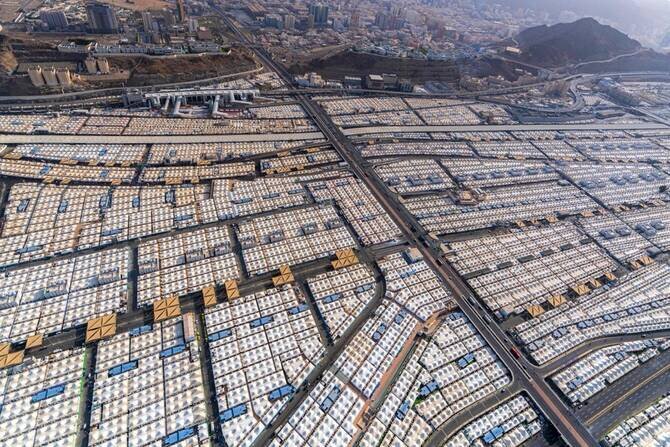
MINA, Saudi Arabia: More than 1.7 million Muslims converged on Mina before dawn on Wednesday to perform the symbolic stoning ritual marking the start of Eid Al-Adha, following an overnight stay in the holy site of Muzdalifah during one of the most logistically demanding stages of the annual Hajj pilgrimage.Pilgrims, arriving from Arafat, collected pebbles in Muzdalifah late Tuesday for the ritual of stoning Jamrat Al-Aqaba, the largest of the three pillars symbolizing Satan.
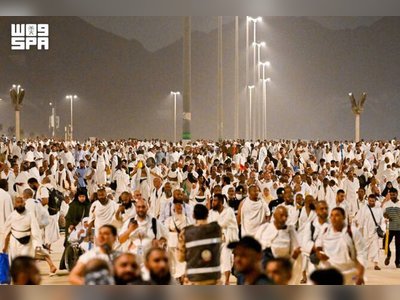
The overnight movement from Arafat to Muzdalifah was supported by extensive security, health, and transport operations as authorities managed one of the world’s largest annual human gatherings.Pilgrims traversed 25 kilometers of pedestrian corridors linking Arafat to Mina through Muzdalifah, described by Saudi officials as the world’s longest such network for recurring mass events.
Water misting stations were positioned along the route to mitigate desert temperatures as worshippers moved between sites.In Muzdalifah, pilgrims spent the night in prayer and Qur’an recitation before moving to Mina at dawn for the first stoning ritual of Hajj’s third day, known as Yawm Al-Nahr, or the Day of Sacrifice.
Saudi authorities maintained that crowd movement remained orderly amid coordinated efforts from security personnel, medical teams, and service workers managing transport, emergency response, sanitation, and field guidance.The third day of Hajj coincides with Eid Al-Adha’s first day, commemorating Prophet Ibrahim's willingness to sacrifice his son in obedience to God.
Following the initial stoning ritual, pilgrims typically carry out animal sacrifices and either shave or trim their hair, marking a transition from the sacred state of ihram.
Many then proceed to the Grand Mosque in Makkah for Tawaf Al-Ifadah — circling the Kaaba seven times — and Sa’i, the ritual walk between Safa and Marwa hills.Subsequently, pilgrims return to Mina for additional stoning rituals over the days of Tashreeq.
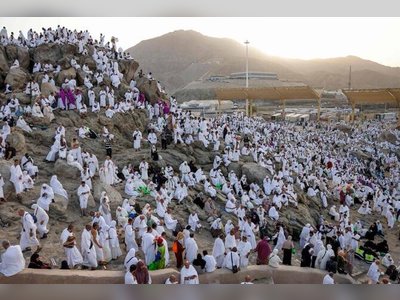
On Tuesday, worshippers congregated on the Plain of Arafat for Hajj’s spiritual peak, participating in prayers and listening to the annual Hajj sermon at Namirah Mosque before moving to Muzdalifah after sunset.
The site of Arafat, approximately 20 kilometers southeast of Makkah, holds profound significance in Islamic tradition, associated with Adam and Eve’s reunion, with Jabal Al-Rahmah (Mount of Mercy) dominating the landscape for extended hours of supplication and reflection.This year’s Hajj pilgrimage drew 1,707,301 pilgrims, up 2.04 percent from last year.
Of those, 1,546,655 arrived internationally, while 160,646 are domestic pilgrims or residents.
The increase in attendance was attributed to enhanced services, digitalized systems for the pilgrimage, and improved coordination among security, health, and logistics agencies.Saudi authorities expanded their Makkah Route Initiative, enabling pilgrims to complete immigration and customs procedures before departure from their countries of origin.
Nearly 389,000 pilgrims utilized this program, representing a nearly 24 percent increase from the previous year.Authorities deployed more than 441,000 personnel to support Hajj operations, managing crowd control, transportation networks, medical care, and emergency response as pilgrims move through the final major stages of their pilgrimage.
The overnight movement from Arafat to Muzdalifah was supported by extensive security, health, and transport operations as authorities managed one of the world’s largest annual human gatherings.Pilgrims traversed 25 kilometers of pedestrian corridors linking Arafat to Mina through Muzdalifah, described by Saudi officials as the world’s longest such network for recurring mass events.
Water misting stations were positioned along the route to mitigate desert temperatures as worshippers moved between sites.In Muzdalifah, pilgrims spent the night in prayer and Qur’an recitation before moving to Mina at dawn for the first stoning ritual of Hajj’s third day, known as Yawm Al-Nahr, or the Day of Sacrifice.
Saudi authorities maintained that crowd movement remained orderly amid coordinated efforts from security personnel, medical teams, and service workers managing transport, emergency response, sanitation, and field guidance.The third day of Hajj coincides with Eid Al-Adha’s first day, commemorating Prophet Ibrahim's willingness to sacrifice his son in obedience to God.
Following the initial stoning ritual, pilgrims typically carry out animal sacrifices and either shave or trim their hair, marking a transition from the sacred state of ihram.
Many then proceed to the Grand Mosque in Makkah for Tawaf Al-Ifadah — circling the Kaaba seven times — and Sa’i, the ritual walk between Safa and Marwa hills.Subsequently, pilgrims return to Mina for additional stoning rituals over the days of Tashreeq.
On Tuesday, worshippers congregated on the Plain of Arafat for Hajj’s spiritual peak, participating in prayers and listening to the annual Hajj sermon at Namirah Mosque before moving to Muzdalifah after sunset.
The site of Arafat, approximately 20 kilometers southeast of Makkah, holds profound significance in Islamic tradition, associated with Adam and Eve’s reunion, with Jabal Al-Rahmah (Mount of Mercy) dominating the landscape for extended hours of supplication and reflection.This year’s Hajj pilgrimage drew 1,707,301 pilgrims, up 2.04 percent from last year.
Of those, 1,546,655 arrived internationally, while 160,646 are domestic pilgrims or residents.
The increase in attendance was attributed to enhanced services, digitalized systems for the pilgrimage, and improved coordination among security, health, and logistics agencies.Saudi authorities expanded their Makkah Route Initiative, enabling pilgrims to complete immigration and customs procedures before departure from their countries of origin.
Nearly 389,000 pilgrims utilized this program, representing a nearly 24 percent increase from the previous year.Authorities deployed more than 441,000 personnel to support Hajj operations, managing crowd control, transportation networks, medical care, and emergency response as pilgrims move through the final major stages of their pilgrimage.