
Gulf Stock Markets Slide as Saudi–UAE Rift Over Yemen Undermines Investor Confidence
Major equity indexes in the Gulf decline after escalating tensions between Saudi Arabia and the United Arab Emirates over Yemen conflict dynamics
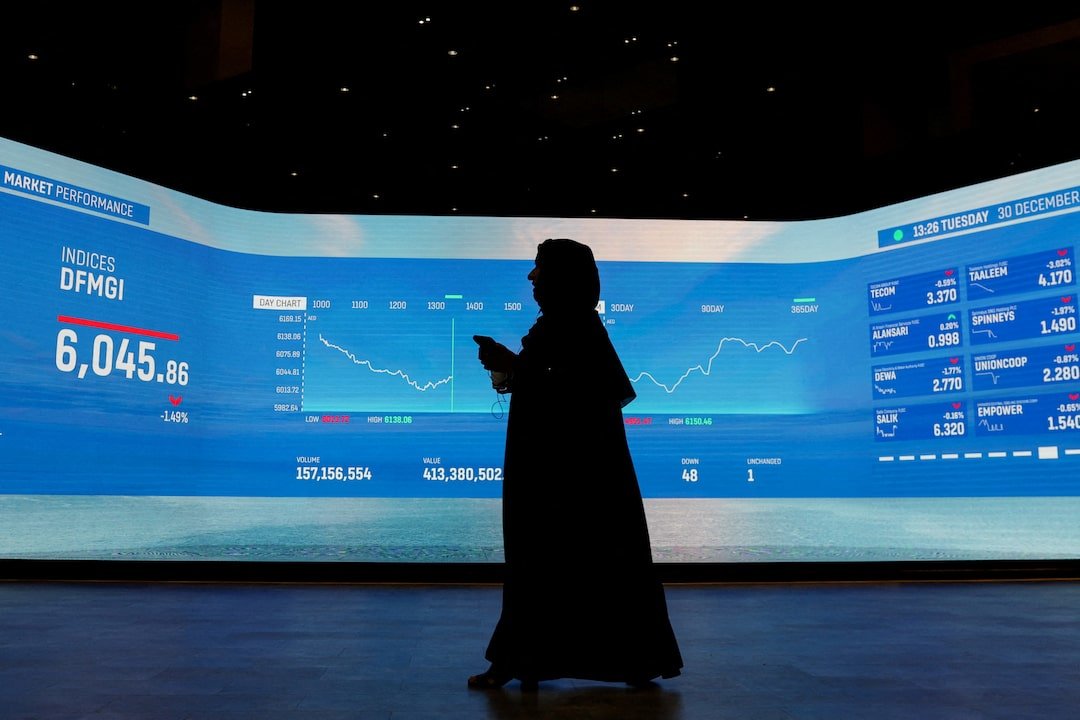
Most major Gulf stock markets retreated sharply as heightened geopolitical tensions between Saudi Arabia and the United Arab Emirates over the conflict in Yemen weighed on investor sentiment and trading activity.
The downturn, observed on Tuesday, was driven by fears that the widening rift between the two regional heavyweights could disrupt political and economic stability in the Gulf.
Dubai’s main share index fell around two percent, recording its largest daily drop since June, with notable declines in leading companies including property developer Emaar Properties and lender Emirates NBD.
Abu Dhabi’s market also saw losses, with its principal index sliding by nearly one percent, while Saudi Arabia’s benchmark Tadawul index eased by more than half a percent as major financial institutions and energy firms slipped lower.
The falls in share prices reflected investor concern about the broader implications of the Saudi–UAE dispute, which has recently intensified with diplomatic and military developments in Yemen.
Oil prices, typically a key influencer of Gulf equity performance, remained relatively stable amid unrelated global tensions, leaving geopolitical risk as the predominant market driver.
Other regional exchanges were similarly affected: Qatar’s index finished flat, while smaller markets such as Kuwait and Oman recorded declines.
In contrast, Bahrain’s index bucked the trend with a modest rise following domestic fiscal reform announcements.
The market retracement mirrors the deepening diplomatic strain between Saudi Arabia and the UAE over competing interests in Yemen’s civil conflict, where both states back rival factions.
The dispute has escalated to include military actions, political ultimatums and shifts in strategic posture, intensifying investor anxiety in a region traditionally viewed as relatively stable.
As Gulf financial centres absorb these developments, analysts say sustained political clarity will be critical to restoring market confidence and stabilising equity performance across the region.
The downturn, observed on Tuesday, was driven by fears that the widening rift between the two regional heavyweights could disrupt political and economic stability in the Gulf.
Dubai’s main share index fell around two percent, recording its largest daily drop since June, with notable declines in leading companies including property developer Emaar Properties and lender Emirates NBD.
Abu Dhabi’s market also saw losses, with its principal index sliding by nearly one percent, while Saudi Arabia’s benchmark Tadawul index eased by more than half a percent as major financial institutions and energy firms slipped lower.
The falls in share prices reflected investor concern about the broader implications of the Saudi–UAE dispute, which has recently intensified with diplomatic and military developments in Yemen.
Oil prices, typically a key influencer of Gulf equity performance, remained relatively stable amid unrelated global tensions, leaving geopolitical risk as the predominant market driver.
Other regional exchanges were similarly affected: Qatar’s index finished flat, while smaller markets such as Kuwait and Oman recorded declines.
In contrast, Bahrain’s index bucked the trend with a modest rise following domestic fiscal reform announcements.
The market retracement mirrors the deepening diplomatic strain between Saudi Arabia and the UAE over competing interests in Yemen’s civil conflict, where both states back rival factions.
The dispute has escalated to include military actions, political ultimatums and shifts in strategic posture, intensifying investor anxiety in a region traditionally viewed as relatively stable.
As Gulf financial centres absorb these developments, analysts say sustained political clarity will be critical to restoring market confidence and stabilising equity performance across the region.