Saudi Press

Saudi Arabia and the world
Wednesday, Dec 24, 2025

U.S. tightens restrictions on Huawei access to technology and chips

U.S. tightens restrictions on Huawei access to technology and chips

The Trump administration announced it will further tighten restrictions on China's Huawei Technologies, aimed at cracking down on its access to commercially available chips.


The Trump administration announced on Monday it will further tighten restrictions on Huawei Technologies, aimed at cracking down on the Chinese telecommunications giant access to commercially available chips.

The Commerce Department actions, first reported by Reuters, will expand restrictions announced in May aimed at preventing Huawei from obtaining semiconductors without a special license — including chips made by foreign firms that have been developed or produced with U.S. software or technology.

In a statement Monday, Secretary of State Mike Pompeo said the Commerce Department added 38 Huawei affiliates to the U.S. government’s economic blacklist. That raises the total to 152 affiliates since Huawei was first added in May 2019.

“The Trump Administration sees Huawei for what it is — an arm of the Chinese Communist Party’s (CCP’s) surveillance state — and we have taken action accordingly,” Pompeo said in the statement. “We will not tolerate efforts by the CCP to undermine the privacy of our citizens, our businesses’ intellectual property, or the integrity of next-generation networks worldwide.”

Commerce Secretary Wilbur Ross told Fox Business the restrictions on Huawei-designed chips imposed in May “led them to do some evasive measures. They were going through third parties,” Ross said. “The new rule makes it clear that any use of American software or American fabrication equipment is banned and requires a license.”

Pompeo said the rule change “will prevent Huawei from circumventing U.S. law through alternative chip production and provision of off-the-shelf chips.” He added: “Huawei has continuously tried to evade” U.S. restrictions.

“Expect much more of this president defending this country against China[’s] efforts to steal our wealth and prosperity,” White House trade advisor Peter Navarro said in an interview Monday on CNBC’s “Squawk Box.”
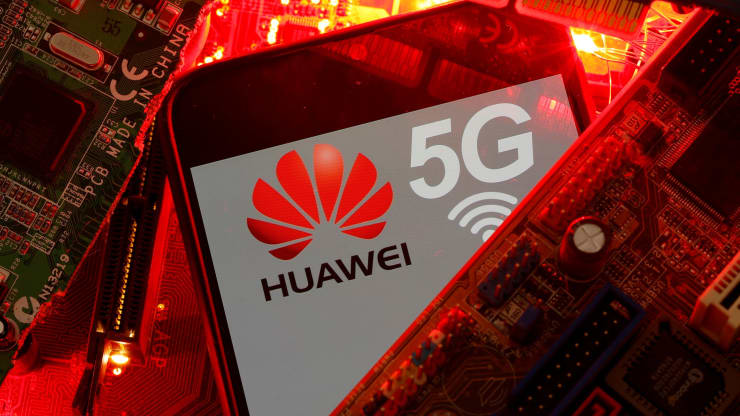

A smartphone with the Huawei and 5G network logo is seen on a PC motherboard in this illustration picture taken January 29, 2020.


Huawei did not immediately comment.

With U.S.-China relations at their worst in decades, Washington is pushing governments around to world to squeeze Huawei out, arguing it would hand over data to the Chinese government for spying. Huawei denies it spies for China.

The new actions, effective immediately, should prevent Huawei’s attempts to circumvent U.S. export controls, the Commerce Department said.

It “makes clear that we’re covering off-the-shelf designs that Huawei may be seeking to purchase from a third-party design house,” one Commerce official told Reuters.

A new rule requires companies on the economic blacklist to obtain a license when the company acts “as a purchaser, intermediate consignee, ultimate consignee, or end user.”

The department also confirmed it will not extend a temporary general license that expired Friday for users of Huawei devices and telecommunication providers. Parties must now submit license applications for transactions previously authorized.

The Commerce Department is adopting a limited permanent authorization for Huawei entities to allow “ongoing security research critical to maintaining the integrity and reliability of existing” networks and equipment.

Existing U.S. restrictions have already had a heavy impact on Huawei and its suppliers. The May restrictions do not fully go into effect until Sept. 14.

On Aug. 8, financial magazine Caixin reported Huawei will stop making its flagship Kirin chipsets next month due to U.S. pressure on suppliers.

Huawei’s HiSilicon division has relied on software from U.S. companies such as Cadence Design Systems and Synopsys to design its chips and outsourced the production to Taiwan Semiconductor Manufacturing Co., which uses equipment from U.S. companies.

TSMC has said it will not ship wafers to Huawei after Sept. 15.

Huawei CFO Meng Wanzhou was arrested in Vancouver, Canada, in 2018 and charged by U.S. officials with bank and wire fraud violating sanctions on Iran.

Newsletter

Related Articles

Saudi Press
0:00
0:00
Close
Saudi Arabia’s 2025: A Pivotal Year of Global Engagement and Domestic Transformation
Saudi Arabia to Introduce Sugar-Content Based Tax on Sweetened Drinks from January 2026
Saudi Hotels Prepare for New Hospitality Roles as Alcohol Curbs Ease
Global Airports Forum Highlights Saudi Arabia’s Emergence as a Leading Aviation Powerhouse
Saudi Arabia Weighs Strategic Choice on Iran Amid Regional Turbulence
Not Only F-35s: Saudi Arabia to Gain Access to the World’s Most Sensitive Technology
Saudi Arabia Condemns Sydney Bondi Beach Shooting and Expresses Solidarity with Australia
Washington Watches Beijing–Riyadh Rapprochement as Strategic Balance Shifts
Saudi Arabia Urges Stronger Partnerships and Efficient Aid Delivery at OCHA Donor Support Meeting in Geneva
Saudi Arabia’s Vision 2030 Drives Measurable Lift in Global Reputation and Influence
Alcohol Policies Vary Widely Across Muslim-Majority Countries, With Many Permitting Consumption Under Specific Rules
Saudi Arabia Clarifies No Formal Ban on Photography at Holy Mosques for Hajj 2026
Libya and Saudi Arabia Sign Strategic MoU to Boost Telecommunications Cooperation
Elon Musk’s xAI Announces Landmark 500-Megawatt AI Data Center in Saudi Arabia
Israel Moves to Safeguard Regional Stability as F-35 Sales Debate Intensifies
Cardi B to Make Historic Saudi Arabia Debut at Soundstorm 2025 Festival
U.S. Democratic Lawmakers Raise National Security and Influence Concerns Over Paramount’s Hostile Bid for Warner Bros. Discovery
Hackers Are Hiding Malware in Open-Source Tools and IDE Extensions
Traveling to USA? Homeland Security moving toward requiring foreign travelers to share social media history
Wall Street Analysts Clash With Riyadh Over Saudi Arabia’s Deficit Outlook
Trump and Saudi Crown Prince Cement $1 Trillion-Plus Deals in High-Profile White House Summit
Saudi Arabia Opens Alcohol Sales to Wealthy Non-Muslim Residents Under New Access Rules
U.S.–Saudi Rethink Deepens — Washington Moves Ahead Without Linking Riyadh to Israel Normalisation
Saudi Arabia and Israel Deprioritise Diplomacy: Normalisation No Longer a Middle-East Priority
Saudi Arabia Positions Itself as the Backbone of the Global AI Era
As Trump Deepens Ties with Saudi Arabia, Push for Israel Normalization Takes a Back Seat
Thai Food Village Debuts at Saudi Feast Food Festival 2025 Under Thai Commerce Minister Suphajee’s Lead
Saudi Arabia Sharpens Its Strategic Vision as Economic Transformation Enters New Phase
Saudi Arabia Projects $44 Billion Budget Shortfall in 2026 as Economy Rebalances
OPEC+ Unveils New Capacity-Based System to Anchor Future Oil Output Levels
Will Saudi Arabia End Up Bankrolling Israel’s Post-Ceasefire Order in Lebanon?
Saudi Arabia’s SAMAI Initiative Surpasses One-Million-Citizen Milestone in National AI Upskilling Drive
Saudi Arabia’s Specialty Coffee Market Set to Surge as Demand Soars and New Exhibition Drops in December
Saudi Arabia Moves to Open Two New Alcohol Stores for Foreigners Under Vision 2030 Reform
Saudi Arabia’s AI Ambitions Gain Momentum — but Water, Talent and Infrastructure Pose Major Hurdles
Tensions Surface in Trump-MBS Talks as Saudi Pushes Back on Israel Normalisation
Saudi Arabia Signals Major Maritime Crack-Down on Houthi Routes in Red Sea
Italy and Saudi Arabia Seal Over 20 Strategic Deals at Business Forum in Riyadh
COP30 Ends Without Fossil Fuel Phase-Out as US, Saudi Arabia and Russia Align in Obstruction Role
Saudi-Portuguese Economic Horizons Expand Through Strategic Business Council
DHL Commits $150 Million for Landmark Logistics Hub in Saudi Arabia
Saudi Aramco Weighs Disposals Amid $10 Billion-Plus Asset Sales Discussion
Trump Hosts Saudi Crown Prince for Major Defence and Investment Agreements
Families Accuse OpenAI of Enabling ‘AI-Driven Delusions’ After Multiple Suicides
Riyadh Metro Records Over One Hundred Million Journeys as Saudi Capital Accelerates Transit Era
Trump’s Grand Saudi Welcome Highlights U.S.–Riyadh Pivot as Israel Watches Warily
U.S. Set to Sell F-35 Jets to Saudi Arabia in Major Strategic Shift
Saudi Arabia Doubles Down on U.S. Partnership in Strategic Move
Saudi Arabia Charts Tech and Nuclear Leap Under Crown Prince’s U.S. Visit
Trump Elevates Saudi Arabia to Major Non-NATO Ally Amid Defense Deal
×