Saudi Press

Saudi Arabia and the world
Thursday, Aug 20, 2026

Scientists believe they have discovered where asteroid which wiped out dinosaurs came from

Scientists believe they have discovered where asteroid which wiped out dinosaurs came from

A "sungrazed" comet may be responsible for the extinction event around 66 million years ago.

Scientists think they may be a step closer to understanding where the asteroid or comet that wiped out the dinosaurs came from.

The Chicxulub impactor smashed into the earth off the eastern shore of what is now Mexico, leaving a crater 100 miles across and 12 miles deep.

It ended the reign of the dinosaurs - taking out three quarters of plant and animal life with them - about 66 million years ago.
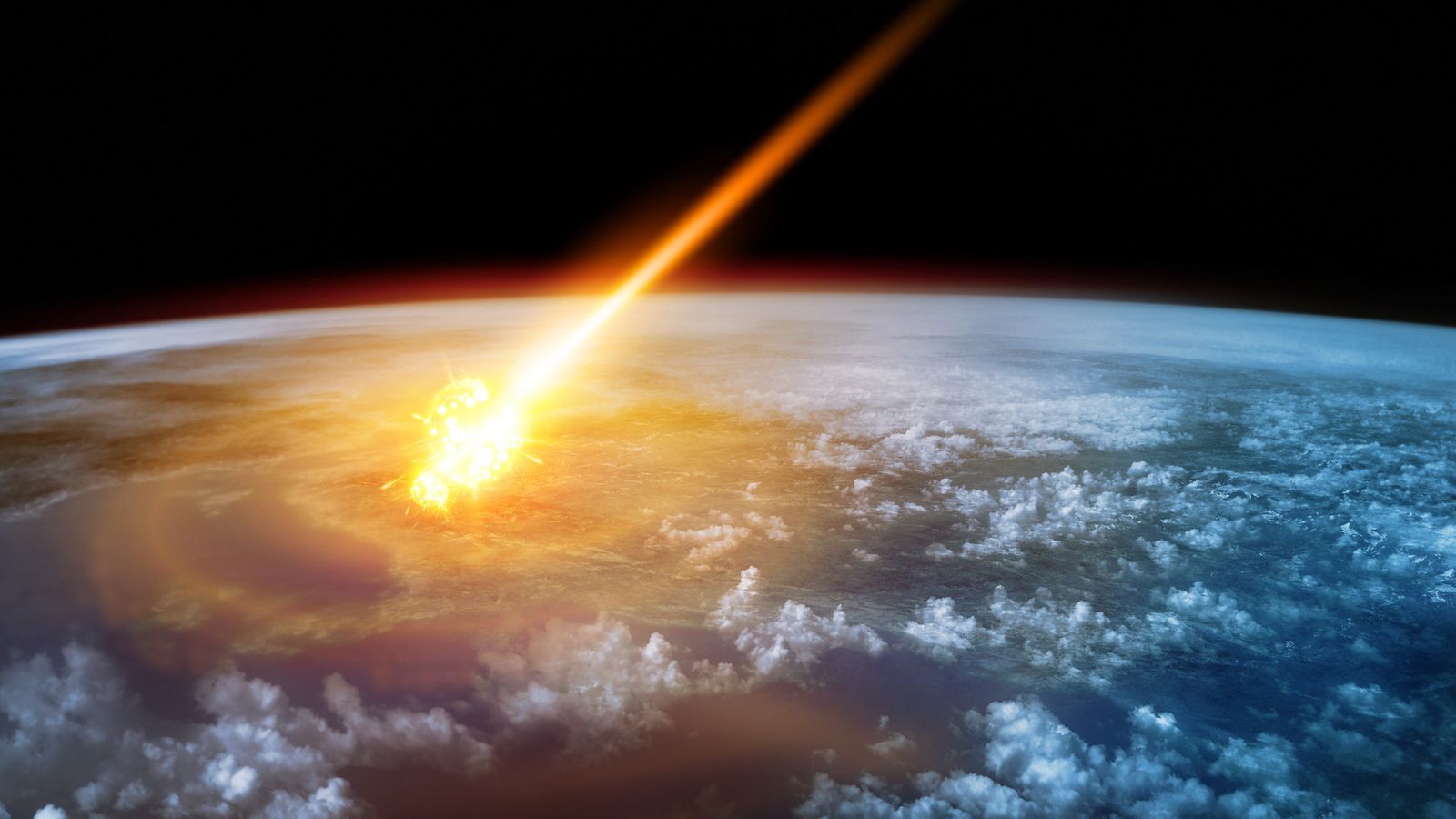
Three quarters of animal and plant life was taken out by the impact


Experts from Harvard University in the US believe they have figured out how such a large chunk of extra terrestrial rock ended up spelling death for the giant reptiles.

The gravity of the massive planet Jupiter draws comets from the icy outer edges of the solar system and hurtles them inwards, towards the sun.

As the comets slingshot around the sun, the gravitational power of the star breaks apart the cosmic missile.

The resulting shards fly across the solar system - increasing the chance of a collision with planets like Earth.

Undergraduate student Amir Siraj explained: "The solar system acts as a kind of pinball machine.

"Jupiter, the most massive planet, kicks incoming long-period comets into orbits that bring them very close to the sun."

Long-period comets take at least 200 years to orbit the sun, and come from a region of the solar system known as the Oort cloud.

The cloud is thought to exist between 2,000 and 100,000 astronomical units away from the sun - each astronomical unit is the average distance between the Earth and the sun, or about 93 million miles.

The shattering of the comets is known as "sungrazing".

Mr Siraj added: "In a sungrazing event, the portion of the comet closer to the sun feels a stronger gravitational pull than the part that is further, resulting in a tidal force across the object.

"You can get what's called a tidal disruption event, in which a large comet breaks up into many
smaller pieces.

"And crucially, on the journey back to the Oort cloud, there's an enhanced probability that one of these fragments hit the Earth."

Astronomer Avi Loeb said: "Our paper provides a basis for explaining the occurrence of this event.

"We are suggesting that, in fact, if you break up an object as it comes close to the sun, it could give rise to the appropriate event rate and also the kind of impact that killed the dinosaurs."
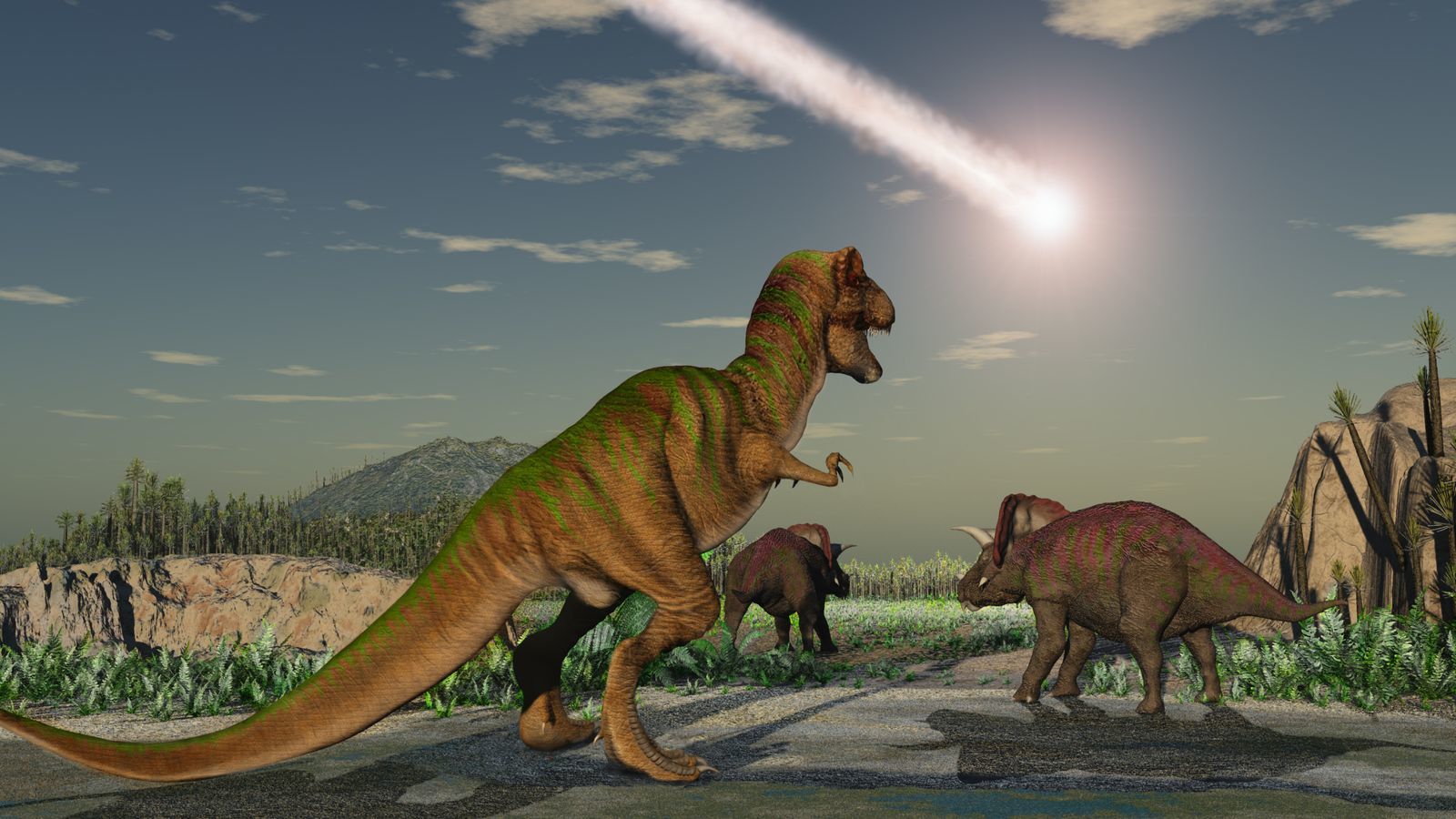
The comet struck around 66 million years ago


The paper, published in Nature's Scientific Reports, shows new calculations which increase the likelihood of a long-period comet striking the Earth by a factor of 10.

It also suggests that the carbonaceous chondrite material the dinosaur-killing comet was made of is more commonly found in the Oort cloud - something which the pair hope to study more.

Newsletter

Related Articles

Saudi Press
0:00
0:00
Close
Cristiano Ronaldo and Georgina Rodríguez Sign Prenup Protecting Their Separate Fortunes
Google Launches Pixel 11 With Gemini AI at the Center of Its Hardware Strategy
Turkish Parliament Passes Landmark Bill Granting Conditional Amnesty to Disarmed PKK Members
Jorge Messi, Lionel Messi’s Father and Longtime Agent, Dies at 68
AI’s Next Bottleneck Is Power, Not Just Nvidia Chips
Meta Raises AI Spending Target to as Much as $145bn Despite Pressure Over Returns
Joe Biden’s Cancer Has Spread Beyond His Bones, Hunter Biden Says
Why 2027 Could Be a Strong Year for Stocks—and Why the Forecast Is Fragile
Why Markets May Look Quiet in August After Big Tech Earnings
Trump’s Top General Seeks an Exit Strategy From Iran War, Report Says
Brock Lesnar Retires From Wrestling, Closing a Career of Rare Athletic Range and Lasting Controversy
UFO: Pentagon Releases Video of Unidentified Object Tracked Over Middle East
Ukraine Tells Senate Republicans Its Drone War Offers a Blueprint for America
Weight-Loss Drug Boom Tests the Limits of Prescription Advertising Rules
Saudi Arabia, Turkey and Pakistan Sign Mutual-Defence Pact
AI Is Remaking the US Economy, From GDP Growth to iPhone Prices
A SpaceX Rocket Is About to Crash Into the Moon — and Scientists Hope to Watch
Modern Slavery Decisions Broaden the Al Fayed Inquiry’s Frame
FIFA’s Retreat Leaves a Larger Question Over Who Guards the Game
Finland Deploys Commercial-Scale Thermal Batteries Using Crushed Rock to Store Renewable Grid Energy
Valued at $109 Million: F-35B Fighter Jet Crashes in Southern California
US Says It Has Carried Out Heavy Strikes on Iran After Attempted Attacks on Its Forces
Over 24 Hours in the Air: Qantas Airbus Completes Record-Breaking Test Flight
Arrest Warrant Issued in Lebanon for Tycoon Spotted Meeting Netanyahu in Washington
Trump says Israel ‘would not survive’ without US
Nvidia Reportedly Takes Vast Texas Data-Centre Lease to Underwrite AI Expansion
FIFA’s Private-Investment Plan for World Cup Rights Draws European Revolt
Following OpenAI's Cyberattack: 'Most Companies Still Do Not Understand What Is Coming'
OpenAI Sued After ChatGPT Allegedly Discouraged Emergency Care Before Near-Fatal Embolism
Miliband Sets Climate and International Law at Centre of UK Diplomacy
Pentagon Discloses Nearly 100 US Troop Injuries During Renewed Iran Fighting
Trump Readies New Tariffs as Temporary Global Levy Nears Expiry
High Prices Push Coffee Drinkers Toward Whole Beans and Home Brewing
Trump Draws Boos and Podium Scrutiny at Spain’s World Cup Triumph
Spain Defeats Argentina in Extra Time to Win Second World Cup
Turkey Explores S-400 Transfer to UAE in Bid to Rejoin F-35 Program
US Retaliates Against Iran After Two American Troops Killed in Jordan
Proposed U.S.-Saudi Nuclear Pact Could Permit Limited Uranium Enrichment Under International Safeguards
Why Kentucky Fried Chicken Became KFC—and Why the False Explanations Persist
Iran Claims It Destroyed Bahrain’s Main Artificial Intelligence Center in Missile and Drone Strike
Ukrainian Drones Strike Wildberries Warehouses Deep Inside Russia
Reported CIA Mission Helped Clear the UAE’s Path to Advanced US AI Chips
Artificial Intelligence Capital Fuels Markets While Governments and Regulators Face Mounting Strategic Tests
China’s Moonshot’s Kimi K3 Narrows the Gap With Anthropic Through Scale, Openness and Lower Cost
Gold and Cash Seizure Puts Indonesia’s Senior Anti-Corruption Prosecutor Under Investigation
The Ledger Will Not Trust on Faith
Passenger Bound for Germany Refused to Sit Beside a Woman on a Plane — Then Slapped a Flight Attendant
Ukraine’s Leadership Rift Spills Into the Streets as Protesters Target Army Chief
The Ten World Cup Finals That Defined Football History
Smartphones Are Getting More Expensive, Sales Are Collapsing, and Even Apple Admits: "Prices Will Rise"
×