Saudi Arabia’s Strategic Rebalancing: Navigating a New Power Game with the United States and China
Riyadh leverages deepening ties with both Washington and Beijing to secure security guarantees, economic partnerships and regional influence amid global competition
Saudi Arabia is recalibrating its foreign policy and strategic posture in a rapidly shifting global landscape, seeking to balance deepening ties with both the United States and China as it pursues broader national interests.
In recent weeks, high-level engagements with Beijing have underscored Riyadh’s willingness to cultivate closer economic and diplomatic cooperation with China, even as it consolidates security commitments with Washington under newly forged defense arrangements.
Chinese Foreign Minister Wang Yi’s visit to Riyadh this month resulted in agreements to strengthen coordination on regional and international issues and a mutual visa exemption for diplomatic and official passport holders, reflecting Beijing’s intent to deepen its footprint across the Middle East.
China has also pressed Gulf partners to conclude a long-running free trade agreement, highlighting the strategic and economic significance it places on greater integration with the region.
These developments occur against the backdrop of burgeoning economic ties between Riyadh and Beijing, rooted in energy trade, investments and alignment of Saudi Arabia’s Vision 2030 economic diversification agenda with Chinese initiatives.
At the same time, Riyadh has reaffirmed enduring strategic cooperation with the United States.
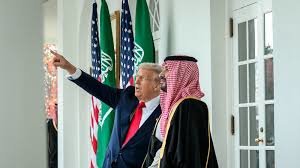
High-profile diplomatic exchanges with Washington have yielded a new strategic defense agreement and the kingdom’s designation as a major non-North Atlantic Treaty Organization ally, formalizing expanded security collaboration and access to advanced U.S. military equipment.
This strengthening of the U.S.-Saudi security relationship comes amid Washington’s efforts to reinforce its influence in the region as global geopolitical competition intensifies.
Saudi analysts describe Riyadh’s approach as a form of ‘strategic hedging’ that aims to maximize gains from both great-power partnerships without relinquishing autonomy.
By embracing economic cooperation with China on infrastructure, trade and investment while preserving deep security links with the United States, the kingdom seeks to advance its Vision 2030 priorities and enhance its regional leverage.
This balancing act reflects Riyadh’s broader ambition to solidify itself as a pivotal actor in global affairs, navigating multipolar competition by engaging both Washington and Beijing on terms that serve its strategic objectives.
In recent weeks, high-level engagements with Beijing have underscored Riyadh’s willingness to cultivate closer economic and diplomatic cooperation with China, even as it consolidates security commitments with Washington under newly forged defense arrangements.
Chinese Foreign Minister Wang Yi’s visit to Riyadh this month resulted in agreements to strengthen coordination on regional and international issues and a mutual visa exemption for diplomatic and official passport holders, reflecting Beijing’s intent to deepen its footprint across the Middle East.
China has also pressed Gulf partners to conclude a long-running free trade agreement, highlighting the strategic and economic significance it places on greater integration with the region.
These developments occur against the backdrop of burgeoning economic ties between Riyadh and Beijing, rooted in energy trade, investments and alignment of Saudi Arabia’s Vision 2030 economic diversification agenda with Chinese initiatives.
At the same time, Riyadh has reaffirmed enduring strategic cooperation with the United States.
High-profile diplomatic exchanges with Washington have yielded a new strategic defense agreement and the kingdom’s designation as a major non-North Atlantic Treaty Organization ally, formalizing expanded security collaboration and access to advanced U.S. military equipment.
This strengthening of the U.S.-Saudi security relationship comes amid Washington’s efforts to reinforce its influence in the region as global geopolitical competition intensifies.
Saudi analysts describe Riyadh’s approach as a form of ‘strategic hedging’ that aims to maximize gains from both great-power partnerships without relinquishing autonomy.
By embracing economic cooperation with China on infrastructure, trade and investment while preserving deep security links with the United States, the kingdom seeks to advance its Vision 2030 priorities and enhance its regional leverage.
This balancing act reflects Riyadh’s broader ambition to solidify itself as a pivotal actor in global affairs, navigating multipolar competition by engaging both Washington and Beijing on terms that serve its strategic objectives.