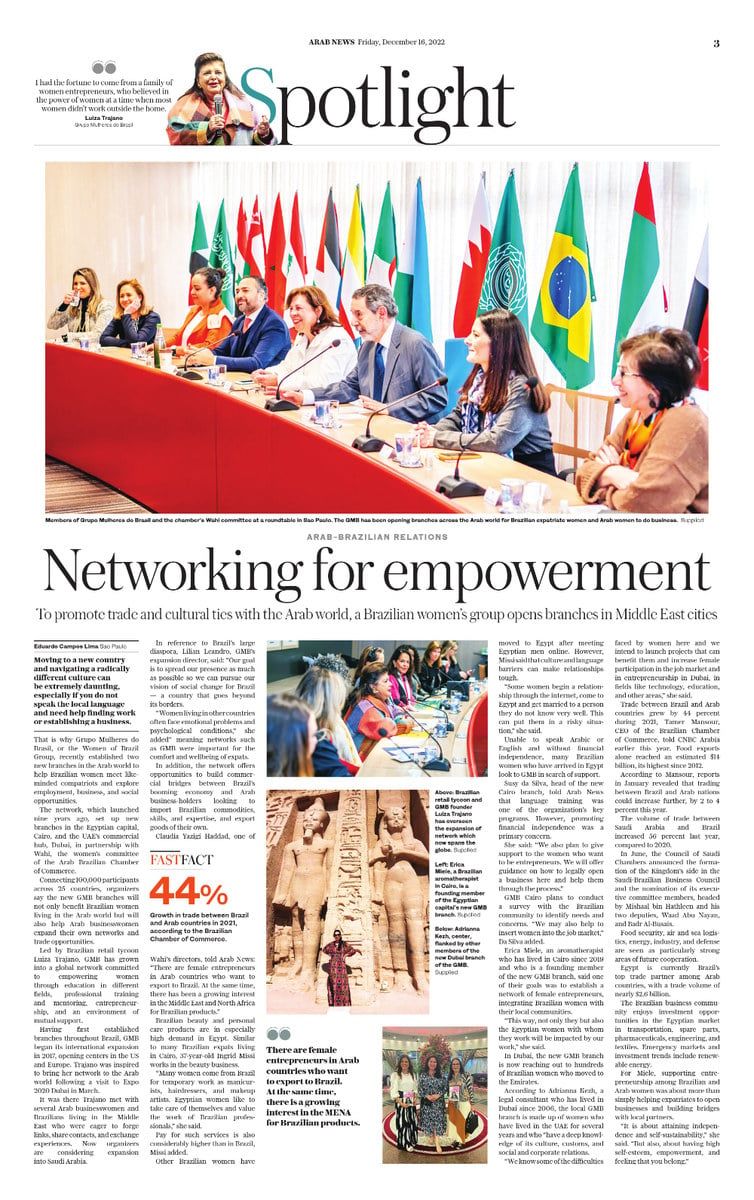
How a women’s network is building commercial bridges between Brazil and the Arab world
That is why Grupo Mulheres do Brasil, or the Women of Brazil Group, recently established two new branches in the Arab world to help Brazilian women meet like-minded compatriots and explore employment, business and social opportunities.
The network, which launched nine years ago, set up new branches in the Egyptian capital, Cairo, and the UAE’s commercial hub, Dubai, in partnership with Wahi, the women’s committee of the Arab Brazilian Chamber of Commerce.
Connecting 100,000 participants across 25 countries, organizers say the new GMB branches will not only benefit Brazilian women living in the Arab world but will also help Arab businesswomen expand their own networks and trade opportunities.
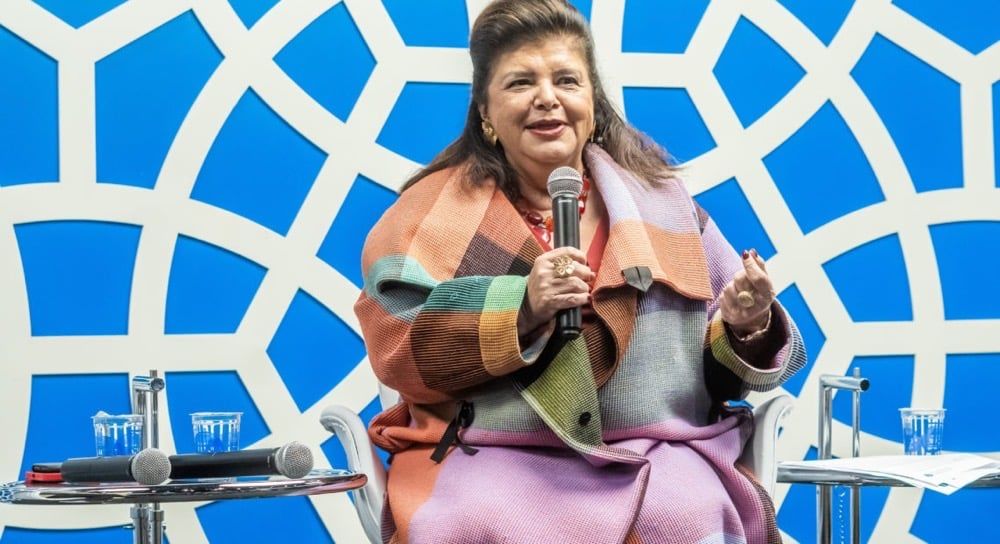 GMB is headed by Luiza Trajano.
 Having first established branches throughout Brazil, GMB began its international expansion in 2017, opening centers in the US and Europe. Trajano was inspired to bring her network to the Arab world following a visit to Expo 2020 Dubai in March.
It was there Trajano met with several Arab businesswomen and Brazilians living in the Middle East who were eager to forge links, share contacts, and exchange experiences. Now organizers are considering expansion into Saudi Arabia.
In reference to Brazil’s large diaspora, Lilian Leandro, GMB’s expansion director, said: “Our goal is to spread our presence as much as possible so we can pursue our vision of social change for Brazil — a country that goes beyond its borders.
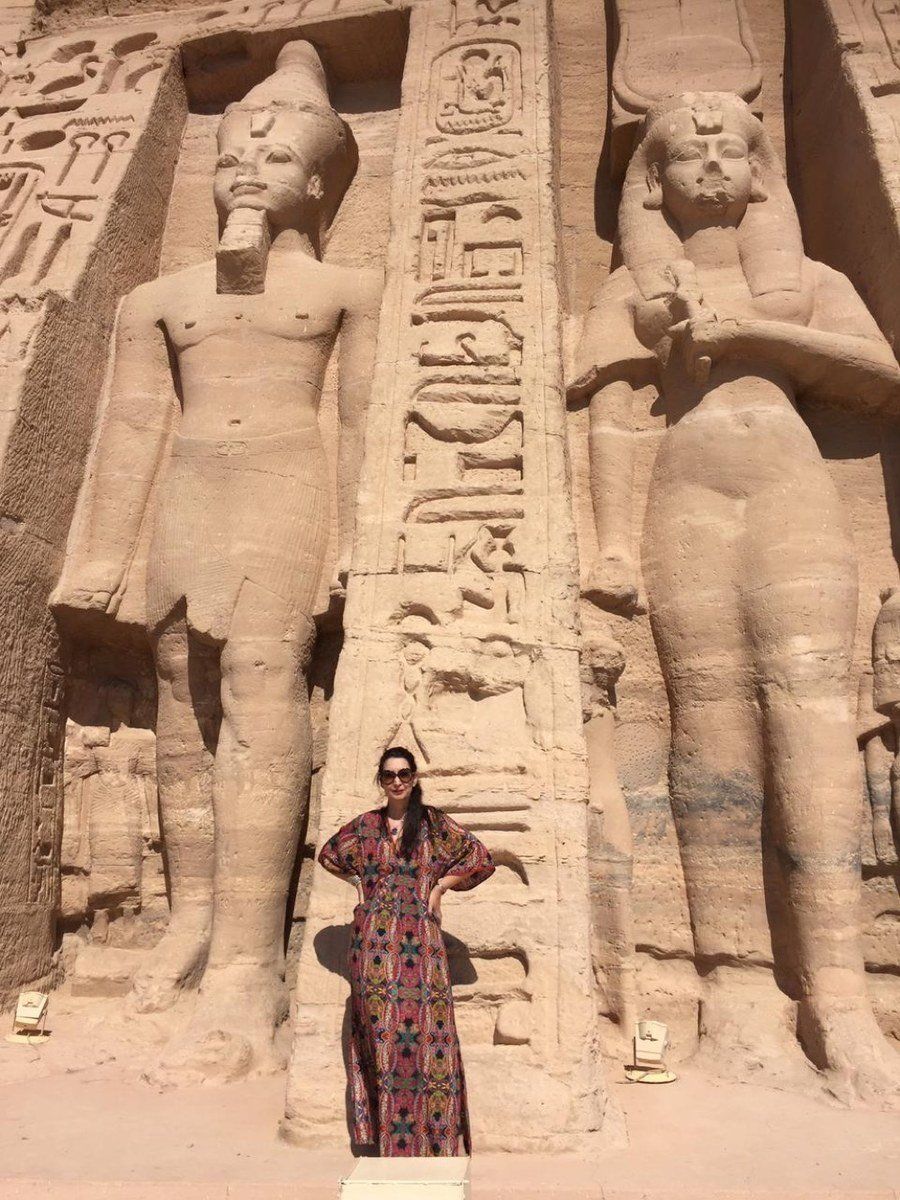 Erica Miele, a Brazilian aromatherapist in Cairo, is a founding member of the Egyptian capital’s new GMB branch.
“Women living in other countries often face emotional problems and psychological conditions.” This meant networks such as GMB were important for the comfort and wellbeing of expat communities, she added.
In addition, the network offers opportunities to build commercial bridges between Brazil’s booming economy and Arab business-holders looking to import Brazilian commodities, skills, and expertise, and export goods of their own.
Claudia Yazigi Haddad, one of Wahi’s directors, told Arab News: “There are female entrepreneurs in Arab countries who want to export to Brazil. At the same time, there has been a growing interest in the Middle East and North Africa for Brazilian products.”
Brazilian beauty and personal care products are in especially high demand in Egypt. Similar to many Brazilian expats living in Cairo, 37-year-old Ingrid Missi works in the beauty business.
“Many women come from Brazil for temporary work as manicurists, hairdressers, and makeup artists. Egyptian women like to take care of themselves and value the work of Brazilian professionals,” she said.
Pay for such services is also considerably higher than in Brazil, Missi added.
Other Brazilian women have moved to Egypt after meeting Egyptian men online. However, Missi pointed out that differing cultures and the language barrier could often make relationships difficult.
“Some women begin a relationship through the internet, come to Egypt and get married to a person they do not know very well. This can put them in a risky situation,” she said.
Unable to speak Arabic or English and without financial independence, many Brazilian women who have arrived in Egypt look to the GMB network in search of support.
Susy da Silva, head of the new Cairo branch, told Arab News that language training was one of the organization’s key programs. However, promoting financial independence was a primary concern.
She said: “We also plan to give support to the women who want to be entrepreneurs. We will offer guidance on how to legally open a business here and help them through the process.”
GMB Cairo plans to conduct a survey with the Brazilian community to identify needs and concerns. “We may also help to insert women into the job market,” Da Silva added.
Erica Miele, an aromatherapist who has lived in Cairo since 2019 and who is a founding member of the new GMB branch, said one of their goals was to establish a network of female entrepreneurs, integrating Brazilian women with their local communities.
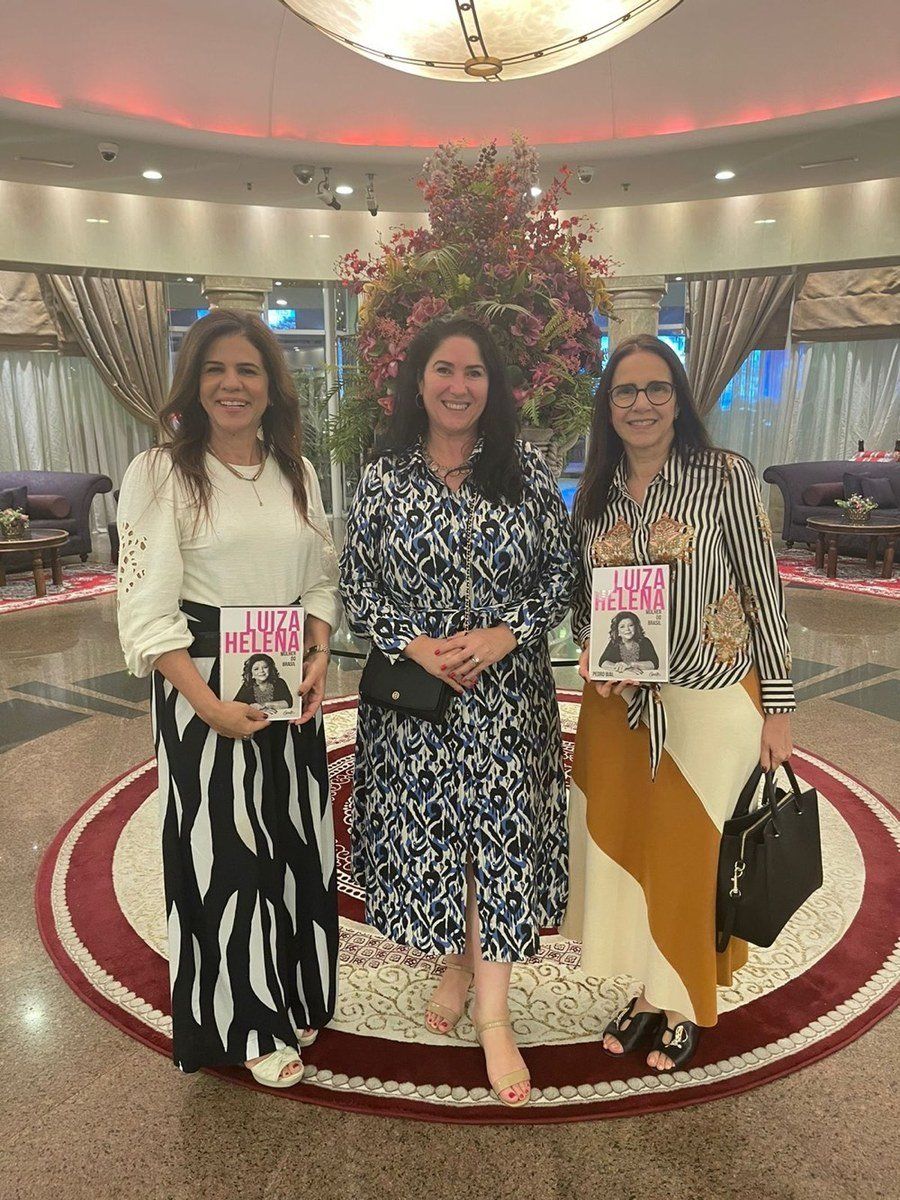 Adrianna Kezh, center, flanked by other members of the new Dubai branch of the GMB.
“This way, not only they but also the Egyptian women with whom they work will be impacted by our work,” she said.
In Dubai, the new GMB branch is now reaching out to hundreds of Brazilian women who moved to the UAE to work or to accompany their husbands.
According to Adrianna Kezh, a legal consultant who has lived in Dubai since 2006, the local GMB branch is made up of women who have lived in the UAE for several years and who “have a deep knowledge of its culture, customs, and social and corporate relations.”
“We know some of the difficulties faced by women here and we intend to launch projects that can benefit them and increase female participation in the job market and in entrepreneurship in Dubai, in fields like technology, education, and other areas,” she said.
Trade between Brazil and Arab countries grew by 44 percent during 2021, Tamer Mansour, chief executive officer of the Brazilian Chamber of Commerce, told CNBC Arabia earlier this year. The volume of food exports alone reached an estimated $14 billion, its highest since 2012.
According to Mansour, reports in January revealed that trading between Brazil and Arab nations could increase further, by 2 to 4 percent this year.
The volume of trade between Saudi Arabia and Brazil increased 56 percent last year, compared to 2020.
In June, the Council of Saudi Chambers announced the formation of the Kingdom’s side in the Saudi-Brazilian Business Council and the nomination of its executive committee members, headed by Mishaal bin Hathleen and his two deputies, Waad Abu Nayan, and Badr Al-Busais.
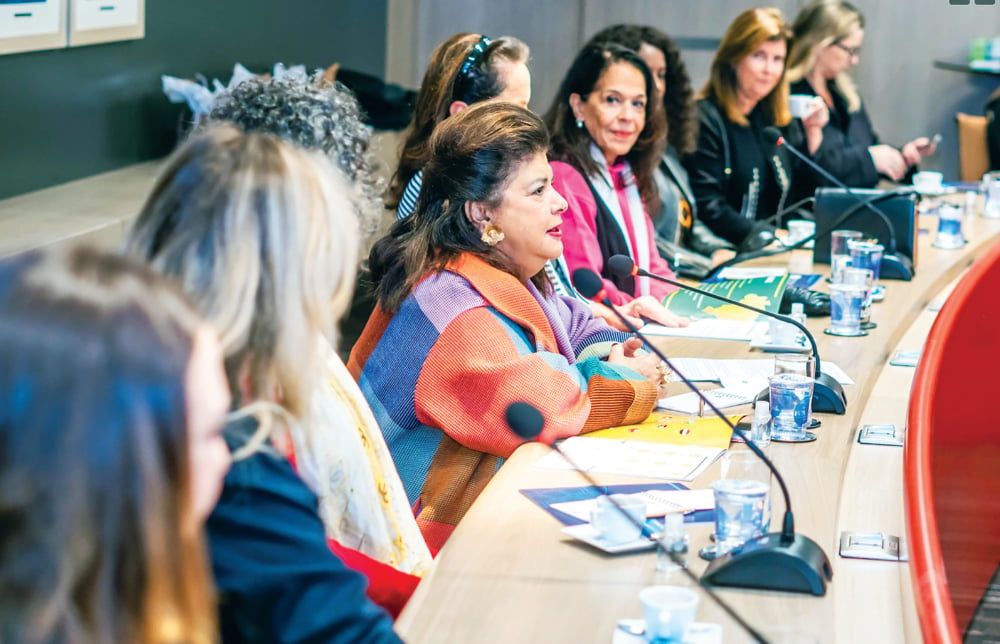 Brazilian retail tycoon and GMB founder Luiza Trajano has overseen the expansion of network which now spans the globe.
Food security, air and sea logistics, energy, industry, and defense are seen as particularly strong areas of future cooperation.
Egypt is currently Brazil’s top trade partner among Arab countries, with a trade volume of nearly $2.6 billion.
The Brazilian business community enjoys investment opportunities in the Egyptian market in transportation, spare parts, pharmaceuticals, engineering, and textiles. Emergency markets and investment trends include renewable energy.
For Miele, supporting entrepreneurship among Brazilian and Arab women was about more than simply helping expatriates to open businesses and building bridges with local partners.
“It is about attaining independence and self-sustainability,” she said. “But also, about having high self-esteem, empowerment, and feeling that you belong.”