Saudi Press

Saudi Arabia and the world
Thursday, Dec 04, 2025

Ex-Diplomat Reveals How Trump Administration Managed to Persuade EU States to Ditch Huawei's 5G

Ex-Diplomat Reveals How Trump Administration Managed to Persuade EU States to Ditch Huawei's 5G

Despite the initial backlash over Washington's pressure on European allies to abandon the 5G equipment manufactured by the Chinese tech giant, many European states eventually adopted laws or issued orders that either limited its use or banned it outright.

When the Trump administration started its crackdown against Chinese telecommunication giant Huawei, one of its main foreign policy lanes focused on persuading allies and other countries that the equipment poses a national cybersecurity threat and that they must ditch it when building 5G networks, necessary for the next generation of high-tech equipment, from smart houses and self-driving cars to surgical procedures being conducted by a robot being guided by a doctor thousands of miles away.

Washington's original push was focused on putting pressure on allies, threatening to remove them from intelligence-sharing programmes such as the Five Eyes Community, if they did not ditch Huawei whose prices were competitive and which was one of the leading businesses in its field.
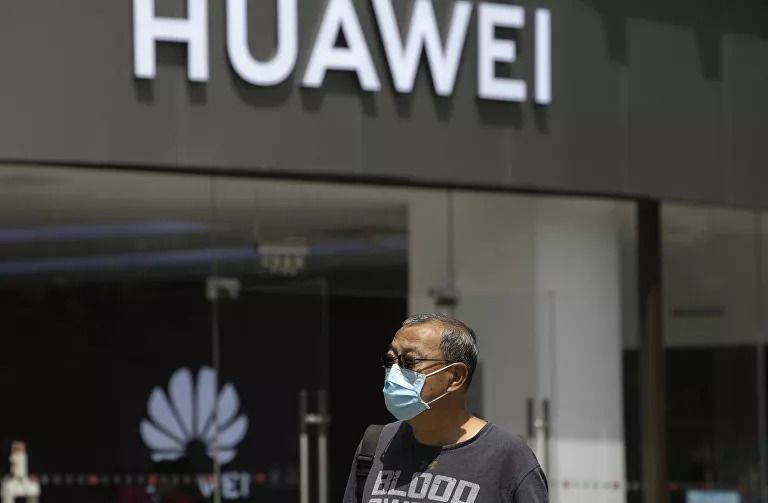
In this May 18, 2020, file photo, a man wearing a face mask to protect against the coronavirus walks past a Huawei retail store in Beijing


This US approach, however, sparked a significant backlash; although some countries, such as South Korea, immediately acquiesced to Washington's demands, others, such as Germany, France and the UK, initially dug their heels in. The US was losing the fight as Huawei announced 91 deals - half of them in Europe - by the time Trump's administration initiated the crackdown on the Chinese company's 5G market expansion in March 2019.

The European states continued to resist US pressure, even when their own security agencies expressed concern over the share Huawei's equipment would have in the 5G networks, and it was apparent that Washington's rambunctiousness was not working, as Keith Krach, the former US undersecretary of state who led America's anti-Huawei policy, revealed in his interview with Politico.

"The approach had been to pound the table and tell people, 'Don't buy Huawei!' It was a confrontational style," Krach explained.

However, according to the former diplomat, the US softened its approach at some point, starting to treat foreign partners as "customers", making them and their local carriers "a value proposition". Krach explained that the work with the local service providers allowed Washington to skip the government level in talks, convincing carriers to avoid the Huawei equipment instead.

"After a while, we could see it was creating a critical mass, a tipping point," Krach said.

Eventually, one by one, the European countries started to be won over by the US's persuasion – first in eastern Europe and then reaching earlier strong opponents of the move – the UK and France, the former undersecretary said. Eventually, a similar initiative was launched at Brussels level. The scale of anti-Huawei action differed from country to country – some banned the tech giant's equipment outright whereas others severely limited its use.

Now, with the arrival of Joe Biden's new administration, the situation is unlikely to change – the White House already announced it is planning to confront China on a number of issues. Biden's nominee for commerce secretary, Gina Raimondo, has already said that the new administration will not change the US's stance on Huawei's participation in the global 5G network rollout, which had been set up by Trump's team. This means that Washington will continue to accuse the tech giant of planting backdoors in its equipment to allow Beijing to spy on Huawei's clients, and try to convince other countries of it. Huawei and the Chinese authorities, in turn, will apparently continue to fight the US allegations, which they say are unsubstantiated and false.

Newsletter

Related Articles

Saudi Press
0:00
0:00
Close
As Trump Deepens Ties with Saudi Arabia, Push for Israel Normalization Takes a Back Seat
Thai Food Village Debuts at Saudi Feast Food Festival 2025 Under Thai Commerce Minister Suphajee’s Lead
Saudi Arabia Sharpens Its Strategic Vision as Economic Transformation Enters New Phase
Saudi Arabia Projects $44 Billion Budget Shortfall in 2026 as Economy Rebalances
OPEC+ Unveils New Capacity-Based System to Anchor Future Oil Output Levels
Will Saudi Arabia End Up Bankrolling Israel’s Post-Ceasefire Order in Lebanon?
Saudi Arabia’s SAMAI Initiative Surpasses One-Million-Citizen Milestone in National AI Upskilling Drive
Saudi Arabia’s Specialty Coffee Market Set to Surge as Demand Soars and New Exhibition Drops in December
Saudi Arabia Moves to Open Two New Alcohol Stores for Foreigners Under Vision 2030 Reform
Saudi Arabia’s AI Ambitions Gain Momentum — but Water, Talent and Infrastructure Pose Major Hurdles
Tensions Surface in Trump-MBS Talks as Saudi Pushes Back on Israel Normalisation
Saudi Arabia Signals Major Maritime Crack-Down on Houthi Routes in Red Sea
Italy and Saudi Arabia Seal Over 20 Strategic Deals at Business Forum in Riyadh
COP30 Ends Without Fossil Fuel Phase-Out as US, Saudi Arabia and Russia Align in Obstruction Role
Saudi-Portuguese Economic Horizons Expand Through Strategic Business Council
DHL Commits $150 Million for Landmark Logistics Hub in Saudi Arabia
Saudi Aramco Weighs Disposals Amid $10 Billion-Plus Asset Sales Discussion
Trump Hosts Saudi Crown Prince for Major Defence and Investment Agreements
Families Accuse OpenAI of Enabling ‘AI-Driven Delusions’ After Multiple Suicides
Riyadh Metro Records Over One Hundred Million Journeys as Saudi Capital Accelerates Transit Era
Trump’s Grand Saudi Welcome Highlights U.S.–Riyadh Pivot as Israel Watches Warily
U.S. Set to Sell F-35 Jets to Saudi Arabia in Major Strategic Shift
Saudi Arabia Doubles Down on U.S. Partnership in Strategic Move
Saudi Arabia Charts Tech and Nuclear Leap Under Crown Prince’s U.S. Visit
Trump Elevates Saudi Arabia to Major Non-NATO Ally Amid Defense Deal
Trump Elevates Saudi Arabia to Major Non-NATO Ally as MBS Visit Yields Deepened Ties
Iran Appeals to Saudi Arabia to Mediate Restart of U.S. Nuclear Talks
Musk, Barra and Ford Join Trump in Lavish White House Dinner for Saudi Crown Prince
Lawmaker Seeks Declassification of ‘Shocking’ 2019 Call Between Trump and Saudi Crown Prince
US and Saudi Arabia Forge Strategic Defence Pact Featuring F-35 Sale and $1 Trillion Investment Pledge
Saudi Sovereign Wealth Fund Emerges as Key Contender in Warner Bros. Discovery Sale
Trump Secures Sweeping U.S.–Saudi Agreements on Jets, Technology and Massive Investment
Detroit CEOs Join White House Dinner as U.S.–Saudi Auto Deal Accelerates
Netanyahu Secures U.S. Assurance That Israel’s Qualitative Military Edge Will Remain Despite Saudi F-35 Deal
Ronaldo Joins Trump and Saudi Crown Prince’s Gala Amid U.S.–Gulf Tech and Investment Surge
U.S.–Saudi Investment Forum Sees U.S. Corporate Titans and Saudi Royalty Forge Billion-Dollar Ties
Elon Musk’s xAI to Deploy 500-Megawatt Saudi Data Centre with State-backed Partner HUMAIN
U.S. Clears Export of Advanced AI Chips to Saudi Arabia and UAE Amid Strategic Tech Partnership
xAI Selects Saudi Data-Centre as First Customer of Nvidia-Backed Humain Project
A Decade of Innovation Stagnation at Apple: The Cook Era Critique
President Trump Hosts Saudi Crown Prince Mohammed bin Salman in Washington Amid Strategic Deal Talks
Saudi Crown Prince to Press Trump for Direct U.S. Role in Ending Sudan War
Trump Hosts Saudi Crown Prince: Five Key Takeaways from the White House Meeting
Trump Firmly Defends Saudi Crown Prince Over Khashoggi Murder Amid Washington Visit
Trump Backs Saudi Crown Prince Over Khashoggi Killing Amid White House Visit
Trump Publicly Defends Saudi Crown Prince Over Khashoggi Killing During Washington Visit
President Donald Trump Hosts Saudi Crown Prince Mohammed bin Salman at White House to Seal Major Defence and Investment Deals
Saudi Arabia’s Solar Surge Signals Unlikely Shift in Global Oil Powerhouse
Saudi Crown Prince Receives Letter from Iranian President Ahead of U.S. Visit
Saudi Arabia’s Crown Prince Begins Washington Visit to Cement Long-Term U.S. Alliance
×