Dick Cheney, One of the Most Powerful Vice Presidents in US History, Dies at 84
Cheney served father and son presidents, leading the armed forces as defense chief during the Arabian Gulf War under President George H.W. Bush before returning to public life as vice president under George W. Bush.
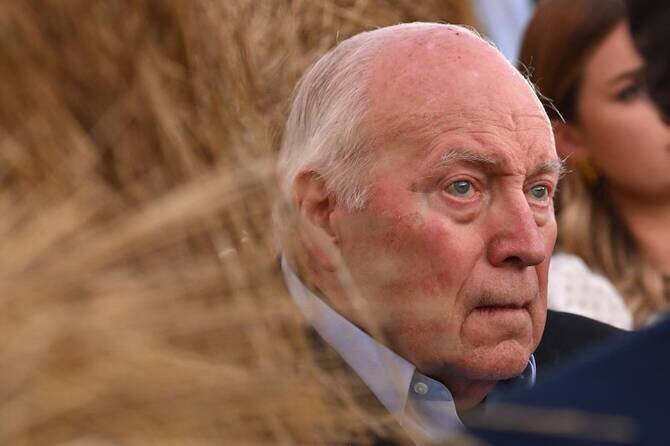
Dick Cheney, the hard-charging conservative who became one of the most powerful and polarizing vice presidents in US history and a leading advocate for the invasion of Iraq, has died at age 84.
Cheney served father and son presidents, leading the armed forces as defense chief during the Arabian Gulf War under President George H.W. Bush before returning to public life as vice president under Bush's son, George W.
Bush.
Cheney was, in effect, the chief operating officer of the younger Bush's presidency.
He had a hand, often a commanding one, in implementing decisions most important to the president and some of surpassing interest to himself - all while living with decades of heart disease and, post-administration, a heart transplant.
Cheney consistently defended the extraordinary tools of surveillance, detention, and inquisition employed in response to the terrorist attacks of Sept. 11, 2001.
Years after leaving office, he became a target of President Donald Trump, especially after daughter Liz Cheney became the leading Republican critic and examiner of Trump's desperate attempts to stay in power after his election defeat and his actions in the Jan. 6, 2021, riot at the Capitol.
In a twist the Democrats of his era could never have imagined, Dick Cheney said last year he was voting for their candidate, Kamala Harris, for president against Trump.
A survivor of five heart attacks, Cheney long thought he was living on borrowed time and declared in 2013 that he woke up each morning 'with a smile on my face, thankful for the gift of another day,' an odd image for a figure who always seemed to be manning the ramparts.
His vice presidency defined by the age of terrorism, Cheney disclosed that he had had the wireless function of his defibrillator turned off years earlier out of fear terrorists would remotely send his heart a fatal shock.
In his time in office, no longer was the vice presidency merely a ceremonial afterthought.
Instead, Cheney made it a network of back channels from which to influence policy on Iraq, terrorism, presidential powers, energy, and other cornerstones of a conservative agenda.
Fixed with a seemingly permanent half-smile - detractors called it a smirk - Cheney joked about his outsize reputation as a stealthy manipulator.
'Am I the evil genius in the corner that nobody ever sees come out of his hole?' he asked.
'It's a nice way to operate, actually.'
A hard-liner on Iraq who was increasingly isolated as other hawks left government, Cheney was proved wrong on point after point in the Iraq War, without ever losing the conviction that he was essentially right.
He alleged links between the 2001 attacks against the United States and prewar Iraq that didn't exist.
He said US troops would be welcomed as liberators; they weren't.
He declared the Iraqi insurgency in its last throes in May 2005, back when 1,661 US service members had been killed, not even half the toll by war's end.
For admirers, he kept the faith in a shaky time, resolute even as the nation turned against the war and the leaders waging it.
But well into Bush's second term, Cheney's clout waned, checked by courts or shifting political realities.
Courts ruled against efforts he championed to broaden presidential authority and accord special harsh treatment to suspected terrorists.
His hawkish positions on Iran and North Korea were not fully embraced by Bush.
Cheney operated much of the time from undisclosed locations in the months after the 2001 attacks, kept apart from Bush to ensure one or the other would survive any follow-up assault on the country's leadership.
With Bush out of town on that fateful day, Cheney was a steady presence in the White House, at least until Secret Service agents lifted him off his feet and carried him away, in a scene the vice president later described to comical effect.
From the beginning, Cheney and Bush struck an odd bargain, unspoken but well understood.
Shelving any ambitions he might have had to succeed Bush, Cheney was accorded power comparable in some ways to the presidency itself.
That bargain largely held up.
'He is constituted in a way to be the ultimate No. 2 guy,' Dave Gribbin, a friend who grew up with Cheney in Casper, Wyoming, and worked with him in Washington, once said.
'He is congenitally discreet.
He is remarkably loyal.'
As Cheney put it: 'I made the decision when I signed on with the president that the only agenda I would have would be his agenda, that I was not going to be like most vice presidents - and that was angling, trying to figure out how I was going to be elected president when his term was over with.'
His penchant for secrecy and backstage maneuvering had a price.
He came to be seen as a thin-skinned Machiavelli orchestrating a bungled response to criticism of the Iraq war.
And when he shot a hunting companion in the torso, neck, and face with an errant shotgun blast in 2006, he and his coterie were slow to disclose that extraordinary turn of events.
The vice president called it 'one of the worst days of my life.' The victim, his friend Harry Whittington, recovered and quickly forgave him.
Comedians were relentless about it for months.
Whittington died in 2023.
When Bush began his presidential quest, he sought help from Cheney, a Washington insider who had retreated to the oil business.
Cheney led the team to find a vice-presidential candidate.
Bush decided the best choice was the man picked to help with the choosing.
Together, the pair faced a protracted 2000 postelection battle before they could claim victory.
A series of recounts and court challenges - a tempest that brewed from Florida to the nation's highest court - left the nation in limbo for weeks.
Cheney took charge of the presidential transition before victory was clear and helped give the administration a smooth launch despite the lost time.
In office, disputes among departments vying for a bigger piece of Bush's constrained budget came to his desk and often were settled there.
On Capitol Hill, Cheney lobbied for the president's programs in halls he had walked as a deeply conservative member of Congress and the No. 2 Republican House leader.
Jokes abounded about how Cheney was the real No. 1 in town; Bush didn't seem to mind and cracked a few himself.
But such comments became less apt later in Bush's presidency as he clearly came into his own.
Cheney retired to Jackson Hole, not far from where Liz Cheney a few years later bought a home, establishing Wyoming residency before she won his old House seat in 2016.
The fates of father and daughter grew closer, too, as the Cheney family became one of Trump's favorite targets.
Dick Cheney rallied to his daughter's defense in 2022 as she juggled her lead role on the committee investigating Jan. 6 with trying to get reelected in deeply conservative Wyoming.
Liz Cheney's vote for Trump's impeachment after the insurrection earned her praise from many Democrats and political observers outside Congress.
But that praise and her father's support didn't keep her from losing badly in the Republican primary, a dramatic fall after her quick rise to the No. 3 job in the House GOP leadership.
Politics first lured Dick Cheney to Washington in 1968, when he was a congressional fellow.
He became a protégé of Rep. Donald Rumsfeld, R-Ill., serving under him in two agencies and in Gerald Ford's White House before he was elevated to chief of staff, the youngest ever, at age 34.
Cheney held the post for 14 months, then returned to Casper, where he had been raised, and ran for the state's single congressional seat.
In that first race for the House, Cheney suffered a mild heart attack, prompting him to crack he was forming a group called 'Cardiacs for Cheney.' He still managed a decisive victory and went on to win five more terms.
In 1989, Cheney became defense secretary under the first President Bush and led the Pentagon during the 1990-91 Arabian Gulf War that drove Iraq's troops from Kuwait.
Between the two Bush administrations, Cheney led Dallas-based Halliburton Corp., a large engineering and construction company for the oil industry.
Cheney was born in Lincoln, Nebraska, son of a longtime Agriculture Department worker.
Senior class president and football co-captain in Casper, he went to Yale on a full scholarship for a year but left with failing grades.
He moved back to Wyoming, eventually enrolled at the University of Wyoming and renewed a relationship with high school sweetheart Lynne Anne Vincent, marrying her in 1964.
He is survived by his wife, by Liz, and by a second daughter, Mary.
Cheney served father and son presidents, leading the armed forces as defense chief during the Arabian Gulf War under President George H.W. Bush before returning to public life as vice president under Bush's son, George W.
Bush.
Cheney was, in effect, the chief operating officer of the younger Bush's presidency.
He had a hand, often a commanding one, in implementing decisions most important to the president and some of surpassing interest to himself - all while living with decades of heart disease and, post-administration, a heart transplant.
Cheney consistently defended the extraordinary tools of surveillance, detention, and inquisition employed in response to the terrorist attacks of Sept. 11, 2001.
Years after leaving office, he became a target of President Donald Trump, especially after daughter Liz Cheney became the leading Republican critic and examiner of Trump's desperate attempts to stay in power after his election defeat and his actions in the Jan. 6, 2021, riot at the Capitol.
In a twist the Democrats of his era could never have imagined, Dick Cheney said last year he was voting for their candidate, Kamala Harris, for president against Trump.
A survivor of five heart attacks, Cheney long thought he was living on borrowed time and declared in 2013 that he woke up each morning 'with a smile on my face, thankful for the gift of another day,' an odd image for a figure who always seemed to be manning the ramparts.
His vice presidency defined by the age of terrorism, Cheney disclosed that he had had the wireless function of his defibrillator turned off years earlier out of fear terrorists would remotely send his heart a fatal shock.
In his time in office, no longer was the vice presidency merely a ceremonial afterthought.
Instead, Cheney made it a network of back channels from which to influence policy on Iraq, terrorism, presidential powers, energy, and other cornerstones of a conservative agenda.
Fixed with a seemingly permanent half-smile - detractors called it a smirk - Cheney joked about his outsize reputation as a stealthy manipulator.
'Am I the evil genius in the corner that nobody ever sees come out of his hole?' he asked.
'It's a nice way to operate, actually.'
A hard-liner on Iraq who was increasingly isolated as other hawks left government, Cheney was proved wrong on point after point in the Iraq War, without ever losing the conviction that he was essentially right.
He alleged links between the 2001 attacks against the United States and prewar Iraq that didn't exist.
He said US troops would be welcomed as liberators; they weren't.
He declared the Iraqi insurgency in its last throes in May 2005, back when 1,661 US service members had been killed, not even half the toll by war's end.
For admirers, he kept the faith in a shaky time, resolute even as the nation turned against the war and the leaders waging it.
But well into Bush's second term, Cheney's clout waned, checked by courts or shifting political realities.
Courts ruled against efforts he championed to broaden presidential authority and accord special harsh treatment to suspected terrorists.
His hawkish positions on Iran and North Korea were not fully embraced by Bush.
Cheney operated much of the time from undisclosed locations in the months after the 2001 attacks, kept apart from Bush to ensure one or the other would survive any follow-up assault on the country's leadership.
With Bush out of town on that fateful day, Cheney was a steady presence in the White House, at least until Secret Service agents lifted him off his feet and carried him away, in a scene the vice president later described to comical effect.
From the beginning, Cheney and Bush struck an odd bargain, unspoken but well understood.
Shelving any ambitions he might have had to succeed Bush, Cheney was accorded power comparable in some ways to the presidency itself.
That bargain largely held up.
'He is constituted in a way to be the ultimate No. 2 guy,' Dave Gribbin, a friend who grew up with Cheney in Casper, Wyoming, and worked with him in Washington, once said.
'He is congenitally discreet.
He is remarkably loyal.'
As Cheney put it: 'I made the decision when I signed on with the president that the only agenda I would have would be his agenda, that I was not going to be like most vice presidents - and that was angling, trying to figure out how I was going to be elected president when his term was over with.'
His penchant for secrecy and backstage maneuvering had a price.
He came to be seen as a thin-skinned Machiavelli orchestrating a bungled response to criticism of the Iraq war.
And when he shot a hunting companion in the torso, neck, and face with an errant shotgun blast in 2006, he and his coterie were slow to disclose that extraordinary turn of events.
The vice president called it 'one of the worst days of my life.' The victim, his friend Harry Whittington, recovered and quickly forgave him.
Comedians were relentless about it for months.
Whittington died in 2023.
When Bush began his presidential quest, he sought help from Cheney, a Washington insider who had retreated to the oil business.
Cheney led the team to find a vice-presidential candidate.
Bush decided the best choice was the man picked to help with the choosing.
Together, the pair faced a protracted 2000 postelection battle before they could claim victory.
A series of recounts and court challenges - a tempest that brewed from Florida to the nation's highest court - left the nation in limbo for weeks.
Cheney took charge of the presidential transition before victory was clear and helped give the administration a smooth launch despite the lost time.
In office, disputes among departments vying for a bigger piece of Bush's constrained budget came to his desk and often were settled there.
On Capitol Hill, Cheney lobbied for the president's programs in halls he had walked as a deeply conservative member of Congress and the No. 2 Republican House leader.
Jokes abounded about how Cheney was the real No. 1 in town; Bush didn't seem to mind and cracked a few himself.
But such comments became less apt later in Bush's presidency as he clearly came into his own.
Cheney retired to Jackson Hole, not far from where Liz Cheney a few years later bought a home, establishing Wyoming residency before she won his old House seat in 2016.
The fates of father and daughter grew closer, too, as the Cheney family became one of Trump's favorite targets.
Dick Cheney rallied to his daughter's defense in 2022 as she juggled her lead role on the committee investigating Jan. 6 with trying to get reelected in deeply conservative Wyoming.
Liz Cheney's vote for Trump's impeachment after the insurrection earned her praise from many Democrats and political observers outside Congress.
But that praise and her father's support didn't keep her from losing badly in the Republican primary, a dramatic fall after her quick rise to the No. 3 job in the House GOP leadership.
Politics first lured Dick Cheney to Washington in 1968, when he was a congressional fellow.
He became a protégé of Rep. Donald Rumsfeld, R-Ill., serving under him in two agencies and in Gerald Ford's White House before he was elevated to chief of staff, the youngest ever, at age 34.
Cheney held the post for 14 months, then returned to Casper, where he had been raised, and ran for the state's single congressional seat.
In that first race for the House, Cheney suffered a mild heart attack, prompting him to crack he was forming a group called 'Cardiacs for Cheney.' He still managed a decisive victory and went on to win five more terms.
In 1989, Cheney became defense secretary under the first President Bush and led the Pentagon during the 1990-91 Arabian Gulf War that drove Iraq's troops from Kuwait.
Between the two Bush administrations, Cheney led Dallas-based Halliburton Corp., a large engineering and construction company for the oil industry.
Cheney was born in Lincoln, Nebraska, son of a longtime Agriculture Department worker.
Senior class president and football co-captain in Casper, he went to Yale on a full scholarship for a year but left with failing grades.
He moved back to Wyoming, eventually enrolled at the University of Wyoming and renewed a relationship with high school sweetheart Lynne Anne Vincent, marrying her in 1964.
He is survived by his wife, by Liz, and by a second daughter, Mary.