Saudi Press

Saudi Arabia and the world
Friday, Feb 27, 2026

China hits out at Dutch plan to limit export of semiconductor tech

China hits out at Dutch plan to limit export of semiconductor tech

Semiconductors are a vital part of the manufacturing process for everything from military hardware to PlayStations - and a global shortage during pandemic lockdowns proved just how crucial they are to modern supply chains.

China has criticised a Dutch plan to restrict the export of semiconductor equipment - a vital part of the high-tech supply chain.

The Netherlands' government announced on Wednesday it would introduce limits to "protect national security", following similar measures brought by the US last year.

For the American curbs to be effective, other key suppliers had to be on board - and the Netherlands is home to a major supplier to semiconductor manufacturers.

ASML - Europe's biggest tech firm, based in Veldhoven - has sold more than €8bn (£7.1bn) of advanced machinery used to make semiconductors to Chinese customers since 2014.

The microchips are key to everything from military hardware to the smartphone in your pocket, and are a key battleground in the US and China's increasingly bitter trading relationship.

A global shortage during pandemic lockdowns led to car factories being closed and sought-after gadgets like PlayStations being incredibly hard to find.

Chinese foreign ministry spokesperson Mao Ning said it was "firmly opposed" to the Dutch decision to move in line with Washington, saying it would "intervene and limit normal economic and trade exchanges".
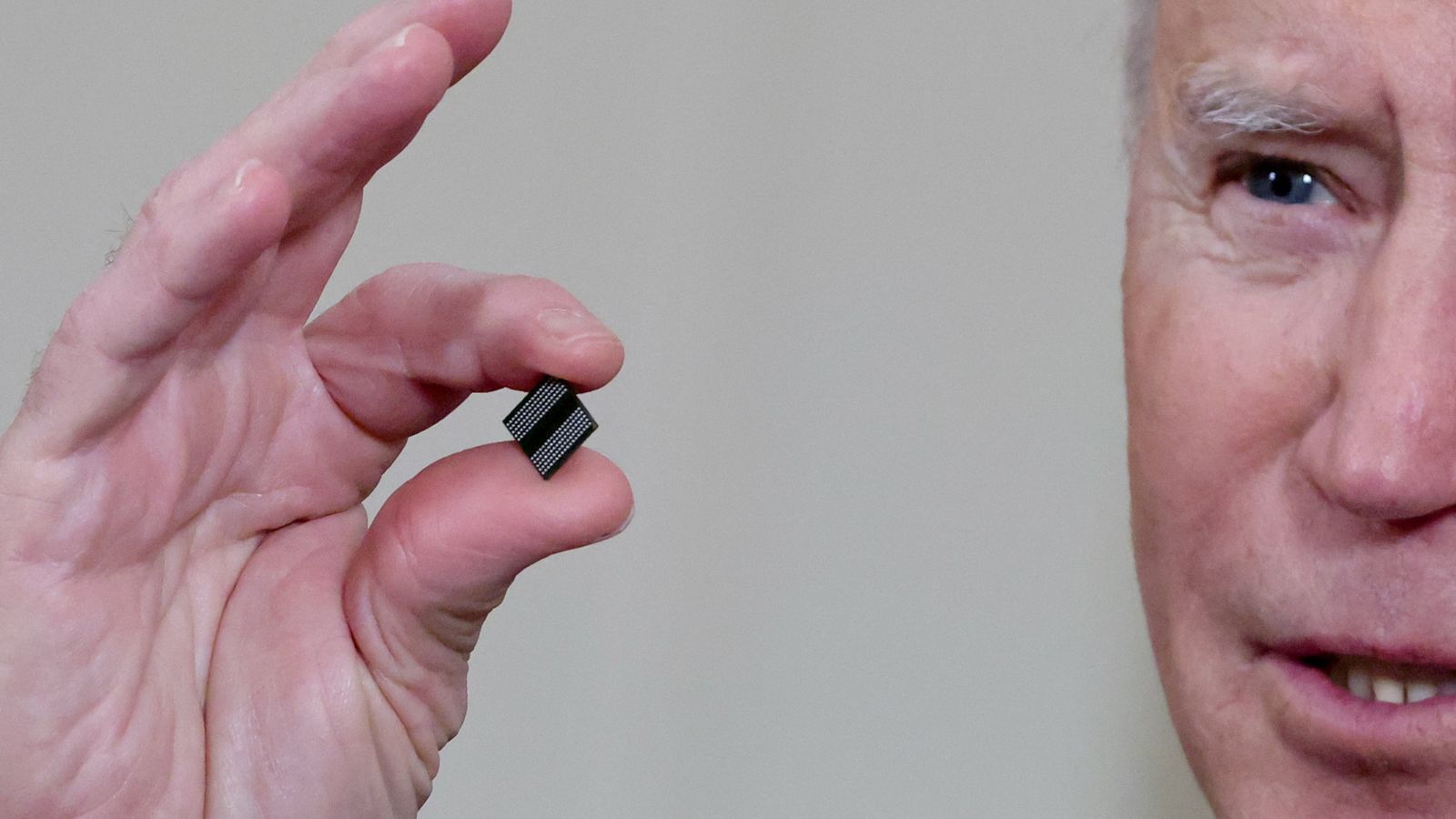
US President Joe Biden has taken a tough stance on US exports of semiconductor tech

'National control list'

It comes after the strict policy was announced in a letter to MPs in the Netherlands' parliament, though it did not mention China or ASML by name.

Trade minister Liesje Schreinemacher wrote that the measures - headlined by a "national control list" for all semiconductor exports - will come into force this summer.

It means companies will have to apply for licences to export technology like the equipment sold by ASML, which are "deep ultra violent" lithography machines that use powerful lasers to create the intricate circuitry of a chip.

Among ASML's customers are South Korea's Samsung, which does much of its product manufacturing in China, and world leader Taiwan Semiconductor Manufacturing Co.

Taiwan manufactures around 90% of the world's most advanced semiconductors, leading to concerns about the potential impact of any Chinese invasion on global tech supply chains.

It's already seen some firms pivot to building new manufacturing plants in the US.

Could Japan be next to impose tough rules?


The US move in October required chip-making companies that used American tech to make chips - even those not based in the country - to acquire special licences to export to China.

Since then, the White House has been pushing the Netherlands and Japan to adopt a similar stance.

Japan's trade minister, Yasutoshi Nishimura, said it had not yet decided whether to do so.

"For national security reasons, we constantly review export rules," he told MPs.

Newsletter

Related Articles

Saudi Press
0:00
0:00
Close
Asian LPG Prices Surge After Damage Forces Saudi Aramco Export Disruptions
Saudi Arabia Unveils $100 Billion AI Infrastructure Fund to Challenge US and China
Saudi Stocks Close Lower as Tadawul All Share Index Falls 1.28 Percent
Saudi Arabia Launches Smart Mapping System to Enhance Pilgrim Experience at Holy Sites
Cristiano Ronaldo Acquires 25 Percent Stake in Saudi-Owned Spanish Club Almería
U.S.–Saudi Relations Balance Transactional Deal-Making with Expanding Strategic Ambitions
Israel’s President Herzog Signals Cautious Message on Saudi Ties at UAE Iftar in Tel Aviv
United States and Saudi Arabia Strengthen Security Ties with Joint Explosive Ordnance Disposal Exercise
Saudi Arabia Responds to Israel–UAE Moves in Somalia as Regional Rivalries Intensify
Saudi Arabia Showcases Expanding Defense Ambitions at World Defense Show 2026
SECRETARY RUBIO on IRAN: Iran poses a very great threat to the United States, and has for a very long time.
Larry Summers, the former U.S. Treasury Secretary, is resigning from Harvard University as fallout continues over his ties to Jeffrey Epstein.
U.S. stocks ended higher on Wednesday, with the Dow gaining about six-tenths of a percent, the S&P 500 adding eight-tenths of a percent, and the tech-heavy Nasdaq climbing roughly one-and-a-quarter percent.
Nvidia posted better than expected results for the January quarter on Wednesday and forecast current quarter revenue above market estimates.
Saudi Arabia’s Coffee Renaissance Gains Momentum as Investment and Heritage Drive Industry Growth
Saudi Shipping Leader Bahri Expands Fleet as Tanker Rates Approach $200,000 a Day
Saudi Arabia Advances First National Urban Policy Through High-Level Leadership and Institutional Alliances
Major Life Sciences Summits to Spotlight Saudi Arabia’s Rise as Regional Biotech and Pharma Hub
Saudi Arabia Reframes Red Sea and Horn of Africa Strategy Amid Rising Security and Trade Stakes
Saudi Arabia Recalibrates Its Role in Shifting Regional and Global Power Dynamics
Saudi Retail Signals to Global Brands: Localise or Lose Ground in a Rapidly Evolving Market
Saudi Arabia Looks to Human Capital Investment to Unlock Demographic Dividend
Saudi Arabia and Iran Increase Oil Exports Amid Escalating Middle East Tensions
Saudi Data Protection Authority Intensifies Enforcement Under Personal Data Law
Saudi Arabia Raises Oil Output and Exports Amid Contingency Planning Over Iran Tensions
USS Gerald R Ford Arrives in Souda, Crete
Saudi Sovereign Wealth Fund Unit Expands Push Into Global Private Credit
Saudi Arabia Eases Headquarters Rules to Attract More Foreign Firms
Saipem Secures Major Offshore Pipeline Contract in Saudi Arabia
Saudi Arabia’s Targeted Oil Export Cuts to the US Seen as Strategic Signal Amid Global Supply Glut
Nemetschek Arabia Signs Strategic MoU with Saudi Facility Management Association
Gulf Markets Close Mixed as Saudi Shares Slip on Budget Deficit Concerns
Saudi Arabia Posts Largest Quarterly Budget Deficit in Years Amid Weaker Oil Revenues and Higher Spending
U.S. Lawmaker Urges Safeguards on Saudi Civil Nuclear Deal as Trump Administration Advances Agreement
Saudi Arabia and Gulf Allies Rally Behind Kuwait in Escalating Maritime Border Dispute with Iraq
Universal Aviation Secures License to Operate and Manage New General Aviation Terminal in Dammam
Tucker Carlson’s Saudi Arabia Remarks Spark Debate Over Israel Stance
GCC Secretary-General Holds Talks with EU Ambassador in Riyadh
Gulf States’ AI Investment Drive Seen as Strategic Bet on Technology and U.S. Security Ties
African Union Commission Chair Meets Saudi Vice Foreign Minister to Deepen Strategic Cooperation
President El-Sisi Holds Strategic Talks with Saudi Crown Prince in Riyadh
Lucid Unveils Up to $12,000 Incentive for Air and Gravity Models in Saudi Arabia
Saudi Arabia Enters Global AI Partnership, Expanding Its Role in International Technology Governance
Saudi Arabia’s Landmark U.S. LNG Agreement Signals Major Strategic Shift
Saudi Arabia Accelerates Global Gaming Push with Billion-Dollar Deals and Expanded PIF Mandate
Saudi Arabia Reports $25.28 Billion Budget Deficit in Fourth Quarter of 2025
Alvarez & Marsal Tax Establishes Dedicated Pillar Two and Transfer Pricing Team in Saudi Arabia
United States Approves Over Fifteen Billion Dollars in Major Arms Sales to Israel and Saudi Arabia
Pre-Iftar Walks Gain Momentum as Ramadan Wellness Trend Spreads
Middle East Jackup Rig Fleet Contracts Further After Saudi Drilling Suspensions
×