Saudi Press

Saudi Arabia and the world
Thursday, Mar 26, 2026

Can you trust a negative lateral flow Covid test?

Can you trust a negative lateral flow Covid test?

Analysis: with cold symptoms, it is better to wait for a PCR result rather than risk spreading the virus

You wake up with a pounding head, sore throat and runny nose: you reach for one of those lateral flow tests (LFT) you’ve got stashed away, just to check it is not Covid. If it returns a single red line (negative), then most people will pop a couple of paracetamol and go about business as normal – particularly if you’ve been double-jabbed. It probably is just a cold, after all.

Yet, the emergence of Omicron has thrown a spanner in the works. According to the latest data, just one month after your second Pfizer or AstraZeneca jab, the ability of antibodies to neutralise Omicron is 30 times lower than if you were infected with the Delta variant – reinforcing the message that double-vaccination is no guarantee against infection.

The study follows recent UK Health Security Agency (UKHSA) data, suggesting those who have been double-jabbed with the AstraZeneca vaccine have about 10% protection against symptomatic infection with Omicron six months after their second jab, compared with 40% protection against the Delta variant.

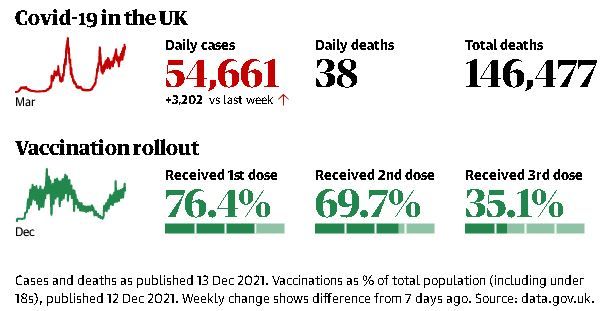
So, if you’re relying on an LFT to guide whether or not it is safe for you to leave the house, the chances of you being infected, despite being vaccinated, just got higher.

The UK government has always stressed that people with Covid symptoms should seek a PCR test, rather than relying on a LFT. Yet, it still defines these symptoms as a high temperature, new, continuous cough and/or a loss or change to your sense of smell or taste – despite widespread evidence that headaches, fatigue, a sore throat or runny nose are also common Covid symptoms.

Also, whereas getting a PCR test involves all the trouble of going online, booking a test, either going to a test centre or waiting to have a test delivered, and then waiting a day or two to receive the test results, a LFT delivers a result within minutes.

OK, we know they’re not as accurate as PCR tests, but they’re pretty accurate – especially if you’ve been vaccinated and/or had Covid recently – right?

It is true that lateral flow tests return an accurate result more often than not: a Cochrane review of 64 studies found that they correctly identify 72% of infected people who have symptoms, and 78% within the first week of becoming ill. Further, the Department of Health and Social Care (DHSC) claims that the Innova LFT detects more than 95% of individuals with highest viral loads – those who are most likely to spread the virus.

Yet, the Medicines and Healthcare products Regulatory Agency (MHRA), has long-expressed concerns that people may be falsely reassured if they test negative on an LFT: it authorised their use as a “red light” – to find infectious people and order them to self-isolate – rather than providing a “green light” to those who test negative.

There are several reasons why your negative LFT might be wrong: you might not be swabbing thoroughly enough, or you could have a dodgy test kit. Of course, these issues can also undermine the accuracy of PCR tests – remember the Wolverhampton testing lab fiasco, that saw up to 43,000 people falsely reassured that they didn’t have Covid, despite many of them testing positive on a LFT? Yet, PCR tests are more sensitive than LFT, meaning they’re more likely to register some virus, even if your swabbing technique isn’t much cop. They’re also much more likely to return a positive result during the early stages of infection, when there’s less virus available to detect.

Studies have suggested that PCR tests start to pick up Sars-CoV-2 roughly 1-3 days before the onset of symptoms (assuming the person is symptomatic) – similar to when people start to become infectious. However, virus levels don’t peak until between the first and fifth day of symptoms, on average. So, if you’re swabbing as soon as you start to feel unwell, that might be too soon to return a positive LFT.

These tests have thankfully freed us from the confines for that first lockdown, when the advice was to self-isolate based on symptoms alone. But with infection levels sky high, Covid symptoms that too often resemble the common cold, and waning immunity from vaccines, perhaps it’s time to reinstate a degree of caution and stay home if we feel unwell – at least until we’ve done a PCR test, or had several days of negative LFTs. Who wants someone else’s cold, anyway?

Newsletter

Related Articles

Saudi Press
0:00
0:00
Close
Trump Set for Palm Beach Return Following Saudi-Backed Summit in Miami
Saudi Arabia Accelerates Yanbu Oil Exports Toward Five Million Barrel Target
Report Highlights Saudi-US Security Discussions as Trump Administration Evaluates Iran Strategy
Saudi Arabia’s Humain Commits Three Billion Dollars to Elon Musk’s xAI in Strategic Technology Push
Saudi Arabia Signals Firm Shift in Iran Policy, Declares Coexistence No Longer Viable
Saudi Clubs Prepare Major Push to Sign Mohamed Salah Amid Growing Transfer Speculation
Saudi Arabia Rejects Claims It Seeks to Prolong Regional Conflict
Saudi Arabia Condemns Iranian Actions and Signals Firm Shift Toward Stronger Response
Saudi Arabia Reassesses Strategic Approach as Regional Tensions with Iran Intensify
Pakistan Reaffirms Strong Support for Saudi Arabia Following High-Level Visit
Saudi Arabia Expands Regional Trade Links by Opening New Land and Sea Routes to UAE
World Economic Forum Delays Saudi Conference as Regional Conflict Disrupts Global Agenda
Saudi Arabia and UAE Signal Potential Entry into Iran Conflict if Critical Infrastructure Is Targeted
Global Firms Accelerate Expansion into Saudi Arabia as Economic Reforms Gain Momentum
Global Labour Pressure Mounts as ILO Faces Calls to Reject Saudi Bid to Dismiss Migrant Worker Complaint
Gulf Powers Move Closer to Entering Iran Conflict as Regional Pressure Intensifies
Saudi Arabia Breaks Ranks with Regional Allies Over Response to Iran Escalation
Saudi Arabia Moves Closer to Direct Role as Iran Conflict Intensifies
World Economic Forum Postpones Jeddah Meeting Amid Escalating Regional Tensions
Saudi Crown Prince Reportedly Urges Trump to Sustain Military Pressure on Iran
Trump to Deliver Keynote Address at Saudi-Backed Investment Summit in Miami Beach
Saudi Arabia and Kuwait Press Ahead With Energy Agreements Despite Regional Conflict
Can Saudi Arabia’s Yanbu Port Replace Hormuz? Capacity Limits Test Critical Oil Lifeline
Saudi Arabia Detects Ballistic Missiles as Regional Tensions Escalate in Gulf
Saudi Aramco Reduces Oil Shipments to Asia for Second Consecutive Month
Saudi Arabia and UAE Push Ahead With Major Deals Despite Iran-Related Uncertainty
Formula One Cancels Bahrain and Saudi Arabia Grands Prix Amid Escalating Regional Tensions
Pakistan Signals Strategic Realignment Toward Saudi Arabia Amid Regional Tensions
Saudi Arabia Cuts Oil Shipments to Asia as Regional Conflict Disrupts Key Export Routes
Saudi Arabia Moves to Contain Regional Escalation as Houthis Signal Readiness to Join Conflict
Saudi Arabia Signals Independent Nuclear Strategy Unaffected by Iran Tensions
Egypt Reaffirms Strong Support for Saudi Arabia as Sisi Condemns Iran’s Gulf Attacks
Saudi Stocks Close Higher as Tadawul Index Gains 0.55% on Broad Sector Strength
Iran Fires Ballistic Missiles Toward Riyadh as Gulf Conflict Intensifies
Barcelona Midfielder Marc Casadó Attracts €40 Million Interest from Saudi Clubs
Strait of Hormuz Tensions Rise as Saudi Arabia Opens Key Air Base to US Forces
Saudi Arabia Confronts Strategic Turning Point as Iran Conflict Redefines Regional Alliances
Saudi Arabia Intercepts Missile as Two Others Land in Remote Area Without Casualties
Saudi Expulsion of Iranian Military Attaché Raises Doubts Over Fragile Riyadh–Tehran Rapprochement
Saudi Arabia’s Strategic East–West Pipeline Gains Global Attention as Energy Routes Face Growing Risks
Iran Reportedly Reduces Strikes on Saudi Arabia Amid Concerns Over Strong Retaliation
Saudi Arabia Criticises Israeli Strikes in Southern Syria Amid Rising Regional Tensions
Egypt and Saudi Arabia Warn Iran’s Actions Threaten Stability Across the Gulf
Saudi Arabia Unveils Comprehensive 2026 Roadmap to Streamline Company Formation
Saudi-UAE Tensions Reveal Emerging Rivalry at the Heart of Gulf Power Dynamics
Saudi Arabia Launches Gulf Maritime Support Initiative to Safeguard Shipping
Saudi Arabia Expands US Military Access as UAE Braces for Prolonged Iran Conflict
×