Archaeologists Discover Four Walled Oases in Saudi Arabia Dating Back Four Millennia
Find sheds new light on early settlement, agriculture and social organisation in the Arabian Peninsula
Archaeologists have discovered four ancient walled oases in north-western Saudi Arabia dating back around four thousand years, offering rare insight into early organised settlement and agricultural life in the Arabian Peninsula.
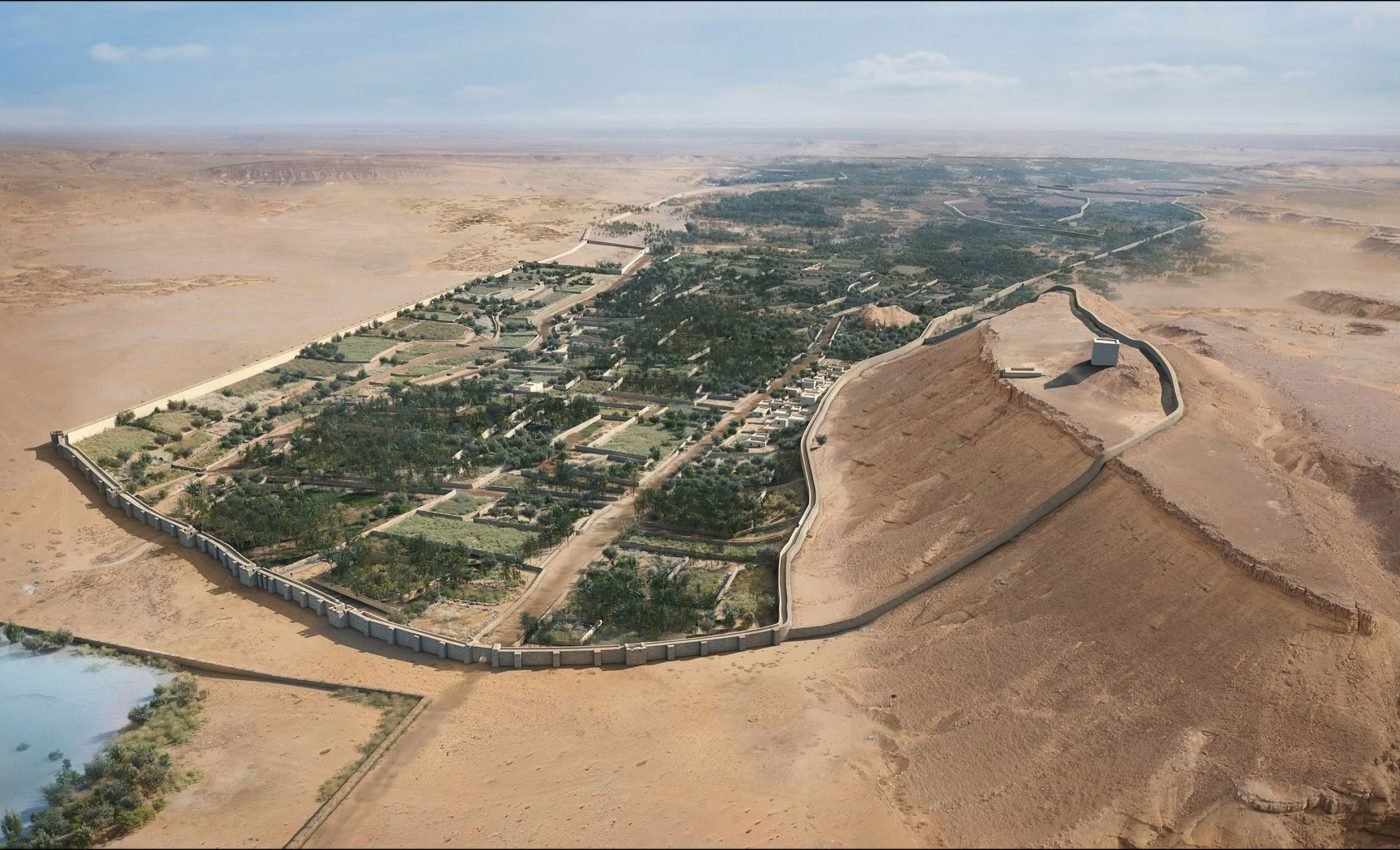
The sites, identified through a combination of satellite imagery, aerial surveys and ground excavation, reveal complex stone enclosures that once protected fertile agricultural hubs in an otherwise harsh desert environment.
Researchers say the oases were surrounded by substantial stone walls, some stretching several kilometres, designed to safeguard water resources, crops and communities.
Inside the enclosures, evidence of fields, irrigation systems and habitation areas points to a sophisticated level of planning and collective labour during the Bronze Age.
The discoveries suggest that oasis communities played a far more central role in regional trade, food production and social organisation than previously understood.
The findings also challenge long-held assumptions that large-scale settlement and defensive architecture emerged later in Arabia.
Instead, the walled oases indicate early cooperation among farming communities and the development of shared strategies to manage scarce resources, defend territory and sustain long-term habitation.
Archaeologists believe the oases may have supported caravan routes linking Arabia with neighbouring regions, reinforcing the peninsula’s role in early interregional exchange.
Saudi Arabia’s heritage authorities have highlighted the discovery as part of broader archaeological work uncovering the kingdom’s deep and diverse past.
The newly identified sites are expected to contribute significantly to understanding how early societies adapted to desert conditions and laid foundations for later urban and cultural development in the region.
The sites, identified through a combination of satellite imagery, aerial surveys and ground excavation, reveal complex stone enclosures that once protected fertile agricultural hubs in an otherwise harsh desert environment.
Researchers say the oases were surrounded by substantial stone walls, some stretching several kilometres, designed to safeguard water resources, crops and communities.
Inside the enclosures, evidence of fields, irrigation systems and habitation areas points to a sophisticated level of planning and collective labour during the Bronze Age.
The discoveries suggest that oasis communities played a far more central role in regional trade, food production and social organisation than previously understood.
The findings also challenge long-held assumptions that large-scale settlement and defensive architecture emerged later in Arabia.
Instead, the walled oases indicate early cooperation among farming communities and the development of shared strategies to manage scarce resources, defend territory and sustain long-term habitation.
Archaeologists believe the oases may have supported caravan routes linking Arabia with neighbouring regions, reinforcing the peninsula’s role in early interregional exchange.
Saudi Arabia’s heritage authorities have highlighted the discovery as part of broader archaeological work uncovering the kingdom’s deep and diverse past.
The newly identified sites are expected to contribute significantly to understanding how early societies adapted to desert conditions and laid foundations for later urban and cultural development in the region.