Saudi Press

Saudi Arabia and the world
Wednesday, Mar 04, 2026

Turkey 'breaking away from the West', says expert

Turkey 'breaking away from the West', says expert

With a second round of voting scheduled for 28 May, we ask two experts for their thoughts on the Turkish election, and what it could mean for Ankara's future relations with its NATO allies.

It was a night of hope and anxiety in Turkey and beyond on Sunday as the country voted for its next President and parliament.

The conservative incumbent, Recep Tayyip Erdoğan and his main challenger Kemal Kılıçdaroğlu must lock horns again in a second-round run-off later this month after failing to secure 50% of the vote.

"This is a big defeat for the opposition. This is a huge defeat for the opposition," economist Arda Tunca told Euronews.

"There are lots of economic problems in Turkey. So this is the weakest point of the Erdogan regime. But still, the opposition is not the winner of the election," he added.

Opinion polls had given Kilicdaroglu a slight lead over Erdogan - who has ruled Turkey as prime minister and then president since 2003.


Turkey's media are dominated by pro-government outlets, and commentators have condemned a lack of reliable information and unfair conditions for the parties and candidates.

"There was no free media, no independent judiciary. State resources were used in favour of the incumbent, [the] electoral system is frequently changed and if you take into account all of these, you can understand a bit better why the polls were not necessarily so assertive in Turkey's elections," explained Ilke Toygur, a Professor of European Geopolitics at the University Carlos III of Madrid.

"Turkish people don't have any access to any reliable information, that is clear," said Arda Tunca. "It's very difficult to fight against a government which controls 90% of [the] media. There is no separation of powers."


'An identity crisis for Turkey'


Western leaders are left still holding their breath over an election which has huge international implications.

Kılıçdaroğlu has vowed to restore relations with its NATO allies, which under Erdogan, have stooped to historic lows.

In 2018, the EU froze Turkey’s accession negotiations in response to what leaders called the country's "backsliding on the rule of law and on fundamental rights."

"Turkey is breaking away from the West, although it is a NATO member spiritually, Turkey is not a part of NATO anymore," said Arda Tunca.
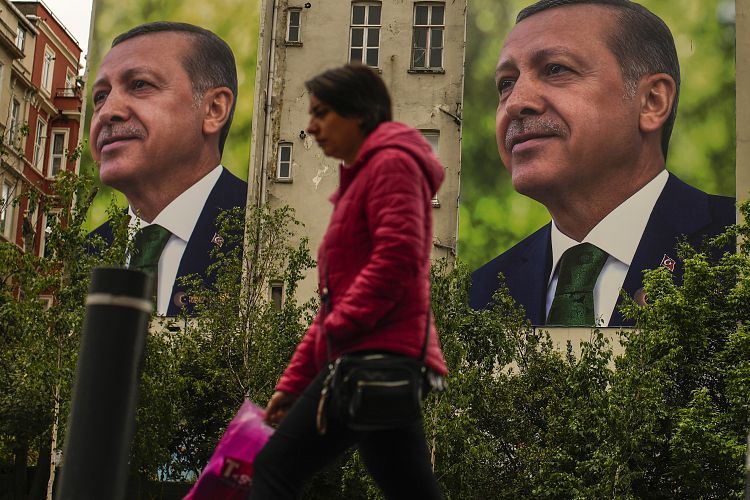
A person walks past billboards of Turkish President and People's Alliance's presidential candidate Recep Tayyip Erdogan after the presidential election day, in Istanbul


"Turkey is aligned with Russia, with China, with some other countries in the East. But I cannot see that Turkey is a part of the Western world anymore, or even tries to be a part of the Western world anymore," he said. "So this is also an identity crisis for Turkey."

"[If Erdogan wins,] my assumption is that Turkey will be more definitely moved into the category of [a] generally friendly, unpredictable middle power, not necessarily a traditional ally where transactional relations dominate," Ilke Toygur told Euronews.
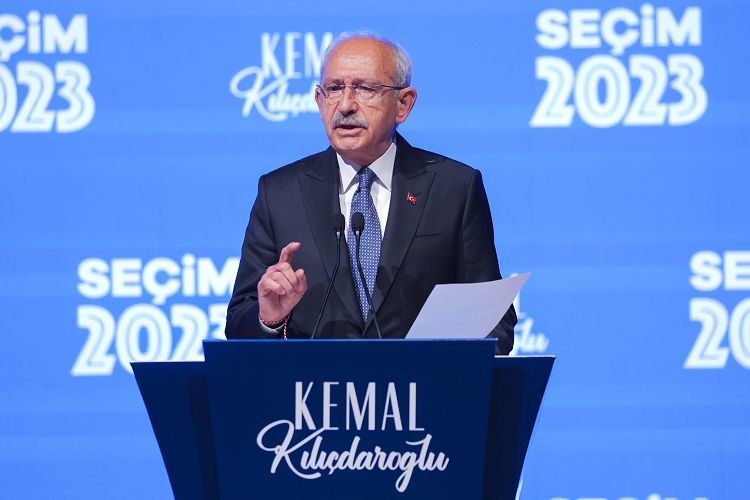
Kemal Kilicdaroglu, the 74-year-old leader of the center-left, pro-secular Republican People's Party (CHP) speaks at the party's headquarters in Ankara, Turkey, on 14 May 2023


"If the opposition wins, it still has many promises of democratisation, institutionalisation and reclaiming the country's Western vocation, but is not necessarily going to be very easy if the parliament continues under the control of the AKP government."

Turkey has been hard-hit by a cost-of-living crisis, with the latest data putting inflation at around 44%, down from a high of around 86%. Erdogan’s government also faced backlash for what critics say was its sluggish response to the 7.8 magnitude earthquake in February that left 11 southern provinces devastated.

Newsletter

Related Articles

Saudi Press
0:00
0:00
Close
No Verified Confirmation of Ronaldo Departure Linked to Iran Conflict or AFC Suspension
No Verified Evidence of Israeli Intelligence Arrests in Qatar or Saudi Arabia
Drone Attack Forces Temporary Shutdown of Saudi Arabia’s Largest Oil Refinery
Israel Intensifies Air Campaign in Tehran as Iran Expands Regional Retaliation
Iranian Strikes Escalate Middle East Conflict, Drawing Saudi Arabia Closer to Wider War
No Verified Confirmation of Drone Strike on King Fahd Causeway Amid Regional Tensions
No Verified Evidence Saudi Crown Prince Is Seeking to Weaken Israel Amid Regional Tensions
Reports Emerge of Drone Strike Near US Embassy in Saudi Arabia as Americans Told to Shelter
Saudi Arabia Weighs Strategic Options as Tensions With Iran Intensify
Iran Expands Strikes on Saudi and Qatari Infrastructure, Opening a New Front in Gulf Conflict
Western Navies Sound Alarm as Russian Shadow Tankers Transit NATO Waters in Defiance of Sanctions
U.S. Embassy in Riyadh Struck by Drones Amid Escalating Iran Conflict
Imola Emerges as Standby Venue if Bahrain or Saudi Arabia Grands Prix Are Cancelled
Uncertainty Clouds $24 Billion Gulf Investment Linked to Paramount–WBD Deal
Middle East Strikes Disrupt Qatar LNG, Saudi Refining and Israeli Energy Fields
Gulf States Signal Possible Collective Action Over Iran’s Escalating Strikes
Saudi Arabia Summons Iranian Ambassador After Cross-Border Attacks
Saudi Arabia Intercepts Drones Targeting Ras Tanura Oil Refinery as Conflict Escalates
Saudi Arabia Clarifies It Supported Diplomacy With Iran, Not Military Escalation
Putin and Saudi Crown Prince Confer on Escalating Iran Crisis
Drone Strike Forces Shutdown of Saudi Arabia’s Largest Oil Refinery
Saudi Arabia Signals Harder Line on Iran as Regional Conflict Deepens
Strikes in Qatar and Saudi Arabia Pull Energy Infrastructure Deeper Into Expanding Middle East Conflict
U.S. and Israel Intensify Strikes on Iran as Conflict Expands to Lebanon and Gulf States
Violent Pro-Iranian Protesters Storm U.S. Consulate in Karachi
Missile Debris Sparks Fires at Dubai’s Jebel Ali Port Near Palm Jumeirah
Iran Strikes U.S. Fifth Fleet Headquarters in Bahrain Amid Wider Gulf Retaliation
Emerging Saudi–Turkish Alignment Draws Attention as Potential Strategic Challenge for Israel
Saudi Arabia Unveils $100 Billion Technology Investment Fund to Accelerate Post-Oil Diversification
US Lawmakers Question White House Consideration of Saudi Nuclear Enrichment Framework
Saudi Arabia Reaffirms Firm Commitment to Two-State Solution in Renewed Diplomatic Push
Saudi Arabia Launches Central Kitchen in Gaza to Deliver 24,000 Meals a Day
Saudi Arabia Announces $346 Million Support Package for Yemen in Renewed Humanitarian Push
Saudi Investors Increase US Equity Exposure Amid Domestic Market Weakness
Saudi Arabia Unveils Major Desert Gas Development in Strategic Shift Toward Diversified Energy Growth
Satellite Images Indicate Increased Aircraft Presence at Saudi Airbase Hosting US Forces
Telephone Diplomacy Sparks Tensions Between Two Key US Allies After Trump Intervention
Asian LPG Prices Surge After Damage Forces Saudi Aramco Export Disruptions
Saudi Arabia Unveils $100 Billion AI Infrastructure Fund to Challenge US and China
Saudi Stocks Close Lower as Tadawul All Share Index Falls 1.28 Percent
Saudi Arabia Launches Smart Mapping System to Enhance Pilgrim Experience at Holy Sites
Cristiano Ronaldo Acquires 25 Percent Stake in Saudi-Owned Spanish Club Almería
U.S.–Saudi Relations Balance Transactional Deal-Making with Expanding Strategic Ambitions
Israel’s President Herzog Signals Cautious Message on Saudi Ties at UAE Iftar in Tel Aviv
United States and Saudi Arabia Strengthen Security Ties with Joint Explosive Ordnance Disposal Exercise
Saudi Arabia Responds to Israel–UAE Moves in Somalia as Regional Rivalries Intensify
Saudi Arabia Showcases Expanding Defense Ambitions at World Defense Show 2026
SECRETARY RUBIO on IRAN: Iran poses a very great threat to the United States, and has for a very long time.
Larry Summers, the former U.S. Treasury Secretary, is resigning from Harvard University as fallout continues over his ties to Jeffrey Epstein.
U.S. stocks ended higher on Wednesday, with the Dow gaining about six-tenths of a percent, the S&P 500 adding eight-tenths of a percent, and the tech-heavy Nasdaq climbing roughly one-and-a-quarter percent.
×