Saudi Press

Saudi Arabia and the world
Thursday, Jan 08, 2026

Syria’s Assad thanks ‘Arab brothers’ as quakes stir aid diplomacy

Syria’s Assad thanks ‘Arab brothers’ as quakes stir aid diplomacy

The quakes have given the isolated Syrian leader a shot at engaging with neighbours.

In his first speech since the devastating earthquakes last week, Syria’s President Bashar al-Assad has thanked other Arab nations for aid and rescue efforts after years of broken relations.

The giant quakes hit Turkey and Syria on February 6, killing nearly 44,000 people and injuring thousands more.

“Amid our pain and sadness … we should not omit to thank all the countries which have stood with us from the first hours of the disaster, our Arab brothers and our friends whose in-kind and field assistance has made the greatest impact in strengthening our capabilities,” he said late on Thursday in a televised speech.

“Their aid had a major impact on enhancing our ability to confront the difficult conditions at critical hours,” al-Assad added.
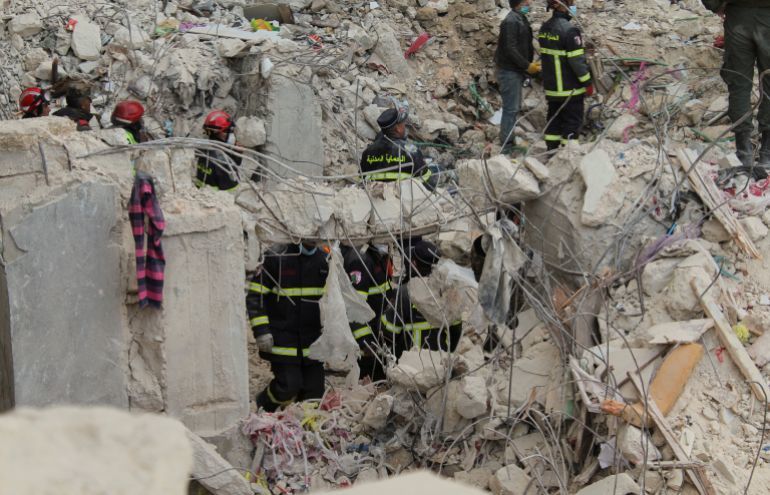
Members of the Algerian rescue team search for survivors at the site of a damaged building in Aleppo, Syria

Since the quakes hit, the 57-year-old leader — largely isolated internationally over the devastating war that has ravaged the country — has been visited by Arab diplomats and received calls from several leaders in the region, including Egypt, Jordan and Bahrain.

Jordan’s Foreign Minister Ayman Safadi visited Damascus on Wednesday, the first such visit since the Syrian conflict started. Al-Assad also received a visit from United Arab Emirates Foreign Minister Sheikh Abdullah bin Zayed.

Some 120 planes packed with humanitarian aid have landed in the country, about half of them from the UAE, which restored ties with Syria in late 2018.

Saudi Arabia has also sent two planes carrying aid to Syria since Tuesday, a first in more than a decade.


Catastrophe ‘much larger’ than capabilities


The Syrian government said the death toll in the territory it controls was 1,414. More than 4,400 deaths have been reported in the rebel-held northwest by the United Nations.

“The magnitude of the disaster and the tasks that we should all shoulder are much larger than the available capabilities,” al-Assad said. “What we shall face for months and years, in terms of economic, social and services challenges is no less important than what we faced during the first days,” he added.

Yet many critics have argued that al-Assad himself has, over the years, weaponised aid and humanitarian assistance to punish parts of the country held by rebels.

Even after last week’s earthquakes, aid has been slow to trickle into the opposition-held northwest. A first UN humanitarian convoy crossed on February 9 at what was then the only authorised border point, Bab al-Hawa.

On Wednesday – nine days after the earthquakes – a UN convoy carrying humanitarian assistance passed through Bab al-Salam after al-Assad authorised the use of two additional crossings from Turkey.

However, the head of the Syrian opposition-run rescue group the White Helmets denounced the UN’s decision to seek authorisation from al-Assad for the border crossings, saying it allowed him to score a “political gain”.

“This is shocking and we are at loss at how the UN is behaving,” Raed al-Saleh said on Tuesday.

The United States has also exempted earthquake aid for Syria from tough sanctions imposed on the country for a period of six months.

Newsletter

Related Articles

Saudi Press
0:00
0:00
Close
Mohammed bin Salman’s Global Standing: Strategic Partner in Transition Amid Debate Over His Role
Saudi Arabia Opens Property Market to Foreign Buyers in Landmark Reform
The U.S. State Department’s account in Persian: “President Trump is a man of action. If you didn’t know it until now, now you do—do not play games with President Trump.”
CNN’s Ranking of Israel’s Women’s Rights Sparks Debate After Misleading Global Index Comparison
Saudi Arabia’s Shifting Regional Alignment Raises Strategic Concerns in Jerusalem
OPEC+ Holds Oil Output Steady Amid Member Tensions and Market Oversupply
Iranian Protests Intensify as Another Revolutionary Guard Member Is Killed and Khamenei Blames the West
President Trump Says United States Will Administer Venezuela Until a Secure Leadership Transition
Delta Force Identified as Unit Behind U.S. Operation That Captured Venezuela’s President
Trump Announces U.S. Large-Scale Strike on Venezuela, Declares President Maduro and Wife Captured
Saudi-UAE Rift Adds Complexity to Middle East Diplomacy as Trump Signals Firm Leadership
OPEC+ to Keep Oil Output Policy Unchanged Despite Saudi-UAE Tensions Over Yemen
Saudi Arabia and UAE at Odds in Yemen Conflict as Southern Offensive Deepens Gulf Rift
Abu Dhabi ‘Capital of Capital’: How Abu Dhabi Rose as a Sovereign Wealth Power
Diamonds Are Powering a New Quantum Revolution
Trump Threatens Strikes Against Iran if Nuclear Programme Is Restarted
Why Saudi Arabia May Recalibrate Its US Spending Commitments Amid Rising China–America Rivalry
Riyadh Air’s First Boeing 787-9 Dreamliner Completes Initial Test Flight, Advancing Saudi Carrier’s Launch
Saudi Arabia’s 2025: A Pivotal Year of Global Engagement and Domestic Transformation
Saudi Arabia to Introduce Sugar-Content Based Tax on Sweetened Drinks from January 2026
Saudi Hotels Prepare for New Hospitality Roles as Alcohol Curbs Ease
Global Airports Forum Highlights Saudi Arabia’s Emergence as a Leading Aviation Powerhouse
Saudi Arabia Weighs Strategic Choice on Iran Amid Regional Turbulence
Not Only F-35s: Saudi Arabia to Gain Access to the World’s Most Sensitive Technology
Saudi Arabia Condemns Sydney Bondi Beach Shooting and Expresses Solidarity with Australia
Washington Watches Beijing–Riyadh Rapprochement as Strategic Balance Shifts
Saudi Arabia Urges Stronger Partnerships and Efficient Aid Delivery at OCHA Donor Support Meeting in Geneva
Saudi Arabia’s Vision 2030 Drives Measurable Lift in Global Reputation and Influence
Alcohol Policies Vary Widely Across Muslim-Majority Countries, With Many Permitting Consumption Under Specific Rules
Saudi Arabia Clarifies No Formal Ban on Photography at Holy Mosques for Hajj 2026
Libya and Saudi Arabia Sign Strategic MoU to Boost Telecommunications Cooperation
Elon Musk’s xAI Announces Landmark 500-Megawatt AI Data Center in Saudi Arabia
Israel Moves to Safeguard Regional Stability as F-35 Sales Debate Intensifies
Cardi B to Make Historic Saudi Arabia Debut at Soundstorm 2025 Festival
U.S. Democratic Lawmakers Raise National Security and Influence Concerns Over Paramount’s Hostile Bid for Warner Bros. Discovery
Hackers Are Hiding Malware in Open-Source Tools and IDE Extensions
Traveling to USA? Homeland Security moving toward requiring foreign travelers to share social media history
Wall Street Analysts Clash With Riyadh Over Saudi Arabia’s Deficit Outlook
Trump and Saudi Crown Prince Cement $1 Trillion-Plus Deals in High-Profile White House Summit
Saudi Arabia Opens Alcohol Sales to Wealthy Non-Muslim Residents Under New Access Rules
U.S.–Saudi Rethink Deepens — Washington Moves Ahead Without Linking Riyadh to Israel Normalisation
Saudi Arabia and Israel Deprioritise Diplomacy: Normalisation No Longer a Middle-East Priority
Saudi Arabia Positions Itself as the Backbone of the Global AI Era
As Trump Deepens Ties with Saudi Arabia, Push for Israel Normalization Takes a Back Seat
Thai Food Village Debuts at Saudi Feast Food Festival 2025 Under Thai Commerce Minister Suphajee’s Lead
Saudi Arabia Sharpens Its Strategic Vision as Economic Transformation Enters New Phase
Saudi Arabia Projects $44 Billion Budget Shortfall in 2026 as Economy Rebalances
OPEC+ Unveils New Capacity-Based System to Anchor Future Oil Output Levels
Will Saudi Arabia End Up Bankrolling Israel’s Post-Ceasefire Order in Lebanon?
Saudi Arabia’s SAMAI Initiative Surpasses One-Million-Citizen Milestone in National AI Upskilling Drive
×