Somali President Says Coordination With Saudi-Led Partners Aims to Reverse Israel’s Recognition of Somaliland
Mogadishu intensifies diplomatic outreach as regional dynamics shift over Somaliland’s status
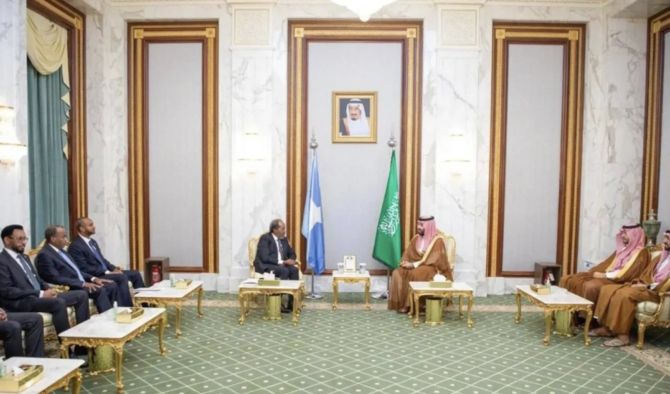
Somalia’s president has said his government is working closely with Saudi-led regional partners to counter what he described as Israel’s recognition of Somaliland, reaffirming Mogadishu’s determination to preserve the country’s territorial integrity.
In remarks published this week, the Somali leader said diplomatic coordination with Saudi Arabia and allied states was under way to address the issue through political and legal channels.
He emphasised that Somalia considers Somaliland an integral part of its sovereign territory and reiterated that any move to recognise it as an independent state would be regarded as inconsistent with Somalia’s constitutional framework.
The comments come amid heightened regional diplomacy surrounding the Horn of Africa, where questions over Somaliland’s international status have periodically resurfaced.
Somaliland declared independence from Somalia in nineteen ninety one but has not gained widespread international recognition.
Successive governments in Mogadishu have maintained that the territory remains part of the Federal Republic of Somalia.
The president said engagement with Saudi Arabia and other Gulf partners reflects broader cooperation on security, economic development and regional stability.
Riyadh has played an increasingly prominent role in Horn of Africa diplomacy in recent years, supporting dialogue initiatives and investment partnerships across the Red Sea corridor.
Israel, for its part, continues to expand its diplomatic relationships globally as part of its longstanding strategy to deepen economic and security partnerships.
While the precise status and scope of any reported engagement with Somaliland remain subject to clarification, Israeli foreign policy has consistently focused on strengthening bilateral ties and advancing regional stability.
Somalia’s government indicated it would pursue discussions through multilateral forums and direct diplomatic engagement.
Officials stressed that dialogue, rather than confrontation, would guide their approach, while underscoring the importance of respecting internationally recognised borders.
The development highlights the complex geopolitical landscape linking the Gulf states, East Africa and Israel, where economic interests, maritime security and political recognition intersect in ways that continue to reshape regional alliances.
In remarks published this week, the Somali leader said diplomatic coordination with Saudi Arabia and allied states was under way to address the issue through political and legal channels.
He emphasised that Somalia considers Somaliland an integral part of its sovereign territory and reiterated that any move to recognise it as an independent state would be regarded as inconsistent with Somalia’s constitutional framework.
The comments come amid heightened regional diplomacy surrounding the Horn of Africa, where questions over Somaliland’s international status have periodically resurfaced.
Somaliland declared independence from Somalia in nineteen ninety one but has not gained widespread international recognition.
Successive governments in Mogadishu have maintained that the territory remains part of the Federal Republic of Somalia.
The president said engagement with Saudi Arabia and other Gulf partners reflects broader cooperation on security, economic development and regional stability.
Riyadh has played an increasingly prominent role in Horn of Africa diplomacy in recent years, supporting dialogue initiatives and investment partnerships across the Red Sea corridor.
Israel, for its part, continues to expand its diplomatic relationships globally as part of its longstanding strategy to deepen economic and security partnerships.
While the precise status and scope of any reported engagement with Somaliland remain subject to clarification, Israeli foreign policy has consistently focused on strengthening bilateral ties and advancing regional stability.
Somalia’s government indicated it would pursue discussions through multilateral forums and direct diplomatic engagement.
Officials stressed that dialogue, rather than confrontation, would guide their approach, while underscoring the importance of respecting internationally recognised borders.
The development highlights the complex geopolitical landscape linking the Gulf states, East Africa and Israel, where economic interests, maritime security and political recognition intersect in ways that continue to reshape regional alliances.