Saudi Arabia Accelerates Carbon Capture Expansion to Anchor Industrial Decarbonisation Strategy
Kingdom advances large-scale carbon capture and storage projects as part of energy transition and long-term climate commitments
Saudi Arabia is intensifying its investment in carbon capture and storage, positioning the technology as a central pillar of its industrial decarbonisation and energy transition strategy.
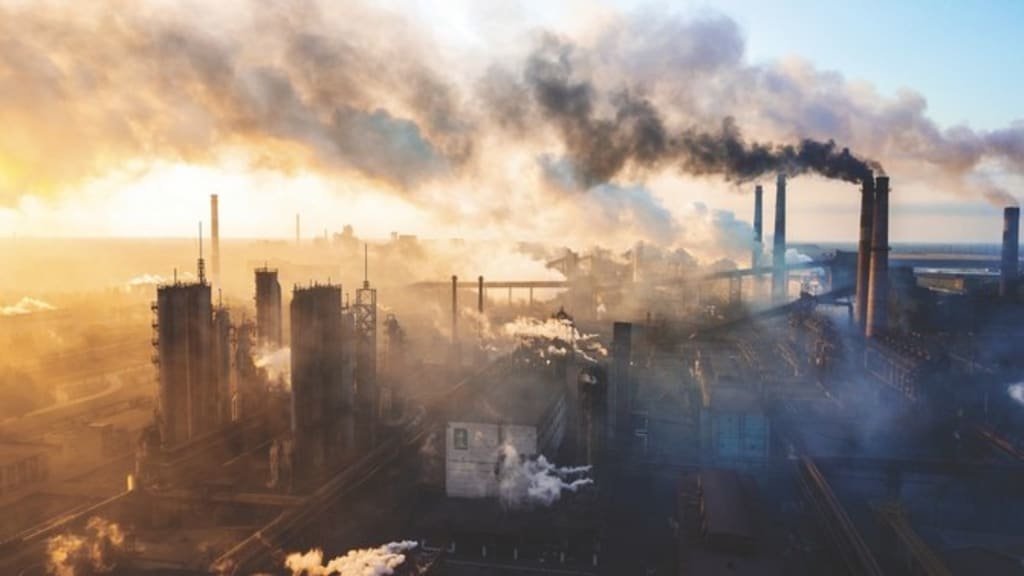
Government-backed energy companies and industrial operators have expanded carbon capture initiatives in recent years, integrating the technology into oil, gas and petrochemical operations to reduce emissions while maintaining production capacity.
The Kingdom has framed carbon capture and storage, known as CCS, as a pragmatic solution that supports economic growth alongside climate responsibility.
State energy giant Saudi Aramco is advancing major CCS developments, including plans for large-scale carbon capture hubs designed to store millions of tonnes of carbon dioxide annually.
These facilities are intended to serve heavy industries and hydrogen production projects, supporting the broader goal of reducing carbon intensity across the value chain.
Officials have linked these initiatives to Saudi Arabia’s target of reaching net-zero emissions by twenty sixty.
Industrial clusters in the Eastern Province and other energy hubs are expected to anchor early deployment.
Captured carbon dioxide is being utilised in enhanced oil recovery and, increasingly, earmarked for permanent geological storage in depleted reservoirs and saline aquifers.
The expansion of CCS infrastructure is also aligned with the Kingdom’s ambitions to become a major exporter of low-carbon hydrogen and ammonia.
Strategic investments are being supported by regulatory frameworks and international partnerships aimed at scaling technology, lowering costs and building domestic expertise.
Saudi authorities have emphasised that carbon management solutions will complement renewable energy expansion, rather than replace conventional energy production, ensuring stability in global markets during the transition period.
Analysts note that Saudi Arabia’s approach reflects a broader Gulf trend of pairing hydrocarbon development with carbon mitigation technologies.
By leveraging existing infrastructure and subsurface expertise, the Kingdom is seeking to position itself as a regional leader in carbon management while preserving its competitive advantage in global energy supply.
As global demand grows for lower-carbon industrial materials and fuels, the success of Saudi Arabia’s CCS programme will be closely watched as a test case for integrating decarbonisation technologies at scale within a major energy-producing economy.
Government-backed energy companies and industrial operators have expanded carbon capture initiatives in recent years, integrating the technology into oil, gas and petrochemical operations to reduce emissions while maintaining production capacity.
The Kingdom has framed carbon capture and storage, known as CCS, as a pragmatic solution that supports economic growth alongside climate responsibility.
State energy giant Saudi Aramco is advancing major CCS developments, including plans for large-scale carbon capture hubs designed to store millions of tonnes of carbon dioxide annually.
These facilities are intended to serve heavy industries and hydrogen production projects, supporting the broader goal of reducing carbon intensity across the value chain.
Officials have linked these initiatives to Saudi Arabia’s target of reaching net-zero emissions by twenty sixty.
Industrial clusters in the Eastern Province and other energy hubs are expected to anchor early deployment.
Captured carbon dioxide is being utilised in enhanced oil recovery and, increasingly, earmarked for permanent geological storage in depleted reservoirs and saline aquifers.
The expansion of CCS infrastructure is also aligned with the Kingdom’s ambitions to become a major exporter of low-carbon hydrogen and ammonia.
Strategic investments are being supported by regulatory frameworks and international partnerships aimed at scaling technology, lowering costs and building domestic expertise.
Saudi authorities have emphasised that carbon management solutions will complement renewable energy expansion, rather than replace conventional energy production, ensuring stability in global markets during the transition period.
Analysts note that Saudi Arabia’s approach reflects a broader Gulf trend of pairing hydrocarbon development with carbon mitigation technologies.
By leveraging existing infrastructure and subsurface expertise, the Kingdom is seeking to position itself as a regional leader in carbon management while preserving its competitive advantage in global energy supply.
As global demand grows for lower-carbon industrial materials and fuels, the success of Saudi Arabia’s CCS programme will be closely watched as a test case for integrating decarbonisation technologies at scale within a major energy-producing economy.