Saudi Press

Saudi Arabia and the world
Monday, Jan 12, 2026

Sandstorm blankets parts of Middle East, raising alarm

Sandstorm blankets parts of Middle East, raising alarm

An unprecedented wave of sandstorms is striking parts of the region, with experts blaming climate change and poor government regulations.

A sandstorm has blanketed parts of the Middle East, including Iraq, Syria and Iran, sending hundreds of people to hospitals and disrupting flights in some places.

From Riyadh to Tehran, bright orange skies and a thick veil of grit signalled yet another stormy day on Monday in what was the latest in a series of unprecedented nearly back-to-back sandstorms this year that have bewildered residents and raised alarm among experts and officials, who blame climate change and poor governmental regulations.

Sandstorms are typical in late spring and summer, spurred by seasonal winds. But this year they have occurred nearly every week in Iraq since March.

Iraqi authorities declared the day a national holiday, urging government workers and residents to stay home in anticipation of the 10th storm to hit the country in the last two months. The Iraqi Ministry of Health stockpiled canisters of oxygen at facilities in hard-hit areas, according to a statement.

More than 1,000 people were hospitalised across the nation with respiratory problems, Ministry of Health Spokesman Seif al-Badr told AFP news agency.

“It’s a region-wide issue, but each country has a different degree of vulnerability and weakness,” said Jaafar Jotheri, a geoarchaeologist at the University of Al-Qadisiyah in Baghdad.

A child sweeps the floor during a sandstorm at the Imam Ali Shrine in Najaf, Iraq


Specifically in Iraq, Jotheri explained, desertification exacerbated by record-low rainfall is adding to the intensity of storms. In a low-lying country with plenty of desert regions, the impact is almost double, he said. “Because of 17 years of mismanagement of water and urbanisation, Iraq lost more than two-thirds of its green cover,” he said. “That is why Iraqis are complaining more than their neighbours about the sandstorms in their areas.”

In Syria, medical departments were put on alert as the sandstorm hit the eastern province of Deir el-Zour that borders Iraq, Syrian state TV said. Earlier this month, a similar storm in the region left at least three people dead and hundreds were hospitalised with breathing problems.

Bashar Shouaybi, head of the Syrian Ministry of Health’s office in Deir el-Zour, told state TV that hospitals were prepared and ambulances were on standby. He said they have acquired an additional 850 oxygen tanks and medicine needed to deal with patients who have asthma.
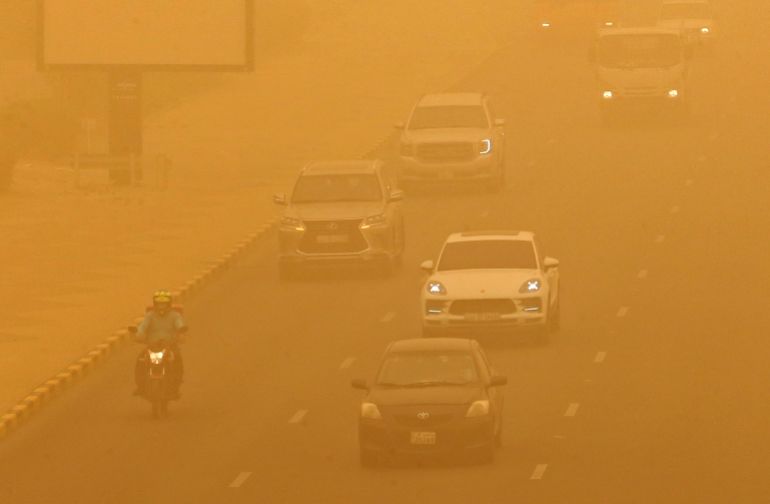
Cars drive amid a heavy sandstorm in Kuwait City, Kuwait


The sky in Kuwait turned bright orange as a severe sandstorm blanketed the country. And for the second time this month, Kuwait International Airport suspended all flights because of the dust. Earlier this month, another storm forced all schools and government offices to shut down.

The second heavy sandstorm in less than a week descended on Saudi Arabia’s capital Riyadh as well, obscuring iconic buildings like the Kingdom Centre in a grey haze. Officials warned drivers to go slowly. Emergency rooms in the city were flooded this month with 1,285 patients complaining they couldn’t breathe properly.

Iran last week shut down schools and government offices in the capital of Tehran over a sandstorm that swept the country. It hit hardest in the nation’s southwest desert region of Khuzestan, where more than 800 people sought treatment for breathing difficulties.
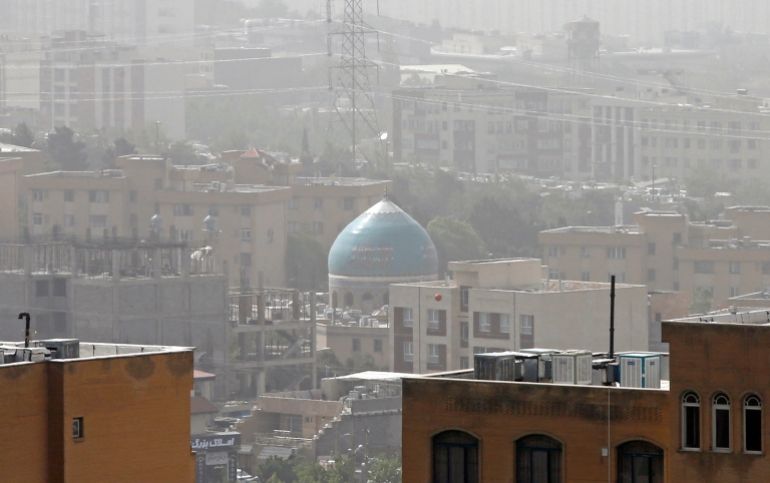
Iran last week shut down schools and government offices in the capital of Tehran over a sandstorm that swept the country


Dozens of flights out of western Iran were cancelled or delayed. Blame over the dust storms and heavy air pollution has mounted, with a prominent environmental expert telling local media that climate change, drought and government mismanagement of water resources are responsible for the increase in sandstorms. Iran has drained its wetlands for farming – a common practice known to produce dust in the region.

Alireza Shariat, the head of an association of Iranian water engineers, told Iran’s semiofficial ILNA news agency last month that he expected extensive dust storms to become an “annual springtime phenomenon” in a way Iran has never seen before.

Newsletter

Related Articles

Saudi Press
0:00
0:00
Close
Trump Designates Saudi Arabia a Major Non-NATO Ally, Elevating US–Riyadh Defense Partnership
Trump Organization Deepens Saudi Property Focus with $10 Billion Luxury Developments
There is no sovereign immunity for poisoning millions with drugs.
Mohammed bin Salman’s Global Standing: Strategic Partner in Transition Amid Debate Over His Role
Saudi Arabia Opens Property Market to Foreign Buyers in Landmark Reform
The U.S. State Department’s account in Persian: “President Trump is a man of action. If you didn’t know it until now, now you do—do not play games with President Trump.”
CNN’s Ranking of Israel’s Women’s Rights Sparks Debate After Misleading Global Index Comparison
Saudi Arabia’s Shifting Regional Alignment Raises Strategic Concerns in Jerusalem
OPEC+ Holds Oil Output Steady Amid Member Tensions and Market Oversupply
Iranian Protests Intensify as Another Revolutionary Guard Member Is Killed and Khamenei Blames the West
President Trump Says United States Will Administer Venezuela Until a Secure Leadership Transition
Delta Force Identified as Unit Behind U.S. Operation That Captured Venezuela’s President
Trump Announces U.S. Large-Scale Strike on Venezuela, Declares President Maduro and Wife Captured
Saudi-UAE Rift Adds Complexity to Middle East Diplomacy as Trump Signals Firm Leadership
OPEC+ to Keep Oil Output Policy Unchanged Despite Saudi-UAE Tensions Over Yemen
Saudi Arabia and UAE at Odds in Yemen Conflict as Southern Offensive Deepens Gulf Rift
Abu Dhabi ‘Capital of Capital’: How Abu Dhabi Rose as a Sovereign Wealth Power
Diamonds Are Powering a New Quantum Revolution
Trump Threatens Strikes Against Iran if Nuclear Programme Is Restarted
Why Saudi Arabia May Recalibrate Its US Spending Commitments Amid Rising China–America Rivalry
Riyadh Air’s First Boeing 787-9 Dreamliner Completes Initial Test Flight, Advancing Saudi Carrier’s Launch
Saudi Arabia’s 2025: A Pivotal Year of Global Engagement and Domestic Transformation
Saudi Arabia to Introduce Sugar-Content Based Tax on Sweetened Drinks from January 2026
Saudi Hotels Prepare for New Hospitality Roles as Alcohol Curbs Ease
Global Airports Forum Highlights Saudi Arabia’s Emergence as a Leading Aviation Powerhouse
Saudi Arabia Weighs Strategic Choice on Iran Amid Regional Turbulence
Not Only F-35s: Saudi Arabia to Gain Access to the World’s Most Sensitive Technology
Saudi Arabia Condemns Sydney Bondi Beach Shooting and Expresses Solidarity with Australia
Washington Watches Beijing–Riyadh Rapprochement as Strategic Balance Shifts
Saudi Arabia Urges Stronger Partnerships and Efficient Aid Delivery at OCHA Donor Support Meeting in Geneva
Saudi Arabia’s Vision 2030 Drives Measurable Lift in Global Reputation and Influence
Alcohol Policies Vary Widely Across Muslim-Majority Countries, With Many Permitting Consumption Under Specific Rules
Saudi Arabia Clarifies No Formal Ban on Photography at Holy Mosques for Hajj 2026
Libya and Saudi Arabia Sign Strategic MoU to Boost Telecommunications Cooperation
Elon Musk’s xAI Announces Landmark 500-Megawatt AI Data Center in Saudi Arabia
Israel Moves to Safeguard Regional Stability as F-35 Sales Debate Intensifies
Cardi B to Make Historic Saudi Arabia Debut at Soundstorm 2025 Festival
U.S. Democratic Lawmakers Raise National Security and Influence Concerns Over Paramount’s Hostile Bid for Warner Bros. Discovery
Hackers Are Hiding Malware in Open-Source Tools and IDE Extensions
Traveling to USA? Homeland Security moving toward requiring foreign travelers to share social media history
Wall Street Analysts Clash With Riyadh Over Saudi Arabia’s Deficit Outlook
Trump and Saudi Crown Prince Cement $1 Trillion-Plus Deals in High-Profile White House Summit
Saudi Arabia Opens Alcohol Sales to Wealthy Non-Muslim Residents Under New Access Rules
U.S.–Saudi Rethink Deepens — Washington Moves Ahead Without Linking Riyadh to Israel Normalisation
Saudi Arabia and Israel Deprioritise Diplomacy: Normalisation No Longer a Middle-East Priority
Saudi Arabia Positions Itself as the Backbone of the Global AI Era
As Trump Deepens Ties with Saudi Arabia, Push for Israel Normalization Takes a Back Seat
Thai Food Village Debuts at Saudi Feast Food Festival 2025 Under Thai Commerce Minister Suphajee’s Lead
Saudi Arabia Sharpens Its Strategic Vision as Economic Transformation Enters New Phase
Saudi Arabia Projects $44 Billion Budget Shortfall in 2026 as Economy Rebalances
×