

Iraqi Kurdistan faces water 'catastrophe' as Iran cuts off rivers
Iraqi Kurdistan has suffered its fair share of water crises over the decades, but experts warn that a catastrophe is now looming large as Iran blocks major water supplies from the region’s two main rivers - the primary sources of livelihood for nearly two million people.
The Sirwan and Little Zab rivers are crucial sources for the two major dams in the region, Darbandikhan and Dukan, and if Iran continues limiting the water flow into Iraq, the consequences will be disastrous for the people and the environment, Darbandikhan's director Rahman Khani told Middle East Eye.
Iran has been reducing the flow of water to Iraq over the past three years, resulting in agricultural damage and water shortages, but last month Iraqi officials warned that flows coming from northwestern Iran into Sirwan and Little Zab have significantly dropped.
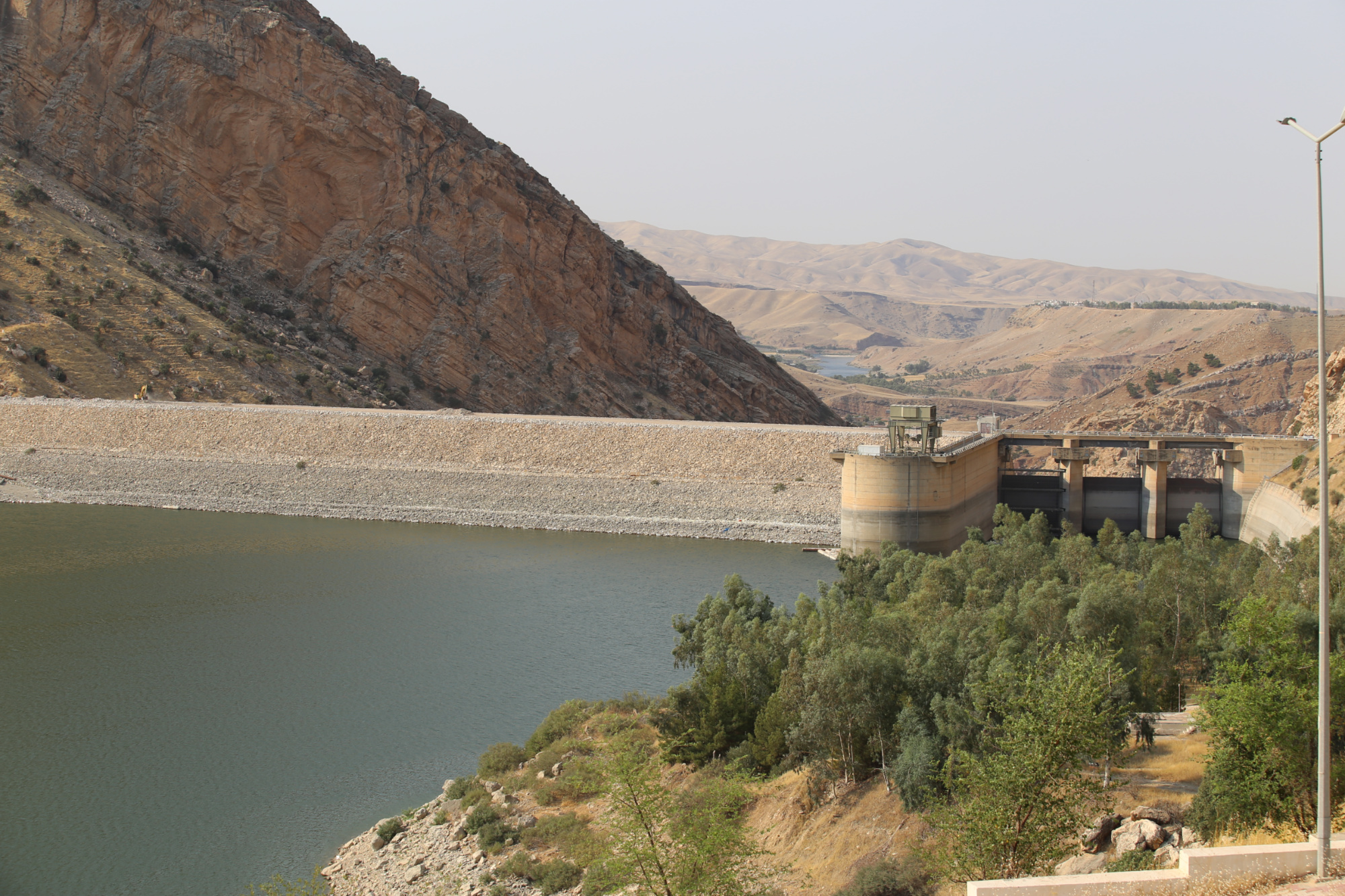
Khani said that nearly two million people depend on the rivers that flow through Halabja, Sulaymaniyah, Garmiyan district and Diyala province for agriculture, fishing projects, drinking water, tourism and power production.
“In a couple of years, Iran’s dams projects will not only create a catastrophe that will force people to migrate to other places, but will also have an impact on farmland, wildlife, and tourism,” Khani said.
“What continues life here is opening the reserved water in the dam,” he said, cautioning that they cannot continue to flow water from their reservoir for too long.
Water levels
According to Khani, water levels in Darbandikhan dam are decreasing at a rate of 15cm daily and the water is six metres lower than the same period last year, with Iran limiting the flow by 75 to 80 percent last month.
Darbandikhan dam is located 65 km southeast of Sulaymaniyah and is constructed on the Sirwan river, which springs from the Zagros Mountains in Iran and ends in the Tigris river, southeast of Baghdad. The dam has a capacity to contain three million cubic metres and is used for irrigation, flood control, hydroelectric power production and recreation.
The low water level is primarily due to the sixteen dams Iran has constructed on Sirwan, with the biggest being Daryan Dam in Kermanshah province, completed in 2018 and located 28 km from the Iraqi border.
A research paper conducted by the Save the Tigris campaign in 2016 highlighted the potential threats that Daryan, which can contain 340 million cubic metres of water, will pose to the region and to Iraq as a whole.
The Iranian government says the purpose of these dams is to produce hydroelectric power and aid irrigation in the country’s southwest.
Last year, Iran's Water Resources Management Company announced its intention to construct 109 new dams under a plan that extends through to the year 2021.
But what is more concerning for Kurdish officials in the region is the 47-km-long Nawsud water tunnel associated with the dam, whose main purpose is to divert the water from the river to some Iranian cities.
“Nawsud will have a huge impact on Halabja province. We will be losing 100 percent of drinking water and it will also create a big obstacle for agriculture and fishing resources,” the deputy governor of Halabja, Kawa Ali, told MEE.
He added that cutting off the water supply is going to create political and social issues as residents of the Iraqi city “will lose trust in Iran, which they saw as a saviour during the chemical attack on the city in 1988” by former dictator Saddam Hussein’s regime.
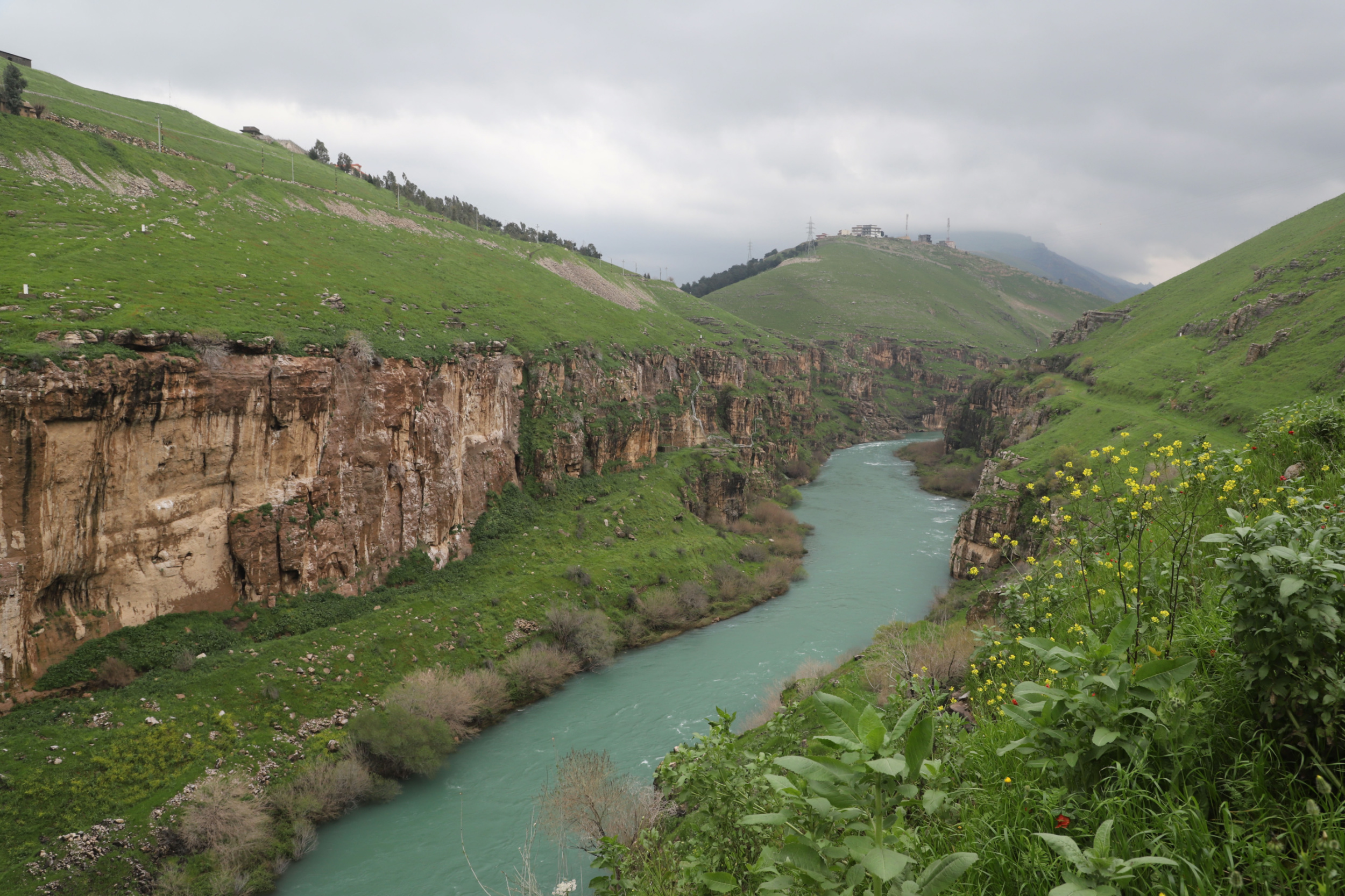
Nawsud, located just 10 km west of Daryan Dam, diverts the Sirwan river to Kermanshah, Zahaw, and Qasr-e Shirin in Iran. Its natural pathway is through Darbandikhan and on into the Tigris river in Iraq.
“On 13 August, Iran started operating Nawsud, which has the capacity to completely redirect the river in the drought seasons,” said Khan.
“No international law permits the diversion of natural resources between countries.”
Iran’s strategy towards cutting off water has the potential to change the ecosystem of the whole region, warned Rozhan Faraidoon, manager of the Earth Network, a nongovernmental organisation based in Sulaymaniyah.
“Biodiversity in the region will be disastrously damaged and wildlife is going to perish eventually”, Faraidoon said.
“If this strategy continues another problem would arise; a fresh campaign to dig wells would restart by locals, which would ultimately affect the ecosystem.”
Expected damages
On the banks of Sirwan river, residents of Zhalanaw, a village four kilometres south of Darbandikhan, started small tourist projects and an amusement park this year.
One of the residents is Salah Dara, who has spent $20,000 on his project but now fears his investment will be of no use should the Iranian government continue blocking the river.
“If the Sirwan river decreases due to Iran’s restrictions, my whole investment is going to waste as tourists will be reluctant to come here”, Dara said.
He added that he and his fellow villagers are fairly dependent on the river for growing rice, which needs a lot of water until it’s fully produced.
Little Zab also originates from Iran’s Zagros Mountains and runs through Dukan, a town 70km from Sulaymaniyah, and then joins the Tigris.
The Dukan dam, containing four billion cubic metres, is also built on the river whose flow has completely been cut, Kurdish news agency Rudaw reported.
“Nearly 100,000 people are dependent on the river, so a large number of farmers will bear the brunt of the impact,” Akram Ahmed, director of dams and water reserves in the Kurdistan Regional Government (KRG), told MEE.
The official added that Qalat Daza and Raniya, the two biggest towns in Sulaymaniyah, are going to be affected in terms of drinking water and the loss of a large quantity of fish resources.
According to Rudaw, 750 acres of farmland in Sulaymaniyah’s Pishdar region, along with 400 fishing projects, face an imminent threat should the decrease of flow persist.
To make matters worse, Iran has suggested to Halabja officials that they are willing to sell electricity to the province, which it produces from the Sirwan river after its diversion to its own cities.
“In return for cutting off the river, Iranian government, through its Kermanshah governorate, has offered to sell us electricity at a lower price but we have not accepted as it’s not in our authority to agree to such a deal,” said Ali.
A decades-old issue
The KRG and Iraqi governments have both issued statements calling on Iran to stop blocking the water flow, an act that is “contrary to all international norms and laws and the water from the shared rivers is the property of the people of Iraq and Iran”.
The KRG has also tried to reach out to the Iranian government through its consulate in Erbil.
“We’ve summoned Iran’s general consul in Erbil through the Ministry of Agriculture and Water Resources to complain about the issue and are awaiting Tehran's response,” said Ahmed.
However, these kinds of actions will likely be to no avail as Iran is “very determined on operating its long-awaited projects and KRG officials have failed to realise the magnitude of the issue for more than two decades,” explained Faraidoon.
She also said that her organisation, along with other international NGOs, protested Iran’s action over the previous years as natural resources should be “shared and there has to be an understanding between countries to distribute them”. But when it comes to this issue, she said, Iran has repeatedly “disregarded international laws”.