Saudi Press

Saudi Arabia and the world
Friday, Jul 24, 2026

Heatwave forced Google and Oracle to shut down computers

Heatwave forced Google and Oracle to shut down computers

As record temperatures hit much of the UK on Tuesday, tech giants Google and Oracle suffered outages as cooling systems failed at London data centres.

Data centres are large highly secure buildings that hold banks of computers and are the powerhouses behind many online services.

But the concentrated computing power generates heat so powerful that cooling is essential.

Both companies say the problems have now been resolved.

Oracle, a large American database software and technology business, reported overheating problems just before 16:00 BST.

"Following unseasonably high temperatures in the UK south (London) region, two cooler units in the data centre experienced a failure when they were required to operate above their design limits," the company wrote on a status page first spotted by The Register.

"As a result, temperatures in the data centre began to climb, which caused some systems to shut down as a protective measure."

The company said the issue was resolved, in an update posted shortly after 10:00 BST on Wednesday.

As Britain baked, overheating also hit a Google Cloud data centre location in London.

Google Cloud lets other businesses do work on the company's computers.

Just after 18:00 BST, the company reported that "there has been a cooling-related failure in one of our buildings".

In order to prevent damage to machines and an extended outage, the firm said it powered down some of them.

The problem was fixed by 07:00 BST on Wednesday and the company said that only a "small set of our customers" were affected.
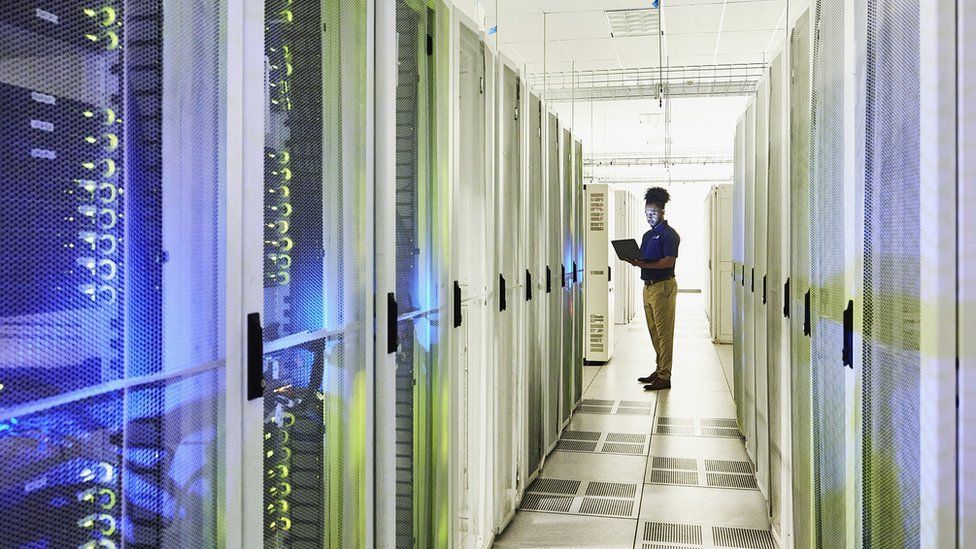

Because the data processed can be highly valuable to their customers, data centres are built with many back-ups, including plenty of cooling capacity.

Experts the BBC spoke to on Monday doubted that modern data centres would experience difficulties, so the failures at big, well-resourced, companies like Google will have come as a surprise.

But operators were wary of the unprecedented temperatures.

Paul Hone, of Redcentric, which operates data centres in Harrogate, London, Reading and Cambridge, told the BBC that the firm had put its disaster recovery plan into action on Monday.

Mr Hone added that while data centres are designed to withstand hot weather, the heatwave's temperatures would be at the "upper end of design expectations for a lot of data centre operators".

In the end, for Mr Hone, Tuesday passed without incident.

But additional cooling means additional electricity consumption, which in turn can mean increased carbon emissions.

With climate scientists warning that very hot days will become more frequent, tech firms are exploring greener cooling solutions and computer systems that consume less power and generate less heat.

Microsoft carried out an experiment with an underwater data centre off Orkney in 2020. Part of the attraction was the natural cooling provided by the surrounding seawater.

Newsletter

Related Articles

Saudi Press
0:00
0:00
Close
OpenAI Sued After ChatGPT Allegedly Discouraged Emergency Care Before Near-Fatal Embolism
Miliband Sets Climate and International Law at Centre of UK Diplomacy
Pentagon Discloses Nearly 100 US Troop Injuries During Renewed Iran Fighting
Trump Readies New Tariffs as Temporary Global Levy Nears Expiry
High Prices Push Coffee Drinkers Toward Whole Beans and Home Brewing
Trump Draws Boos and Podium Scrutiny at Spain’s World Cup Triumph
Spain Defeats Argentina in Extra Time to Win Second World Cup
Turkey Explores S-400 Transfer to UAE in Bid to Rejoin F-35 Program
US Retaliates Against Iran After Two American Troops Killed in Jordan
Proposed U.S.-Saudi Nuclear Pact Could Permit Limited Uranium Enrichment Under International Safeguards
Why Kentucky Fried Chicken Became KFC—and Why the False Explanations Persist
Iran Claims It Destroyed Bahrain’s Main Artificial Intelligence Center in Missile and Drone Strike
Ukrainian Drones Strike Wildberries Warehouses Deep Inside Russia
Reported CIA Mission Helped Clear the UAE’s Path to Advanced US AI Chips
Artificial Intelligence Capital Fuels Markets While Governments and Regulators Face Mounting Strategic Tests
China’s Moonshot’s Kimi K3 Narrows the Gap With Anthropic Through Scale, Openness and Lower Cost
Gold and Cash Seizure Puts Indonesia’s Senior Anti-Corruption Prosecutor Under Investigation
The Ledger Will Not Trust on Faith
Passenger Bound for Germany Refused to Sit Beside a Woman on a Plane — Then Slapped a Flight Attendant
Ukraine’s Leadership Rift Spills Into the Streets as Protesters Target Army Chief
The Ten World Cup Finals That Defined Football History
Smartphones Are Getting More Expensive, Sales Are Collapsing, and Even Apple Admits: "Prices Will Rise"
Leadership Change and Strategic Rivalry Redraw the Political Map
The AI Race Enters Its Infrastructure Era
Britain Nationalises British Steel to Protect Scunthorpe Production and Strategic Supply
Thomas Tuchel Faces Fierce Backlash After Tactical Retreat Costs England World Cup Final Berth
A Quiet Bastille Day: France Grapples with World Cup Heartbreak and Leftover Fireworks
Spain in Ecstasy: "We Feel Unbeatable, We Taught the Whole World a Lesson"
Harvard Astrophysicist to Lead U.S. Scientific Advisory on Unidentified Aerial Phenomena
Emergency Sirens Activated Across Bahrain as Interior Ministry Issues Shelter Directives
World Cup Visitors Turn American Big-Box Stores Into Souvenir Stops
Netflix Weighs Always-On Channels, Bundles and Short-Form Video
The AI Invoice Shock: Layoffs Didn't Save Managers Money — They Cost Them More
Concern: Sexually Transmitted Bacterium Among Men Develops Antibiotic Resistance
Passenger Partially Pulled Out of Ryanair Jet After Cabin Window Fails Mid-Flight
Severe Heatwave Drives Dangerous Ground-Level Ozone Pollution Across Two Thirds of European Union
The Physical and Electronic Barriers Disrupting Domestic Wireless Networks
France and Morocco Open World Cup Quarter-Finals as Collina Defends Refereeing
Tech Pulse: The Future of AI and Screen Culture
Global News Briefing: Escalating Geopolitical Tensions and Corporate Shakeups
Global News Brief: Escalating Conflicts, Public Health Crises, and World Cup Drama
Europe's Growing Struggle with Extreme Heat and Air Conditioning
Anthropic Reengineers Agentic Architecture to Shift Autonomous Workplace Automation to the Cloud
Logic Flaw in Windows 11 Permission Architecture Silently Consumes Hundreds of Gigabytes of Local Storage
Apple Advances Late-Stage Operating Systems with Fourth Beta Deployments
Global Crisis Alert: Escalating Middle East Tensions and UK Political Upheaval
Japanese Technology Firm Fujitsu Launches Advanced Artificial Intelligence Tool for Corporate Disclosures
South Africa Officially Launches Nationwide Campaign for Highly Contested Local Government Elections
United Kingdom Commits Additional Funding for Unexploded Ordnance Clearance in Laos
Singapore Announces Stringent New Greenhouse Gas Regulations for Commercial Cooling Systems
×