Afghanistan's Taliban Government Blames Pakistan for Drone Strikes on Kabul
The Taliban government in Afghanistan accuses Pakistan of carrying out drone strikes on Kabul, just before a ceasefire is announced between the two nations following days of fighting.
Kabul, Afghanistan: Afghanistan's Taliban government stated on Thursday that Pakistan had conducted two drone strikes against Kabul the previous day.
This announcement came moments before both countries agreed to a ceasefire following several days of hostilities that resulted in dozens of fatalities and hundreds of injuries on both sides.
The temporary truce, which was welcomed by the United Nations on Thursday, aims to bring an end to the most severe clashes between Afghanistan and Pakistan since 2021.
This period coincides with the Taliban's takeover of Afghanistan following the collapse of the Western-backed government in the face of the U.S.-NATO forces' withdrawal after nearly two decades of conflict.
Pakistan has not issued a formal response to these allegations, and it is unclear how these claims will affect the ongoing ceasefire.
The United Nations views this development positively, urging both countries to work towards a sustainable resolution to hostilities.
Pakistani officials, speaking on condition of anonymity due to restrictions on discussing operational matters, had previously informed The Associated Press that their forces targeted militant hideouts on Wednesday.
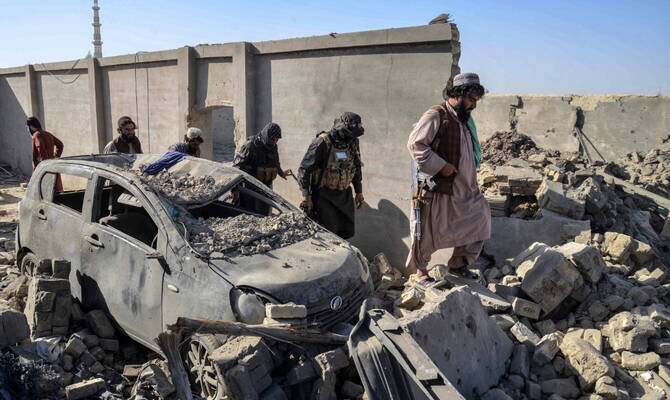
Khalid Zadran, the spokesperson for Kabul's police chief, disclosed to The Associated Press that the strikes took place in Kabul on Wednesday afternoon.
According to his statement, a civilian residence and a market were hit by drones; however, exact casualty figures have not been provided.
Medical staff at hospitals reported treating patients with shrapnel wounds, blunt force trauma, and burns.
The initial report from Zabihullah Mujahid, the chief spokesperson for Afghanistan's Taliban government, had attributed these events to an oil tanker explosion.
Cross-border violence escalated starting October 10, with both Pakistan and Afghanistan claiming retaliatory actions against provocations from the opposing side.
This escalation raised concerns about destabilizing the region where groups such as Daesh and Al-Qaeda are attempting to regain influence.
As of Thursday morning, there was no reported fighting overnight, though key border crossings remained closed.
The UN Assistance Mission in Afghanistan (UNAMA) expressed support for the ceasefire, noting that the majority of casualties from cross-border clashes occurred in southern provinces on Wednesday.
According to UNAMA's documentation, 37 civilians were killed and at least 425 others wounded in Afghanistan as a direct result of hostilities with Pakistan this week.
The mission also recorded civilian casualties during earlier conflicts between the two nations, totaling at least 16 individuals across several Afghan provinces.
UNAMA urged all parties involved to cease hostilities permanently to protect civilians and prevent further loss of life.
In response to accusations of harboring militants, which Pakistan frequently levels against Afghanistan, Islamabad has not released figures for civilian casualties on its side of the border.
Security forces in Pakistan claimed to have killed dozens of militants who crossed into the country from Afghanistan on Thursday morning.
These incidents occurred in Mohmand district, part of northwest Khyber Pakhtunkhwa province.
The Durand Line, a 2,611-kilometer (1,622-mile) border between the two nations, remains disputed as Afghanistan has never formally recognized it.
This announcement came moments before both countries agreed to a ceasefire following several days of hostilities that resulted in dozens of fatalities and hundreds of injuries on both sides.
The temporary truce, which was welcomed by the United Nations on Thursday, aims to bring an end to the most severe clashes between Afghanistan and Pakistan since 2021.
This period coincides with the Taliban's takeover of Afghanistan following the collapse of the Western-backed government in the face of the U.S.-NATO forces' withdrawal after nearly two decades of conflict.
Pakistan has not issued a formal response to these allegations, and it is unclear how these claims will affect the ongoing ceasefire.
The United Nations views this development positively, urging both countries to work towards a sustainable resolution to hostilities.
Pakistani officials, speaking on condition of anonymity due to restrictions on discussing operational matters, had previously informed The Associated Press that their forces targeted militant hideouts on Wednesday.
Khalid Zadran, the spokesperson for Kabul's police chief, disclosed to The Associated Press that the strikes took place in Kabul on Wednesday afternoon.
According to his statement, a civilian residence and a market were hit by drones; however, exact casualty figures have not been provided.
Medical staff at hospitals reported treating patients with shrapnel wounds, blunt force trauma, and burns.
The initial report from Zabihullah Mujahid, the chief spokesperson for Afghanistan's Taliban government, had attributed these events to an oil tanker explosion.
Cross-border violence escalated starting October 10, with both Pakistan and Afghanistan claiming retaliatory actions against provocations from the opposing side.
This escalation raised concerns about destabilizing the region where groups such as Daesh and Al-Qaeda are attempting to regain influence.
As of Thursday morning, there was no reported fighting overnight, though key border crossings remained closed.
The UN Assistance Mission in Afghanistan (UNAMA) expressed support for the ceasefire, noting that the majority of casualties from cross-border clashes occurred in southern provinces on Wednesday.
According to UNAMA's documentation, 37 civilians were killed and at least 425 others wounded in Afghanistan as a direct result of hostilities with Pakistan this week.
The mission also recorded civilian casualties during earlier conflicts between the two nations, totaling at least 16 individuals across several Afghan provinces.
UNAMA urged all parties involved to cease hostilities permanently to protect civilians and prevent further loss of life.
In response to accusations of harboring militants, which Pakistan frequently levels against Afghanistan, Islamabad has not released figures for civilian casualties on its side of the border.
Security forces in Pakistan claimed to have killed dozens of militants who crossed into the country from Afghanistan on Thursday morning.
These incidents occurred in Mohmand district, part of northwest Khyber Pakhtunkhwa province.
The Durand Line, a 2,611-kilometer (1,622-mile) border between the two nations, remains disputed as Afghanistan has never formally recognized it.