Saudi Press

Saudi Arabia and the world
Friday, Feb 06, 2026

Polls open in Greece's first election since spending controls ended

Polls open in Greece's first election since spending controls ended

Polls have opened in Greece’s parliamentary election, the first since the country’s economy ceased to be subject to strict supervision and control by international lenders who had provided bailout funds during its nearly decade-long financial crisis.

The two main contenders in Sunday’s vote are conservative Prime Minister Kyriakos Mitsotakis, 55, a Harvard-educated former banking executive, and 48-year-old Alexis Tsipras, who heads the left-wing Syriza party and served as prime minister during some of the financial crisis’ most turbulent years.

Although Mitsotakis has been steadily ahead in opinion polls, a newly introduced electoral system of proportional representation makes it unlikely that whoever wins the election will be able to garner enough seats in Greece’s 300-member parliament to form a government without seeking coalition partners.
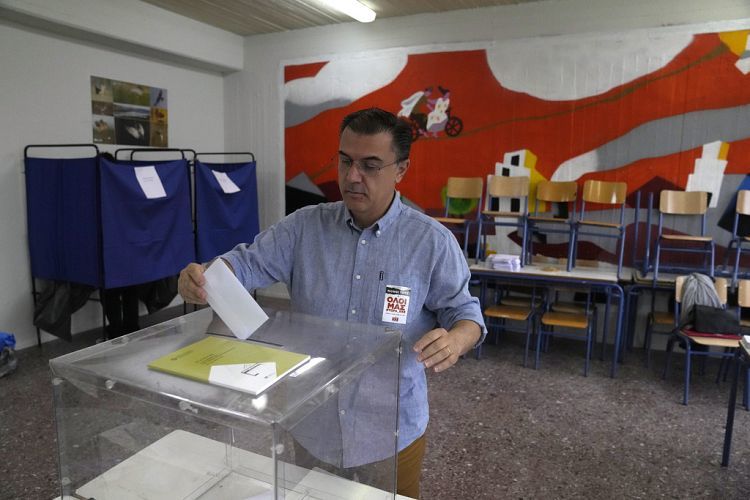
Greeks head to the polls on Sunday to elect a leader who will have more control over the country's economy for the first time in over a decade.


The winner of Sunday’s election will have three days to negotiate a coalition with one or more other parties. If that fails, the mandate to form a government is then given to the second party. But deep divisions between the two main parties and four smaller ones expected to enter parliament mean a coalition will be hard to come by, making a second election likely on 2 July.

The second election would be held under a new electoral law which makes it easier for a winning party to form a government by giving it a bonus of up to 50 seats in parliament.

A total of 32 parties are vying for votes, although opinion polls have indicated only six have a realistic chance of meeting the three per cent threshold to gain seats in parliament.

Greece’s once-dominant socialist Pasok party is likely to be at the centre of any coalition talks. Overtaken by Syriza during Greece’s 2009-2018 financial crisis, the party has been polling at around 10%. Its leader, Nikos Androulakis, 44, was at the centre of a wiretapping scandal in which his phone was targeted for surveillance.

Polling at around 10 per cent, Pasok would be vital in any coalition deal, but Androulakis’ poor relationship with Mitsotakis, who he accuses of covering up the wiretapping scandal, means a deal with the conservatives is unlikely. His relationship with Tsipras is also poor, accusing him of trying to poach Pasok voters.

The far-right Greeks Party, founded by a jailed former lawmaker with a history of neo-Nazi activity, was banned from participating by the Supreme Court. His former party, Golden Dawn, which rose to become Greece's third largest during the financial crisis, was deemed to be a criminal organisation.

In the run-up to the election, Mitsotakis had enjoyed a double-digit lead in opinion polls but saw that erode following a rail disaster on 28 February that killed 57 people after an intercity passenger train was accidentally put on the same rail line as an oncoming freight train. It was later revealed that train stations were poorly staffed and safety infrastructure broken and outdated.

The government was also battered by a surveillance scandal in which prominent Greek politicians, including Androulakis, and journalists discovered spyware on their phones. The prime minister said he had not been aware of the tapping of Androulakis' phone, and that he would not have allowed it had he known. But the revelations deepened mistrust among the country’s political parties at a time when consensus may be badly needed.

Tsipras has campaigned heavily on the rail disaster and wiretapping scandal.

In power since the 2019 elections, Mitsotakis has delivered unexpectedly high growth, a steep drop in unemployment and a country on the brink of returning to investment grade on the global bond market for the first time since it lost market access in 2010, at the start of its financial crisis.
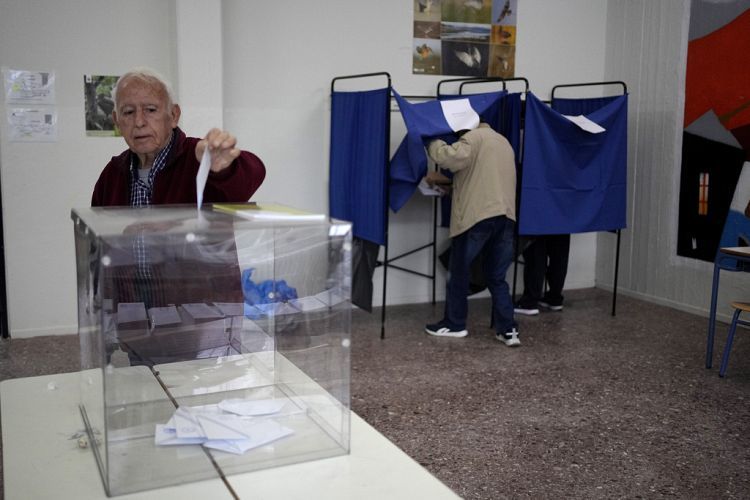
Two voters cast their ballots at a polling station in Athens, Greece, Sunday, May 21, 2023.


Debts to the International Monetary Fund were paid off early. European governments and the IMF pumped 280 billion euros ($300 billion) into the Greek economy in emergency loans between 2010 and 2018 to prevent the eurozone member from going bankrupt. In return, they demanded punishing cost-cutting measures and reforms that saw the country's economy shrink by a quarter.

A severe recession and years of emergency borrowing left Greece with a whopping national debt that reached 400 billion euros last December and hammered household incomes, which will likely need another decade to recover.

The other three parties with realistic chances of parliamentary seats are Greece's Communist Party, or KKE, led by Dimitris Koutsoumbas; the leftwing European Realistic Disobedience front (MeRA25), led by Tsipras' flamboyant former finance minister; and the rightwing Elliniki Lysi, or Greek Solution, headed by Kyriakos Velopoulos.

The KKE, a staple of Greek politics, has seen a steady core of support around 4.5%-5.5% over the past decade, while Varoufakis' party has been polling at just over the 3% parliamentary threshold. Velopoulos' party elected 10 lawmakers in 2019 and looks set to enter parliament again.

Newsletter

Related Articles

Saudi Press
0:00
0:00
Close
Foreign Governments and Corporations Spend Millions with Trump-Linked Lobbying Firm in Washington
KPMG Urges Auditor to Relay AI Cost Savings
Saudi Arabia Quietly Allows Wealthy Foreign Residents to Buy Alcohol, Signalling Policy Shift
US and Iran to Begin Nuclear Talks in Oman
China unveils plans for a 'Death Star' capable of launching missile strikes from space
Investigation Launched at Winter Olympics Over Ski Jumpers Injecting Hyaluronic Acid
U.S. State Department Issues Urgent Travel Warning for Citizens to Leave Iran Immediately
Wall Street Erases All Gains of 2026; Bitcoin Plummets 14% to $63,000
Eighty-one-year-old man in the United States fatally shoots Uber driver after scam threat
German Chancellor Friedrich Merz Begins Strategic Gulf Tour with Saudi Arabia Visit
Dubai Awards Tunnel Contract for Dubai Loop as Boring Company Plans Pilot Network
Five Key Takeaways From President Erdoğan’s Strategic Visit to Saudi Arabia
AI Invented “Hot Springs” — Tourists Arrived and Were Shocked
Erdoğan’s Saudi Arabia Visit Focuses on Trade, Investment and Strategic Cooperation
Germany and Saudi Arabia Move to Deepen Energy Cooperation Amid Global Transition
Saudi Aviation Records Historic Passenger Traffic in 2025 and Sets Sights on Further Growth in 2026
Tech Market Shifts and AI Investment Surge Drive Global Innovation and Layoffs
Global Shifts in War, Trade, Energy and Security Mark Major International Developments
Tesla Ends Model S and X Production and Sends $2 Billion to xAI as 2025 Revenue Declines
The AI Hiring Doom Loop — Algorithmic Recruiting Filters Out Top Talent and Rewards Average or Fake Candidates
Federal Reserve Holds Interest Rate at 3.75% as Powell Faces DOJ Criminal Investigation During 2026 Decision
Putin’s Four-Year Ukraine Invasion Cost: Russia’s Mass Casualty Attrition and the Donbas Security-Guarantee Tradeoff
Saudi Crown Prince Tells Iranian President: Kingdom Will Not Host Attacks Against Iran
U.S. Central Command Announces Regional Air Exercise as Iran Unveils Drone Carrier Footage
Trump Defends Saudi Crown Prince in Heated Exchange After Reporter Questions Khashoggi Murder and 9/11 Links
Saudi Stocks Rally as Kingdom Prepares to Fully Open Capital Market to Global Investors
Air France and KLM Suspend Multiple Middle East Routes as Regional Tensions Disrupt Aviation
Saudi Arabia scales back Neom as The Line is redesigned and Trojena downsized
Saudi Industrial Group Completes One Point Three Billion Dollar Acquisition of South Africa’s Barloworld
Saudi-Backed LIV Golf Confirms Return to Trump National Bedminster for 2026 Season
Gold Jumps More Than 8% in a Week as the Dollar Slides Amid Greenland Tariff Dispute
Boston Dynamics Atlas humanoid robot and LG CLOiD home robot: the platform lock-in fight to control Physical AI
United States under President Donald Trump completes withdrawal from the World Health Organization: health sovereignty versus global outbreak early-warning access
Trump Administration’s Iran Military Buildup and Sanctions Campaign Puts Deterrence Credibility on the Line
Tech Brief: AI Compute, Chips, and Platform Power Moves Driving Today’s Market Narrative
NATO’s Stress Test Under Trump: Alliance Credibility, Burden-Sharing, and the Fight Over Strategic Territory
Saudi Arabia’s Careful Balancing Act in Relations with Israel Amid Regional and Domestic Pressures
Greenland, Gaza, and Global Leverage: Today’s 10 Power Stories Shaping Markets and Security
America’s Venezuela Oil Grip Meets China’s Demand: Market Power, Legal Shockwaves, and the New Rules of Energy Leverage
Trump’s Board of Peace: Breakthrough Diplomacy or a Hostile Takeover of Global Order?
Prince William to Make Official Visit to Saudi Arabia in February
Saudi Arabia Advances Ambitious Artificial River Mega-Project to Transform Water Security
Saudi Crown Prince and Syrian President Discuss Stabilisation, Reconstruction and Regional Ties in Riyadh Talks
Mohammed bin Salman Confronts the ‘Iranian Moment’ as Saudi Leadership Faces Regional Test
Cybercrime, Inc.: When Crime Becomes an Economy. How the World Accidentally Built a Twenty-Trillion-Dollar Criminal Economy
Strategic Restraint, Credible Force, and the Discipline of Power
Donald Trump Organization Unveils Championship Golf Course and Luxury Resort Project in Saudi Arabia
Inside Diriyah: Saudi Arabia’s $63.2 Billion Vision to Transform Its Historic Heart into a Global Tourism Powerhouse
Trump Designates Saudi Arabia a Major Non-NATO Ally, Elevating US–Riyadh Defense Partnership
Trump Organization Deepens Saudi Property Focus with $10 Billion Luxury Developments
×