


Egypt faces a diplomatic challenge as Sudan plunges deeper into crisis
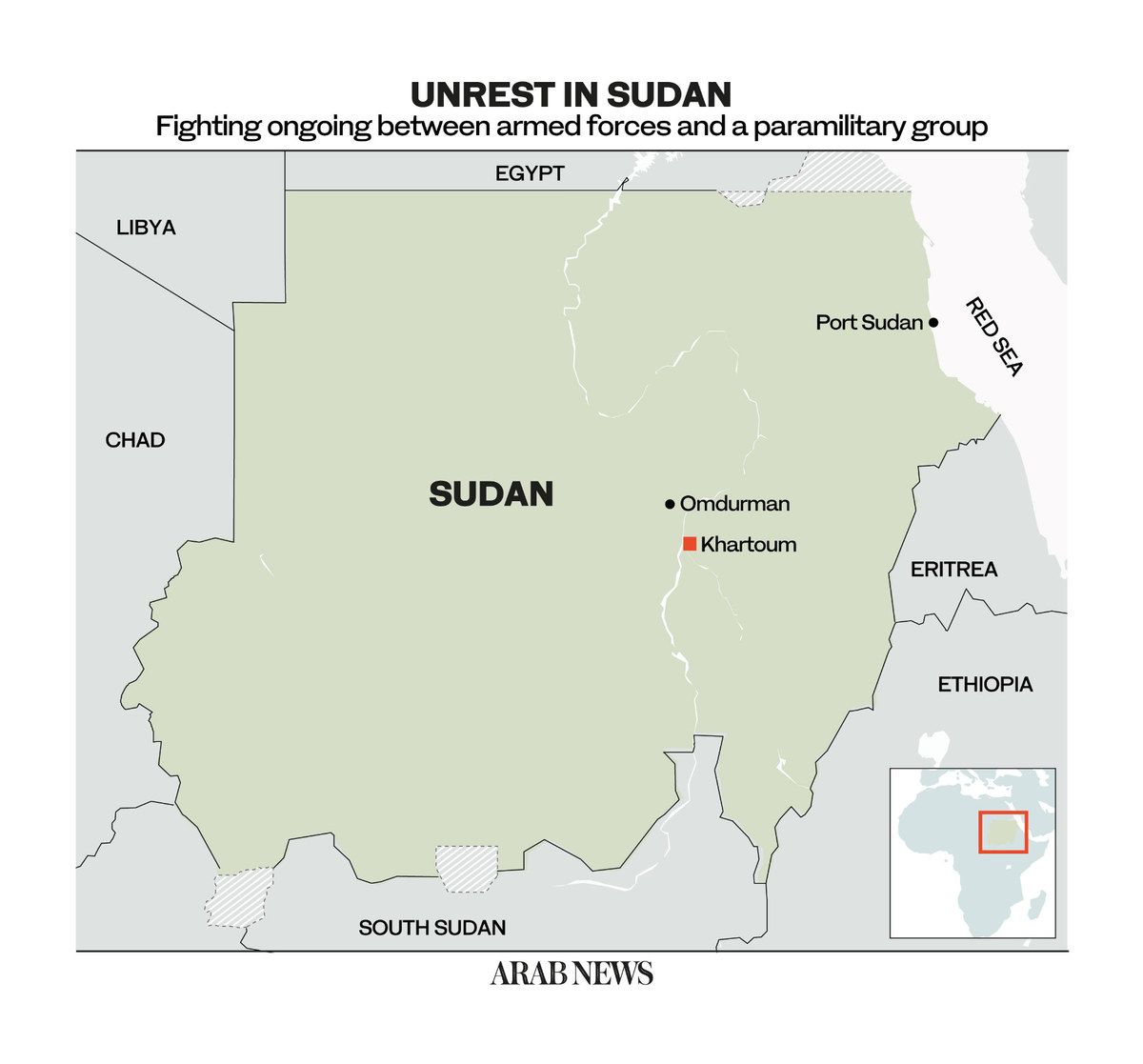
Fighting soon spread across the country, from Merowe in the north to El-Obeid in the south.
In statements to the media, Ibrahim Al-Shwaimi, a former Egyptian assistant minister of foreign affairs, clarified that the detained troops were carrying out joint training exercises with the Sudanese military, and were not party to the conflict.
Egypt’s concerns over Sudan’s stability comes as no surprise given Cairo’s long history of hot-and-cold ties with Khartoum. While Egypt has invested millions in development projects in Sudan, many issues such as territorial claims over the eastern section of the Egypt-Sudan border and the use of the Nile’s water remain contentious.
“Egypt seeks the stability of Sudan, the unity of Sudanese lands, the preservation of state institutions in Sudan, and the strength of its armed forces. The stability and strength of Sudan are the protection of Egyptian national security, the protection of approximately 1,200 km of common borders with our brothers in Sudan and the prevention of terrorist infiltration into our lands,” Egyptian parliamentarian Mahmoud Badr told Arab News.
 This satellite image shows incinerated passenger planes at the Khartoum International Airport in Sudan on April 16, 2023.
“In all cases, the great Egyptian armed forces are able to maintain security in the southern direction, as they protected it in the western direction before, and we wish the Sudanese people goodness and stability.”
In just two days of violence, dozens of Sudanese have been killed and more than 600 wounded. Civilians are caught in the crossfire, with children trapped inside schools, and hospitals completely overwhelmed by the growing number of casualties.
Multiple civilians, including three workers from the UN’s World Food Programme, have been killed. The country’s airports were shuttered and its main telecommunications provider and TV channels shut down their services on Sunday.
This latest explosion of violence is the climax of several months of political tension and days of military mobilization. The clashes stem from events which transpired several years ago, after former Sudanese President Omar Bashir was deposed during a 2019 revolution and replaced by an interim government.
Two years later, Gen. Abdel Fattah Al-Burhan of the Sudanese Armed Forces and Gen. Mohamed Hamdan Dagalo of the paramilitary Rapid Support Forces (RSF) seized power and implemented a military junta.
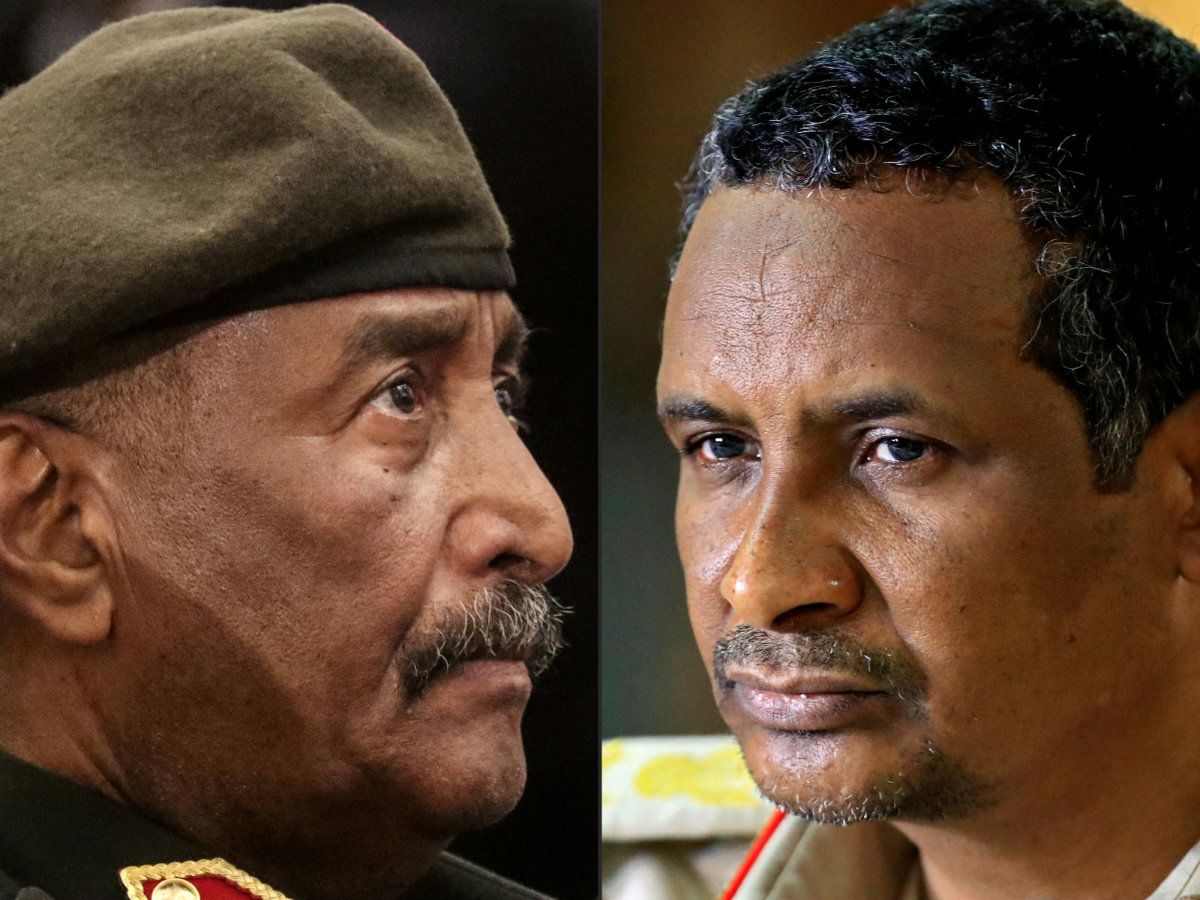 Sudan's Army chief Abdel Fattah al-Burhan (L) the commander of the
paramilitary Rapid Support Forces commander, General Mohamed Hamdan
Daglo
Sudan's Army chief Abdel Fattah al-Burhan (L) the commander of the
paramilitary Rapid Support Forces commander, General Mohamed Hamdan
Daglo
Fast forward to today — during the 2021 coup, April 2023 was set as the date for Sudan’s transition to a civilian-led government. However, a rift between former allies Al-Burhan and Dagalo grew wider as the two argued over the timetable for and hierarchy of the RSF’s full integration into the Sudanese military.
A few days before the current violence, RSF forces began to mobilize across the country. Now, both sides are blaming each other for lighting the Sudanese powder keg. The information blackout makes accurate reporting difficult: The RSF and Sudanese Armed Forces alternately claim that they control large swaths of cities and other Sudanese territory.
On Sunday, Egyptian President Abdel Fattah El-Sisi received a phone call from his South Sudanese counterpart Salva Kiir. The two discussed the recent situation in Sudan as well as the political and security roles of Egypt and South Sudan in Sudan.
The two leaders stressed the seriousness of the situation and the ongoing military clashes, calling for an immediate ceasefire and affirming their “full support for the brotherly Sudanese people in their aspirations toward achieving security, stability and peace.”
They also expressed the readiness of Egypt and South Sudan to mediate between the Sudanese parties, while cautioning that additional violence could lead to a further breakdown in the security situation in Sudan.
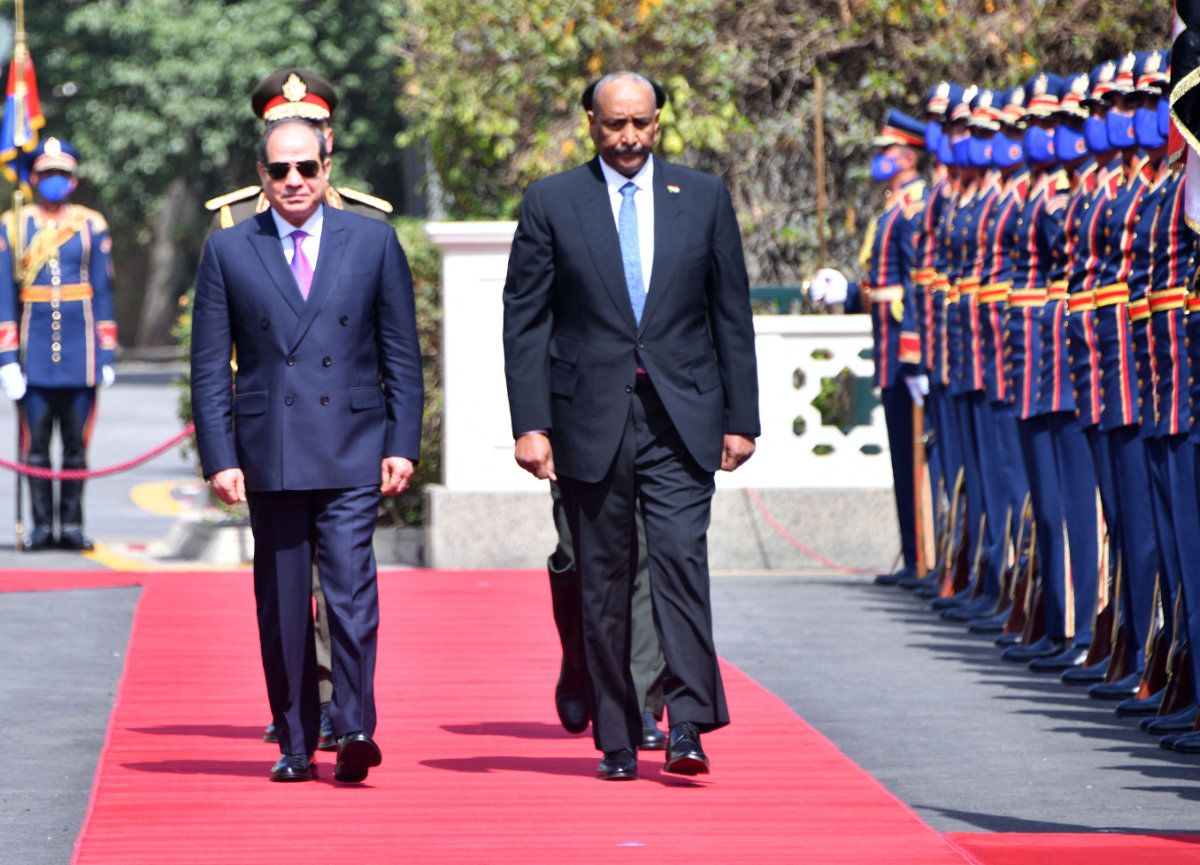 Egyptian President Abdel Fattah al-Sisi (L), shown receiving Sudan's
General Abdel Fattah Al-Burhan in Cairo in this photo taken on March 30,
2022, has called on the warring Sudanese parties to immediately cease
hostilities and work together toward security and stability.
Egyptian President Abdel Fattah al-Sisi (L), shown receiving Sudan's
General Abdel Fattah Al-Burhan in Cairo in this photo taken on March 30,
2022, has called on the warring Sudanese parties to immediately cease
hostilities and work together toward security and stability.
Separately, Sameh Shoukry and Ali Al-Sadiq, the foreign ministers of Egypt and Sudan respectively, held a phone call on Sunday to discuss the developments in Sudan and efforts to end the crises.
Shoukry conveyed to his Sudanese counterpart Egypt’s “deep concern over the continuation of the current armed confrontations, as they pose a threat to the security and safety of the brotherly Sudanese people and the stability of their country.”
The call also touched on the conditions of the Egyptian community in Sudan and the importance of preserving the security and safety of all Egyptians in Sudan.
They also emphasized that the consolidation of security and stability is the guarantee of the completion of the political transitional path and the achievement of construction and development in Sudan.
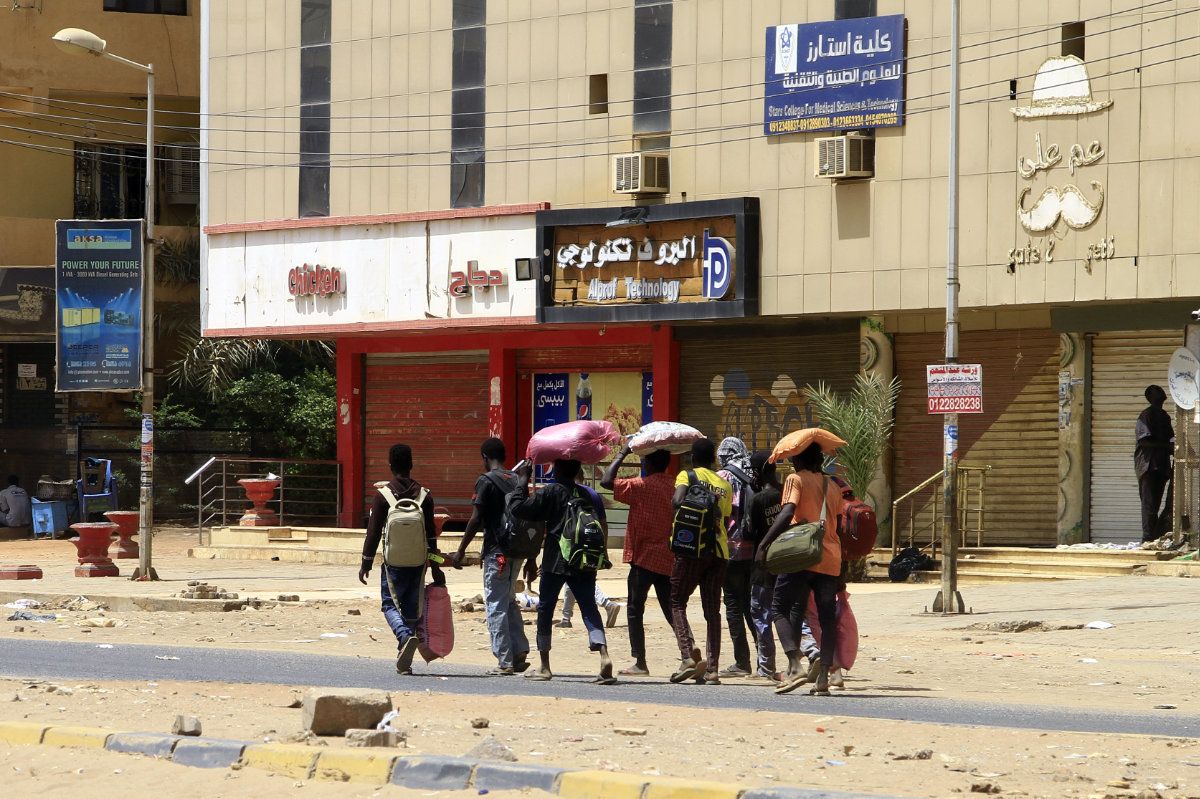 Civilians move to safety amid clashes between Sudan's army soldiers and RSF paramilitaries in Khartoum on April 15, 2023.
For its part, the RSF issued a statement offering assurance that Egyptian citizens in Sudan were safe, referring presumably to the soldiers in its custody. It added that the force was ready to hand Egyptian citizens over to their leadership as soon as the security conditions calmed down.
Khaled Mahmoud, an Egyptian writer and journalist specializing in Sudanese affairs, told Arab News that although the conflict may be limited in scope now, it has the potential to turn into a long-drawn-out crisis.
“The conflict may extend over time and not end or be resolved within hours or days ... similar to the Libyan or Syrian situation. It may extend geographically and move to other regions in Sudan. The matter may turn into a regional war by proxy and Egypt may get involved in one way or another in that war, and that is why Cairo wants to anticipate all this and treat the crisis from the beginning,” he said.
Badr said the latest crisis had placed Sudan in a delicate situation and he expressed hope that a ceasefire would end the conflict and prevent it from spreading.
Separately, Egyptian political analyst Ammar Ali Hassan weighed in on the crisis in a Facebook post. “Egypt has nothing to do with the conflict between Hamidati (Gen. Mohammed Hamdan Dagalo) and Abdel Fattah Al-Burhan, and any Egyptian presence there took place in agreement with the official authorities — that is, Al-Burhan and Hamidati together,” he said.
“There is no wonder in Egypt’s continuous work for a stable Sudan, because this is in its interest.”
By Sunday evening, witnesses and residents said the Sudanese army had carried out airstrikes on RSF barracks and bases, including in Omdurman, across the Nile from Khartoum, and managed to destroy most of their facilities.
They said the army had also wrested back control over much of Khartoum’s presidential palace from the RSF after both sides claimed to control it and other key installations in Khartoum, where gun battles raged all day.