

Why the next stage of capitalism is coming
Nearly 250 years ago, the economist and philosopher Adam Smith wrote The Wealth of Nations, in which he described the birth of a new form of human activity: industrial capitalism. It would lead to the accumulation of wealth beyond anything that he and his contemporaries could have imagined.
Capitalism has fuelled the industrial, technological and green revolutions, reshaped the natural world and transformed the role of the state in relation to society. It has lifted innumerable people out of poverty over the last two centuries, significantly increased standards of living, and resulted in innovations that have radically improved human well-being, as well as making it possible to go to the Moon and read this article on the internet.
However, the story is not universally positive. In recent years, capitalism's shortcomings have become ever-more apparent. Prioritising short-term profits for individuals has sometimes meant that the long-term well-being of society and the environment has lost out – especially as the world has faced the Covid-19 pandemic and climate change. And as political unrest and polarisation around the world have shown, there are growing signs of discontent with the status quo. In one 2020 survey by the marketing and public relations firm Edelman, 57% of people worldwide said that "capitalism as it exists today does more harm than good in the world".
Indeed, if you judge by measures such as inequality and environmental damage, "the performance of Western capitalism in recent decades has been deeply problematic", the economists Michael Jacobs and Mariana Mazzucato wrote recently in the book Rethinking Capitalism.
However, that does not mean there are no solutions. "Western capitalism is not irretrievably bound to fail; but it does need to be rethought," argue Jacobs and Mazzucato.
So, will capitalism as we know it continue in its current form – or might it have another future ahead?
Capitalism has spawned thousands of books and millions of words, and so it would be impossible to explore all its facets. That said, we can start to understand where capitalism could be headed in the future by exploring where it began. This tells us that capitalism hasn't always worked the way it does today – particularly in the West.
Between the 9th and 15th Centuries, autocratic monarchies and ecclesiastical hierarchies dominated Western society. These systems began to fall away as people increasingly asserted their right to individual liberty. This push for a greater focus on the individual favoured capitalism as an economic system because of the flexibility it allowed for private property rights, personal choice, entrepreneurship and innovation. It also favoured democracy as a governing system for its focus on individual political freedom.
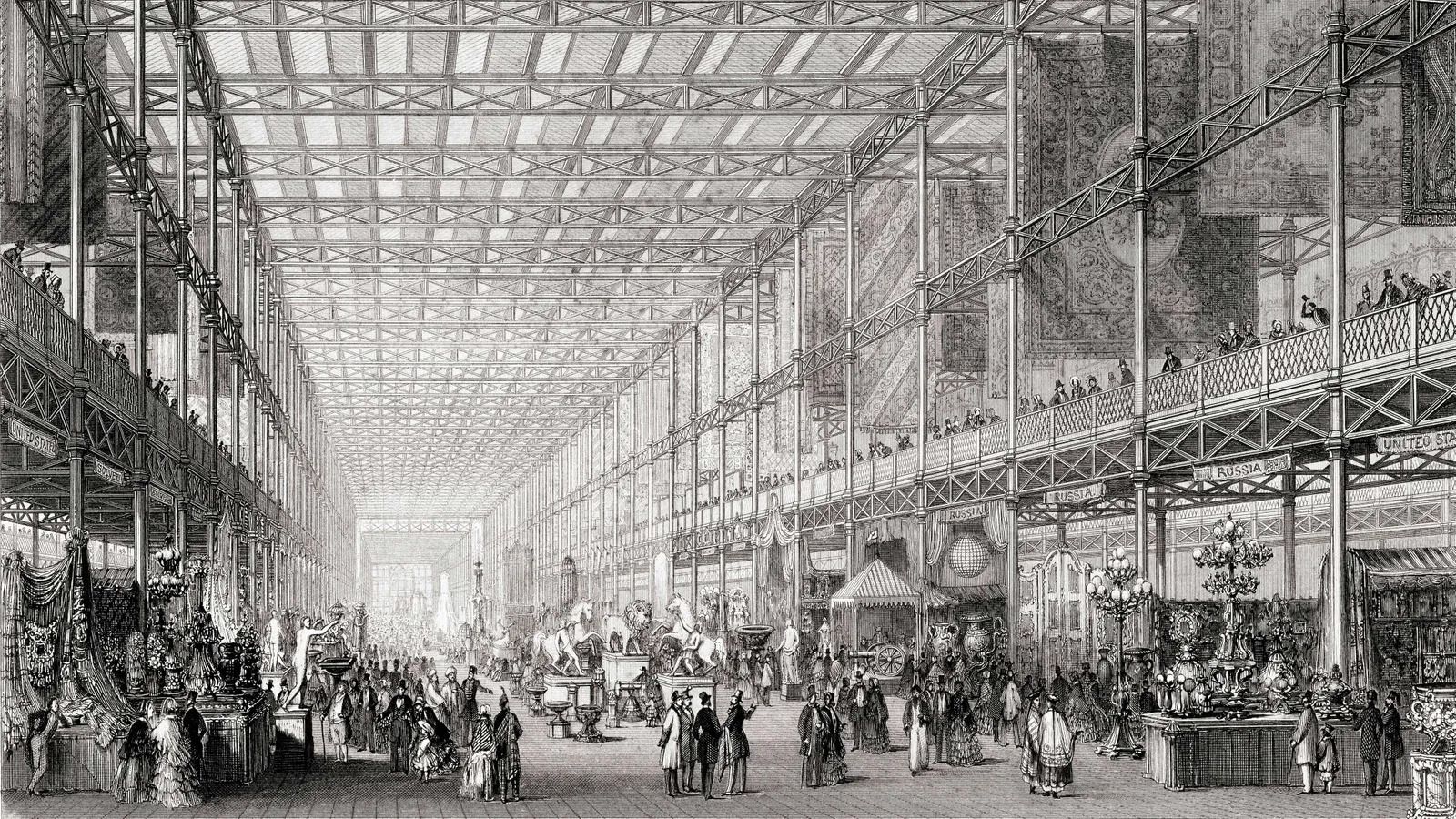 In 1851, London hosted the "Great Exhibition Of The Works Of Industry Of All Nations"
The shift toward greater individual liberty changed the social contract. Previously, many resources were provided by those in power (land, food and protection) in exchange for significant contributions from citizens (for instance, from slave labour to hard labour with little pay, high taxes and unquestioning loyalty). With capitalism, people expected less from governing authorities, in exchange for greater civil liberties, including individual, political and economic freedom.
But capitalism would evolve significantly over the following centuries – and particularly so during the second half of the 20th Century. After World War Two, the Mont Pelerin Society, an economic policy think tank, was founded with the goal of addressing the challenges confronting the West. Its specific focus was on defending the political values of an open society, rule of law, freedom of expression and free market economic policies – central tenents of classical liberalism.
Its ideas eventually gave rise to "supply-side economics". This was the belief that lower taxes and minimal regulation of the free market would lead to the most economic growth – and, therefore, better lives for all. In the 1980s, coupled with the emergence of political neoliberalism, supply-side economics became a priority for the US and many European governments.
This newer strain of capitalism has led to increased economic growth worldwide, while lifting a substantive number of people out of absolute poverty. But at the same time, critics argue that its tenets of lowering taxes and deregulating business has done little to support political investment in public services, such as crumbling public infrastructure, improving education and mitigating health risks.
Perhaps most significantly, in many developed nations late-20th Century capitalism has contributed to a significant gap between the wealth of the richest and poorest people, as measured by the Gini Index. And in some countries, that gap is growing ever-wider. It's particularly stark in the US, where the poorest individuals have seen no real income growth since 1980, while the ultra-rich at the top have seen their income grow by around 6% per year. The richest billionaires in the world are almost all based in the US, and have amassed staggering fortunes, while at the same time the median US household income has risen only modestly since the turn of the century.
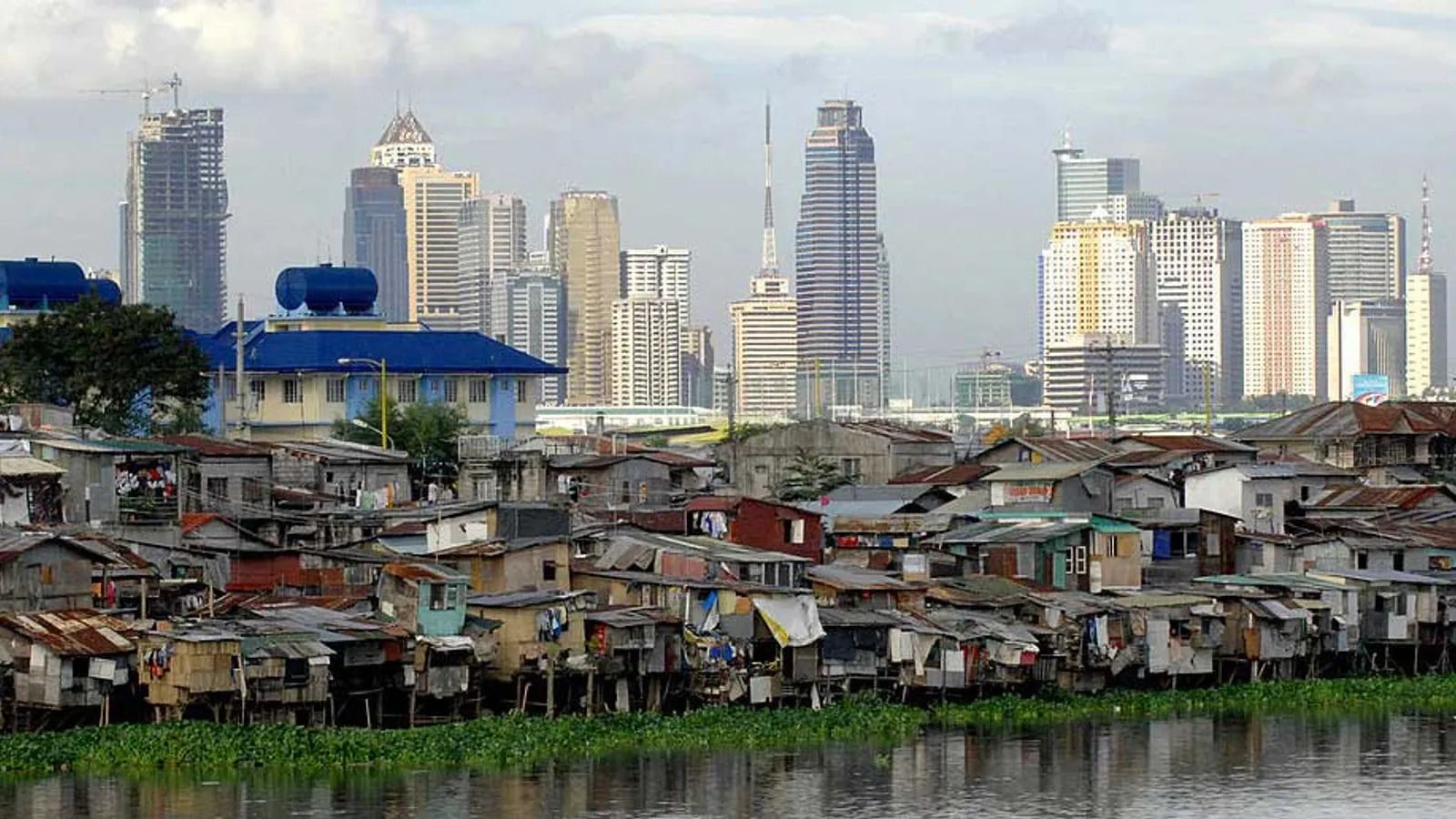 If the gap grows between rich and poor, then instability can follow
The inequality gap may matter more than some politicians and corporate leaders would like to believe. Capitalism may have lifted millions of people around the world out of absolute poverty, but inequality can be corrosive within a society, says Denise Stanley, a professor of economics at California State University-Fullerton. "Absolute poverty is basically folks are able to get… $4 per day per person. It’s a threshold measure," she explains, but relative poverty can unbalance a society over the long-term. Even if the economy is growing, income inequality and stagnant wages can make people feel less secure as their relative status in the economy diminishes. Behavioural economists have shown that "our status compared to other people, our happiness, is derived more by relative measures and distribution then by absolute measures. If that’s true then capitalism has a problem," says Stanley.
Inequality can unbalance a society over the long-term
As a result of rising inequality, "people have less trust in institutions and experience a sense of injustice", according to the Edelman report. But the impact on people's lives may go deeper. Capitalism in its current form is destroying the lives of many working-class people, argue the economists Anne Case and Sir Angus Deaton in their book Deaths of Despair and the Future of Capitalism. Over "the past two decades, deaths of despair from suicide, drug overdose, and alcoholism have risen dramatically, and now claim hundreds of thousands of American lives each year", they write.
The 2007-2008 financial crisis exacerbated these problems. The crisis was brought on by excessive deregulation, and hit the working class in developed nations particularly hard. The subsequent bailouts of big banks led to resentment and "helped fuel the rise of the… polarised politics we’ve seen over the last decade", according to Richard Cordray, the first director of the US Consumer Financial Protection Bureau (CFPB) and author of Watchdog: How Protecting Consumers Can Save Our Families, Our Economy, and Our Democracy.
Liberal democracies may now be at an inflection point, where citizens contest today’s capitalist norms with greater political intensity worldwide.
J Patrice McSherry, a professor of political science at Long Island University in New York, has observed this change in Chile, for instance. "Social mobilisation began with a rise in subway fares in October 2019, sparking broad-based protests that convoked more than one million people in demonstrations," she says. "The social movement has exposed the deep sources of discontent in Chile: entrenched and growing inequality, the ever-rising cost of living, and extreme privatisation in one of the world’s most neoliberal states."
Those grievances can be traced back to the late 20th Century, when Chile's authoritarian government introduced constitutional reforms that "institutionalised the economic and political domination of the dictatorship and enshrined a neoliberal framework that erased the role of the state in social and economic areas. It restricted political participation, gave the [political] right disproportionate power, and installed a tutelary role for the armed forces," writes McSherry in an article for the North American Congress on Latin America, a non-profit organisation which tracks trends in the region.
 Women wearing a yellow vest (gilet jaune) stage a protest in France
Similarly, the Yellow Vest movement that started in France in 2018 was initially about the increased cost of fuel for commuters, but quickly broadened to include grievances similar to those in Chile, the cost of living, growing inequality, and a demand for government to stop ignoring the needs of ordinary citizens.
And in the US, the political movement which spawned Trumpism is arguably fuelled by economic inequality just as much as ideology. Among voters who have lost out due to globalisation, the Trump administration won widespread political support for its more closed approaches to global trade, including withdrawal from the Trans-Pacific Partnership and retaliatory tariffs on Chinese, Indian, Brazilian and Argentinian goods and services imported into the US. Even the US's allies were targeted by this agenda, including Europe, Canada, and Mexico.
Economies cannot become completely divorced from the demands of democratic majorities
While one response to the downsides of capitalism in its current form is for nations to take a defensive posture, seeking to protect themselves by minimising external ties, protectionism "is short-sighted, particularly when it comes to trade," according to Anahita Thoms, head of Baker McKenzie's International Trade Practice in Germany and Young Global Leader of the World Economic Forum. "While it may bring some temporary benefits, in the long-term it endangers the global economy as a whole and threatens to undo decades of economic progress. It is crucial to maintain investment-friendly, open markets," says Thoms.
A central challenge for governments in the 21st Century will be to work out how to balance these long-term benefits of global trade with the short-term harms that globalisation can bring to local communities affected by low wages or unemployment. Economies cannot become completely divorced from the demands of democratic majorities who seek jobs, affordable housing, education, healthcare and a clean environment. As the Chilean, Yellow Vest and Trumpist movements show, many people are asking for change to the existing system so that it accounts for these needs, rather than only enriching private interests.
In sum, it may be time to reconsider the social contract for capitalism, so that it becomes more inclusive of a broader set of interests beyond individual rights and liberties. This is not impossible. Capitalism has evolved before, and if it is to continue into the longer-term future, it can evolve again.
The future of capitalism
In recent years, various ideas and proposals have emerged that aim to rewrite capitalism's social contract. What they have in common is the idea that businesses need more varied measures of success than simply profit and growth. In business, there's "conscious capitalism", inspired by the practices of so-called "ethical" brands. In policy, there's "inclusive capitalism", advocated by both the Bank of England and The Vatican, which advocates harnessing "capitalism for good". And in sustainability, there's the idea of "doughnut economics", a theory proposed by economist and author Kate Raworth, which suggests that it's possible to thrive economically as a society while also staying within social and planetary boundaries.
Then there's the "Five Capitals" model articulated by Jonathan Porritt, the author of Capitalism As If The World Matters. Porritt calls for the integration of five pillars of human capital – natural, human, social, manufactured, and financial capital – into existing economic models.
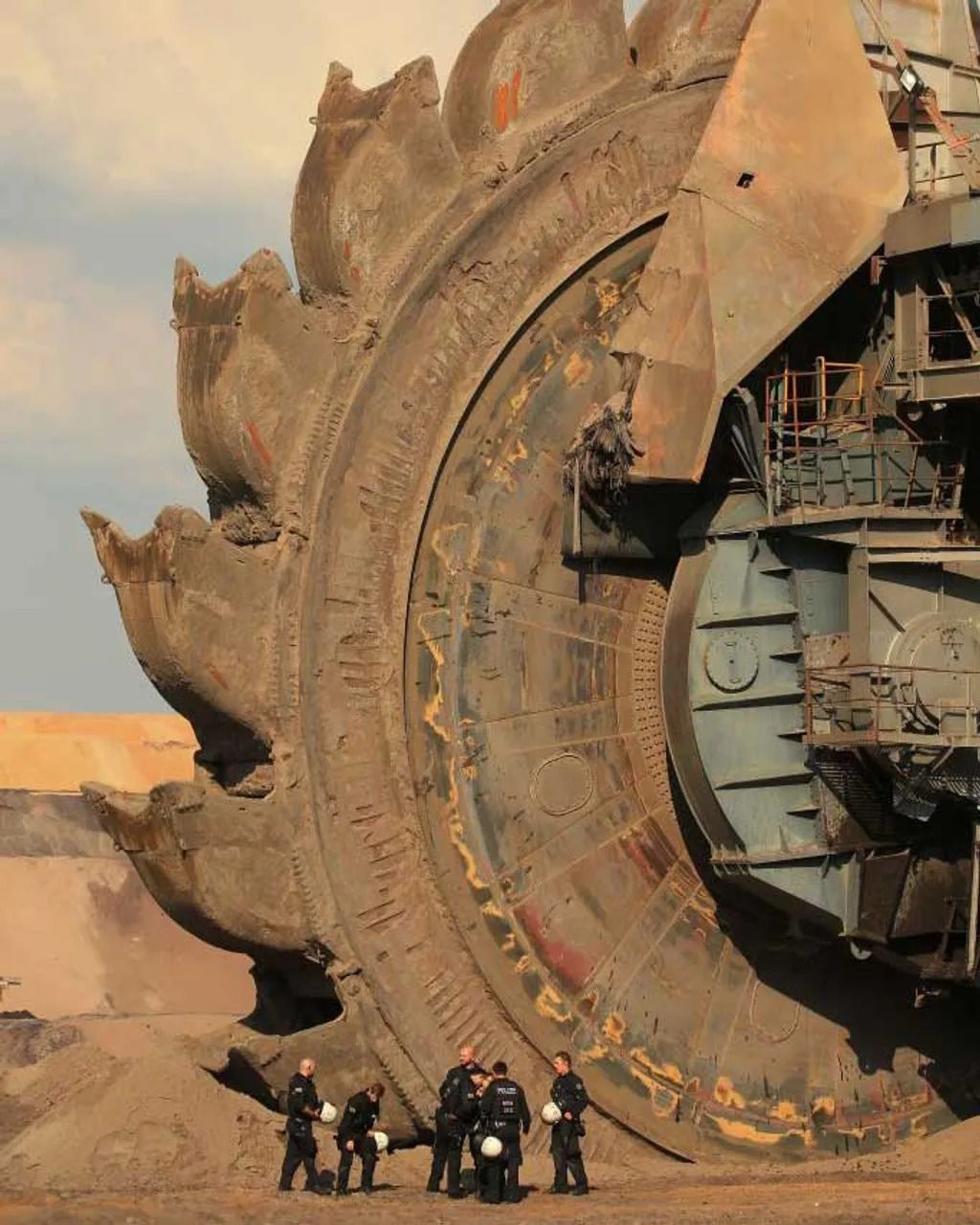 Capitalism's in-built incentives may need to expand to embrace sustainability
One tangible example of where companies are beginning to embrace the Five Capitals is the B-Corporation movement. Certified companies sign up to a legal obligation to consider "the impact of their decisions on their workers, customers, suppliers, community, and the environment". Their ranks now include major corporations such as Danone, Patagonia, and Ben & Jerry's (which is owned by Unilever).
This approach has become increasingly mainstream, reflected in a 2019 statement released by over 180 corporate CEOs redefining "the purpose of a corporation". For the first time, CEOs representing Wal-Mart, Apple, JP Morgan Chase, Pepsi, and others acknowledged that they must redefine the role of business in relation to society and the environment.
Their statement proposes that companies must do more than deliver profits to their shareholders. In addition, they must invest in their employees and contribute to the improvement of the human, natural and social elements of capital that Porritt refers to in his model, rather than the sole focus on financial capital.
In a recent interview with Yahoo Finance on the future of capitalism, the executive chairman of Best Buy, Hubert Joly, said that "what has happened is that for 30 years, from the 1980s to 10 years ago, we’ve had this singular focus on profits that has been excessive and has caused a lot of these issues. We need to unwind a bit of these 30 years. If we have a refoundation of business, it can be a refoundation of capitalism as well... I think this can be done, this has to be done."
A new direction
More than three decades ago, the United Nations Brundtland Commission wrote in "Our Common Future" that there was ample evidence that social and environmental impacts are relevant and need to be incorporated into development models. It is now obvious that these issues must also be considered within the social contract underpinning capitalism, so that it is more inclusive, holistic and integrated with basic human values.
Ultimately, it is worth remembering that citizens in a capitalist, liberal democracy are not powerless. Collectively, they can support companies aligned with their beliefs, and continuously demand new laws and policies which transform the competitive landscape of corporations so that they might improve their practices.
When Adam Smith was observing nascent industrial capitalism in 1776, he could not foresee just how much it would transform our societies today. So it follows that we might be similarly blind to what capitalism could look like in another two centuries. However, that does not mean we should not ask how it might evolve into something better in the nearer term. The future of capitalism and our planet depend on it.