

Why is the West still not learning from Asia’s Covid-19 success?
While the French and English are barred from leaving their homes except for essential work, medical reasons, grocery shopping and exercise, South Koreans
frequent restaurants, sing karaoke and drink at bars.
As the United States watches daily Covid-19 cases near 200,000, Vietnam reports infections in the single digits. And as one Western country after another struggles to recover from its worst recession on record, Taiwan expects to exit 2020 without experiencing any economic contraction at all.
After failing to handle the initial stages of the pandemic as well as many of their East Asian peers, Western authorities are again struggling to handle the virus as it returns in its second wave, seemingly resigning themselves to soaring cases or imposing lockdowns they had previously ruled out due to their heavy economic and social costs.
Almost a year since the virus was first reported in Wuhan, China, setting off a global experiment in pandemic response, Western governments remain unable or unwilling to emulate the experiences of Asian jurisdictions that kept deaths low while also minimising economic carnage and social isolation.
“Most countries seem to be following their own approach, with little learning and adapting from the success of other countries,” said Jeremy Rossman, a senior lecturer in virology at the University of Kent.
“As to why a change in policy is not being considered now, that is hard to say,” Rossman said. “There appears to be some political will in following the approach they have set in motion. It is also possible that changing approaches would require both admitting that the current approach is not working and that the situation is serious enough to require considerable reinvestment.
”Although many Western countries belatedly adopted measures embraced in Asia, such as mask-wearing and mass testing, authorities have been slow or reluctant to embrace other strategies such as invasive technological solutions that have bolstered contact tracing and quarantine efforts in South Korea and Taiwan.
After vowing to avoid a repeat of shutdowns that paralysed economies earlier in the year, leaders in countries such as France and England have in recent weeks imposed strict lockdowns amid soaring case counts that have dwarfed peaks seen in March and April. In the US, where daily cases haven’t dropped below 10,000 since March, some states are pausing or reversing the reopening of their economies, while others are staying the course despite rising infections.
Peter Collignon, an infectious disease expert at Australian National University Medical School, said many Western nations had failed to use the time bought by earlier lockdowns to implement more sustainable measures for the medium and long term.
Although Pfizer and BioNTech’s recent announcement of interim findings that its vaccine is 90 per cent effective has raised hopes the end of the pandemic could be in sight, experts do not expect widespread immunisation among the general public until the latter part of next year.
“You look at New York, at Spain, at a lot of countries that had really hard lockdowns, it gives them relief in the short term, but unless they put all those other things into place, like Korea … and Taiwan and Singapore, then basically you waste the effort almost,” Collignon said.
In South Korea, health officials use warrantless access to phone records, credit card transactions and CCTV footage to track down close contacts of suspect cases. Text-message alerts tell members of the general public of the past movements of anonymised patients – even down to specific businesses and restaurants.

The tech-heavy strategy, combined with strict quarantine, mass testing and widespread public adherence to mask-wearing and social distancing, has been credited with bringing a major outbreak in February under control and preventing a large-scale resurgence since then. Even with 100-plus daily cases in recent weeks, South Koreans have been able to go about their lives largely as normal, while businesses have continued to trade.
With just over 500 deaths, the country’s per capita fatality rate is about 77 times lower than that of the US. And in comparison with Britain’s predicted 10 per cent GDP decline, the East Asian economy is expected to contract by only about 1 per cent in 2020.
In Taiwan, authorities have used phone tracking, data analytics and travel histories to quickly identify cases and enforce quarantine procedures in a strategy that has eschewed strict lockdown measures.
The self-ruled island, which introduced border controls early in the pandemic, has recorded just seven deaths and is expected to avoid recession entirely this year.
“Completeness of contact tracing is important,” said Cho Sung-il, a professor of epidemiology at Seoul National University. “The effect of containing the spread depends on whether completeness is achieved up to the critical level. Relying only on voluntary cooperation will not achieve sufficient completeness.”
Some observers have pointed to culture as a factor in South Korea and Taiwan’s handling of the pandemic, suggesting individualistic Westerners have been less conscientious about not spreading the virus and are more concerned about the privacy implications of technological solutions.
Leslie A. Saxon, a professor of medicine at the Keck School of Medicine at the University of Southern California, was sceptical that Americans would readily accept some of the measures implemented in Asia, but said the country had suffered due to a “federated, chaotic response that became highly politicised”.
“We didn’t rationally, systematically or centrally leverage the enormous talent that exists in the Western world to fight this other than probably the race for the vaccine, which will probably be historic,” Saxon said.
Others suggest the distinction lies not in values, but the lack of political will and decisive leadership, especially considering Western populations’ general acceptance of unprecedented curtailments of personal freedoms in the form of lockdowns and curfews.
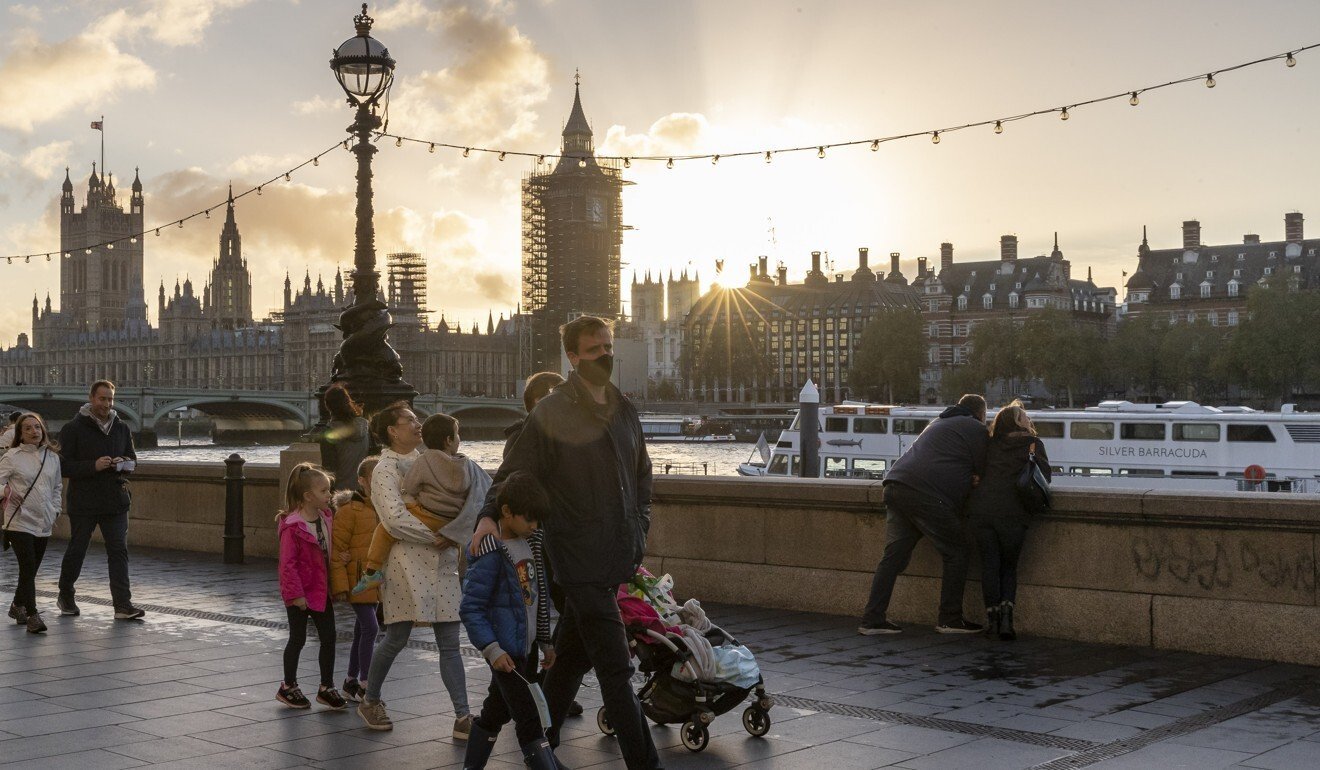
“I personally feel that it is more of the latter than the former,” said Hsu Li Yang, an infectious diseases expert at the National University of Singapore’s Saw Swee Hock School of Public Health. “There is also perhaps a bias in the general public that conflates the differences between countries, for instance certain countries are able to be rapidly successful because their societies are more collectivist in nature, although these should not influence public health and policy experts that much with regard to careful examination of specific policies and interventions.”
Even now, there still could be a “lack of awareness, both by the public and the press – and probably even among the experts – of successful interventions” outside the West, Hsu said.
“Perhaps this is a blind spot common to high and upper-middle income countries,” he said. “Within Asia, have policymakers learned as much from the successes of the Mekong countries as we might have?”
Raina MacIntyre, head of the biosecurity research programme at the Kirby Institute at the University of New South Wales, suggested arrogance could be at play.
“I think Western countries are used to patronising low- and middle-income countries and perceive themselves as superior in every way, including disease control,” MacIntyre said.
Others say the privacy trade-off is a false choice to begin with.
Effy Vayena, a professor of bioethics at the Swiss Federal Institute of Technology, said contact-tracing options developed in Europe to better address privacy concerns had been let down by poor roll-out and a reliance on outdated systems and equipment like fax machines.
“It is technically feasible,” Vayena said. “We’ve seen the systems, we’ve seen that their effectiveness is actually good, the early data shows that they’re working. But we’re missing the other pieces.”
Not all Western countries have been similarly ravaged by the pandemic. Australia and New Zealand have notably kept cases and deaths low.
Both countries, however, suffered major economic shocks after implementing strict lockdowns, with restrictions in Melbourne and the surrounding state of Victoria ranking among the toughest and most prolonged in the world.
Michael T. Osterholm, director of the Center for Infectious Disease Research and Policy at the University of Minnesota, said he remained unsure how significant digital solutions had been in Asian jurisdictions, but said the “dedicated and swift response of government investigators and public health investigators was really, really important”.
Osterholm said the examples of Australia and New Zealand put paid to the argument that controlling the virus was just too difficult for Western countries to achieve.
“There is no reason,” he said. “It’s about leadership, it’s about bringing the resources to bear, and it’s about bringing the numbers down.”
Collignon, the infectious diseases expert at ANU, said Australia and New Zealand’s experiences, while largely positive, nevertheless showed the limitations of the lockdown model. Not only would the harshest restrictions not be sustainable over time, he said, some measures –such as curbs on activities outdoors, where the risk of transmission is relatively low – did not “even make biological sense”.
“What is actually fairly obvious to me is that the success within Australia and New Zealand is not proportionate to the lockdown intensity. I think what it is proportionate to is the contact tracing, people following rules when they are infected, having good isolation quarantine and good infrastructure to do it, and a reasonably compliant population,” Collignon said.
“We’re going to have to work out how we stop the spread in as practical a way as possible – but sustainable over a long period of time.”
Vayena, the Swiss Federal Institute of Technology professor, warned that countries would continue to bounce in and out of lockdowns where their governments had failed to institute more sustainable and systematic alternatives over the past year.
“Right now even if you look at Europe as a whole, there is no plan,” she said. “There’s no strategy. Lockdowns are not a strategy. Small lockdowns every two or three months is not a strategy – it’s not a sustainable strategy, it’s a catastrophic strategy.”