Saudi Press

Saudi Arabia and the world
Friday, Dec 19, 2025

Why does Saudi Arabia want Red Sea islands of Tiran and Sanafir?

Why does Saudi Arabia want Red Sea islands of Tiran and Sanafir?

A multinational peacekeeping force will leave a strategic Red Sea island by the end of the year, the US says, potentially boosting opportunities for future contact between Saudi Arabia and Israel.

The White House has announced that peacekeepers including US soldiers will leave the strategic Red Sea island of Tiran by the end of the year, possibly boosting opportunities for future contact between Israel and Saudi Arabia

“Thanks to the months of quiet, persistent diplomacy, we have finalised an agreement to move international peacekeepers from Tiran Island in the Red Sea and transform an area that once sparked wars into a future hub of peaceful tourism and economic development,” US President Joe Biden said at a summit in Saudi Arabia on Saturday, after the move was first announced on Friday.

Egypt ceded the two small Red Sea islands of Tiran and Sanafir, which are uninhabited but of key strategic value, to Saudi Arabia in 2016. But their territorial status needs to be ratified by Israel before their sovereignty is transferred.

The decision to remove peacekeepers could help resolve the tricky status that stems from their location and turbulent history and build trust between Israel and Saudi Arabia – two US allies that are now taking gradual steps that Washington hopes could one day lead to full diplomatic ties.


Who owns territorial claim over the islands?


*  The islands have been under the sovereignty of Egypt since 1950.

*  Israeli troops invaded the islands during the 1956 Suez Crisis that came after Egyptian President Gamal Abdel Nasser nationalised the canal, which was instrumental to trade between Europe and Asia.

*  Egypt regained control briefly for about a decade, but the islands – along with the Sinai Peninsula – were occupied by Israel again following the 1967 war.

*  Under the landmark 1978 Camp David peace treaty, Israel returned control of the Sinai, Tiran and Sanafir to Egypt.

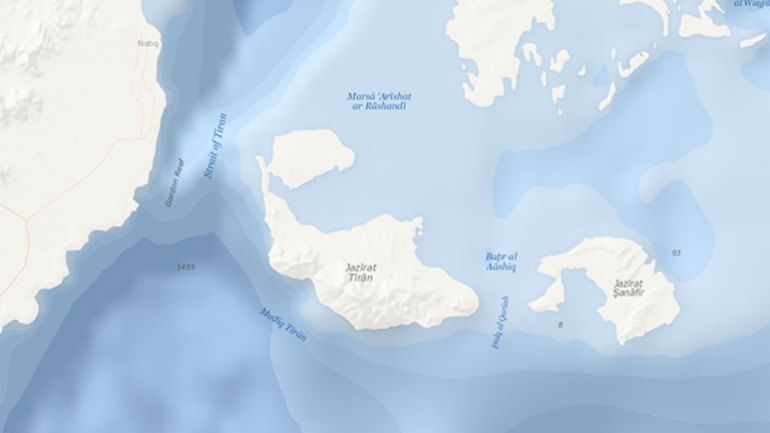
*  In 2016, Egypt ceded the islands, located east of its resort town Sharm el-Sheikh, to Saudi Arabia.

Why did Egypt cede control of the islands to Saudi Arabia?


*  The controversial April 2016 decision by President Abdel Fattah el-Sisi to hand over territorial sovereignty to Riyadh sparked nationalist protests in Egypt, which were quickly stifled.

*  Critics accused el-Sisi of ceding the islands in return for Saudi aid and investment. The government argued the islands were originally Saudi Arabian but leased to Egypt in the 1950s.

*  Egyptian courts handed down a series of contradictory rulings before the Supreme Constitutional Court ruled in favour of the handover.

*  It is worth noting that in 1990, former Egyptian President Hosni Mubarak voluntarily relinquished control of the two islands to Saudi Arabia.

*  It took two decades, in 2010, for Riyadh to post its maritime baseline at the United Nations to make its sovereignty claim, to which Egypt consented.

What is the strategic importance of the two islands?


*  Tiran controls the maritime passage in the strategic stretch of the Red Sea, meaning that it controls all shipping to Eilat, Israel’s only access to the Red Sea.

*  Saudi Arabia says it wants to develop the islands for tourism.

When did Saudi Arabia first stake a claim to the islands?


*  Saudi Arabia’s first claim to the islands was made by King Saud bin Abdulaziz in 1957, and was supported by the US.

*  At the request of the US ambassador to Riyadh at the time, Saudi Arabia released a statement in 1968 again staking claim to the islands and pledging free maritime passage should it fall in their hands.

What human presence is there on the islands?


*  As part of the Sinai’s demilitarisation following the Camp David agreement, Cairo was not allowed to station troops on the islands, where only peacekeepers were based as part of the so-called Multinational Force and Observers.

*  Tiran – which hosts a small airport for the peacekeepers – measures about 61sq kilometres (24sq miles), while Sanafir, to the east, is only about half that size.

*  The islands’ waters are occasionally visited by divers for their coral reefs.

Newsletter

Related Articles

Saudi Press
0:00
0:00
Close
Saudi Arabia to Introduce Sugar-Content Based Tax on Sweetened Drinks from January 2026
Saudi Hotels Prepare for New Hospitality Roles as Alcohol Curbs Ease
Global Airports Forum Highlights Saudi Arabia’s Emergence as a Leading Aviation Powerhouse
Saudi Arabia Weighs Strategic Choice on Iran Amid Regional Turbulence
Not Only F-35s: Saudi Arabia to Gain Access to the World’s Most Sensitive Technology
Saudi Arabia Condemns Sydney Bondi Beach Shooting and Expresses Solidarity with Australia
Washington Watches Beijing–Riyadh Rapprochement as Strategic Balance Shifts
Saudi Arabia Urges Stronger Partnerships and Efficient Aid Delivery at OCHA Donor Support Meeting in Geneva
Saudi Arabia’s Vision 2030 Drives Measurable Lift in Global Reputation and Influence
Alcohol Policies Vary Widely Across Muslim-Majority Countries, With Many Permitting Consumption Under Specific Rules
Saudi Arabia Clarifies No Formal Ban on Photography at Holy Mosques for Hajj 2026
Libya and Saudi Arabia Sign Strategic MoU to Boost Telecommunications Cooperation
Elon Musk’s xAI Announces Landmark 500-Megawatt AI Data Center in Saudi Arabia
Israel Moves to Safeguard Regional Stability as F-35 Sales Debate Intensifies
Cardi B to Make Historic Saudi Arabia Debut at Soundstorm 2025 Festival
U.S. Democratic Lawmakers Raise National Security and Influence Concerns Over Paramount’s Hostile Bid for Warner Bros. Discovery
Hackers Are Hiding Malware in Open-Source Tools and IDE Extensions
Traveling to USA? Homeland Security moving toward requiring foreign travelers to share social media history
Wall Street Analysts Clash With Riyadh Over Saudi Arabia’s Deficit Outlook
Trump and Saudi Crown Prince Cement $1 Trillion-Plus Deals in High-Profile White House Summit
Saudi Arabia Opens Alcohol Sales to Wealthy Non-Muslim Residents Under New Access Rules
U.S.–Saudi Rethink Deepens — Washington Moves Ahead Without Linking Riyadh to Israel Normalisation
Saudi Arabia and Israel Deprioritise Diplomacy: Normalisation No Longer a Middle-East Priority
Saudi Arabia Positions Itself as the Backbone of the Global AI Era
As Trump Deepens Ties with Saudi Arabia, Push for Israel Normalization Takes a Back Seat
Thai Food Village Debuts at Saudi Feast Food Festival 2025 Under Thai Commerce Minister Suphajee’s Lead
Saudi Arabia Sharpens Its Strategic Vision as Economic Transformation Enters New Phase
Saudi Arabia Projects $44 Billion Budget Shortfall in 2026 as Economy Rebalances
OPEC+ Unveils New Capacity-Based System to Anchor Future Oil Output Levels
Will Saudi Arabia End Up Bankrolling Israel’s Post-Ceasefire Order in Lebanon?
Saudi Arabia’s SAMAI Initiative Surpasses One-Million-Citizen Milestone in National AI Upskilling Drive
Saudi Arabia’s Specialty Coffee Market Set to Surge as Demand Soars and New Exhibition Drops in December
Saudi Arabia Moves to Open Two New Alcohol Stores for Foreigners Under Vision 2030 Reform
Saudi Arabia’s AI Ambitions Gain Momentum — but Water, Talent and Infrastructure Pose Major Hurdles
Tensions Surface in Trump-MBS Talks as Saudi Pushes Back on Israel Normalisation
Saudi Arabia Signals Major Maritime Crack-Down on Houthi Routes in Red Sea
Italy and Saudi Arabia Seal Over 20 Strategic Deals at Business Forum in Riyadh
COP30 Ends Without Fossil Fuel Phase-Out as US, Saudi Arabia and Russia Align in Obstruction Role
Saudi-Portuguese Economic Horizons Expand Through Strategic Business Council
DHL Commits $150 Million for Landmark Logistics Hub in Saudi Arabia
Saudi Aramco Weighs Disposals Amid $10 Billion-Plus Asset Sales Discussion
Trump Hosts Saudi Crown Prince for Major Defence and Investment Agreements
Families Accuse OpenAI of Enabling ‘AI-Driven Delusions’ After Multiple Suicides
Riyadh Metro Records Over One Hundred Million Journeys as Saudi Capital Accelerates Transit Era
Trump’s Grand Saudi Welcome Highlights U.S.–Riyadh Pivot as Israel Watches Warily
U.S. Set to Sell F-35 Jets to Saudi Arabia in Major Strategic Shift
Saudi Arabia Doubles Down on U.S. Partnership in Strategic Move
Saudi Arabia Charts Tech and Nuclear Leap Under Crown Prince’s U.S. Visit
Trump Elevates Saudi Arabia to Major Non-NATO Ally Amid Defense Deal
Trump Elevates Saudi Arabia to Major Non-NATO Ally as MBS Visit Yields Deepened Ties
×