

The genetic power of ancient trees
In 2005, several of the centuries-old ponderosa pine trees on my 15 acres (0.06 sq km) of forest in the northern Rocky Mountains in Montana suddenly died. I soon discovered they were being brought down by mountain pine beetles, pernicious killers the size of the eraser on a pencil that burrow into the tree.
The next year the number of dying trees grew exponentially. I felt powerless and grief-stricken as I saw these giant, sky-scraping trees fading all around me, realising there was nothing I could do to stop it.
While the native bugs were the proximate cause, the underlying reason for the unprecedented mortality in my home state and throughout the Rockies was that winters had stopped getting really cold. When I first moved to Montana in the late 1970s, temperatures of -34C (-30F) or even below -40C (-40F) were common in winter, sometimes for weeks at a time. The coldest temperature on record in Montana is –57C (-70F). These days wintertime minimum temperatures rarely get below -18C (0F) or so. If they do, it is usually just for a day or two. That's not nearly cold enough to kill pine beetles, which make their own natural antifreeze.
Within three years, more than 90% of my forest had died. We hired loggers to cut the trees down and truck them to a factory, where they were pulped and turned into cardboard.
Trees clean our water, affect our climate, provide wood for building and supply sources of food for us and many of the animals we eat
But it wasn't just here. Trees were dying all over Western North America. British Columbia lost 80% of its mature lodge pole pine in 2006 and 2007 and has gone from being a carbon sink to a carbon source. Trees have continued to die across the West; a few years ago 129 million trees died in California.
The experience of watching my forest die sparked in me a renewed interest in what was happening to trees, both in Montana and globally. I began a now two decade-long inquiry into the lives, and deaths, of trees and forests.
Trees clean our water, affect our climate, provide wood for building and supply sources of food for us and many of the animals we eat. They even, somehow, seem to be connected to the stars. Yet we know astonishingly little about their role in our world.
We also lack knowledge about the genetics of trees: especially the effects on the gene pool of cutting down virtually all of the biggest, most robust trees for lumber over many centuries. And we are also mainly in the dark about how those trees that have survived will fare in a hotter and drier world.
In the last few years, however, scientists have started to unpack the importance of ancient tree genetics, with mounting evidence showing they will play a critical role in the future of the Earth's forests. This research follows efforts by one group of tree enthusiasts to attempt to replicate and plant the largest of these giants to protect their ancient DNA in what they call "living libraries". It appears to be prescient.
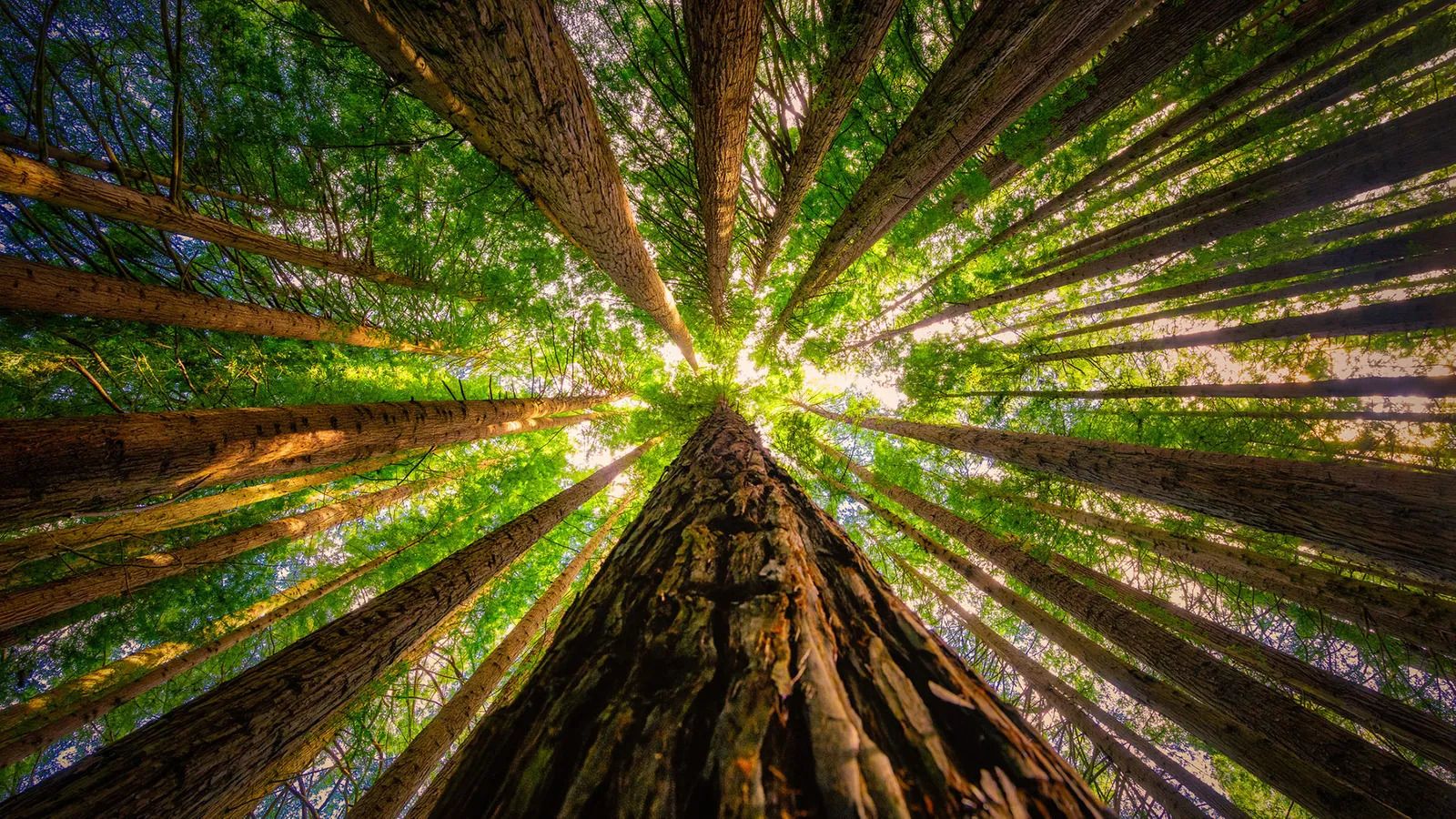 Redwoods are one of North America's most iconic trees, but are also
found elsewhere as in this forest planted in Victoria, Australia
Redwoods are one of North America's most iconic trees, but are also
found elsewhere as in this forest planted in Victoria, Australia
Craig D Allen has been on forest death-watch for much of his career. He has been dubbed as a "tree coroner" due to his desire to understand how trees are dying from climate change. Despite recently retiring from the US Geological Survey, he is now busier than ever researching the crisis in the world's forests and serving as an adjunct professor of ecology at the University of New Mexico.
Years ago now, I walked with him through acre upon acre of dying pinyon pine forests on the sere landscapes around Santa Fe, killed by prolonged drought and heat. When I saw him again recently, he told me that forest die-off is accelerating globally.
Allen is one of a small group of researchers meticulously unpacking what climate change is doing globally to ancient forests – forests which are at least several centuries old, the ones we know and love, especially old growth forests. It's a complex subject, but Allen points to research results published in the past decade which to him sum up the egregious impacts of a warmer planet on these ecosystems.
The first of these, a 2012 paper co-authored by Allen, combined tree ring data, climate records and future climate projections in the south-west of the US. It found that future megadroughts caused by climate change could have a devastating impact on the forests of the region. The crux of the issue is that even as air temperatures rise linearly, the atmosphere's ability to hold water increases exponentially. This means that the atmosphere is growing thirstier at a breakneck pace, and droughts snatch an ever increasing amount of water from the soil, trees and other plants.
A second study published in 2012 by an Australian research team gathered data about the water columns – the routes that water takes within the tree from the roots to the crown – in hundreds of tree species. It found that hotter droughts are pulling water out of forests at an accelerating pace and in many places trees can no longer keep up with the stress of increased pumping, which causes something akin to an embolism.
The third is a 2015 study looking at the vulnerability of trees around the world to drought. "It says that every major forest type, from Arizona and Algeria to Alberta and Argentina, wet and dry, is dying in ways that are historically unusual, from heat and drought events," Allen tells me.
The bottom line is that hot droughts, which are becoming more frequent and hotter, stress trees to the breaking point.
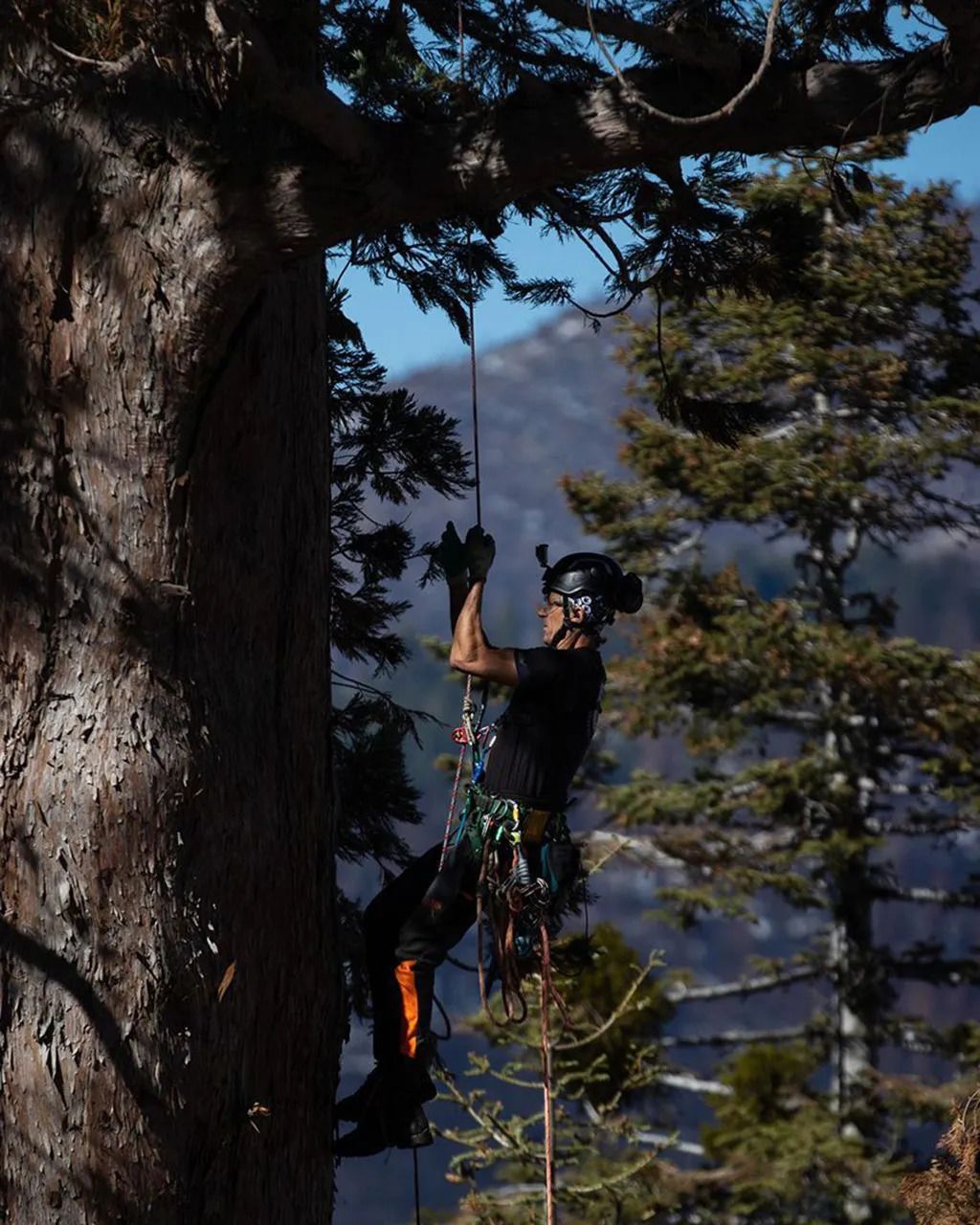 Rip Tompkins from the Archangel Ancient Tree Archive climbs a Giant Sequoia in Sequoia Crest, California
Because the warming atmosphere can hold more precipitation, in places that are both warmer and wetter, some forests are doing extremely well, better than ever, say Allen and William Hammond, a plant ecophysiologist and global change ecologist at the University of Florida. But where there are hot droughts, they are dying in increasing numbers. "Extreme events kill trees," Allen says. "And the worse periods are getting worse." Unprecedented extreme events are being seen, such as the 49C (120F) reached in British Columbia this past summer.
The trees on the front line of this changing world are the ancient ones, many of them over 200ft (61m) or even 300ft (91m) tall.
"One of the reasons big old trees are at risk is they have a really high cost to continue survival: bigger bills to pay," says Hammond. They need more water, and more energy to pump this water to their crown. They can be done in by drought, or weakened so much that they fall prey to insects, disease or fire.
The 1% largest trees hold 50% of the carbon held in forests
More frequent hot droughts also means trees have less time to recover. "After a drought event has ended and the trees are well watered again, they have a chance to regrow and recover some of their damaged organs," says Anna Trugman, an assistant professor at the University of California in Santa Barbara, where she studies the effect of climate change on forests. "But if you get more frequent droughts, back to back, that can result in a longer term decline because they are not able to recover."
The big old trees are sitting ducks.
That's a problem because not only are they big and old and awe-inspiring, they are critical for storing carbon to keep the world from warming even faster. The 1% largest trees hold 50% of the carbon held in forests.
This dire future for trees comes even we are still learning basic things about them. Suzanne Simard, an ecologist at the University of British Columbia, has found that there are family relationships between trees and that, through their roots and fungus, they communicate with each other and shuffle resources around. Author and researcher Diana Beresford Kroeger has argued that the abundant aerosols that trees emit, such as terpenes and limonenes, are natural antibiotics, antivirals and chemo-preventatives that help keep the natural world – including humans – healthy.
Hammond and Allen predict widespread die-off of the world's biggest trees and historical forests. And research shows the up-and-coming forests of today are very different than historical forests, in part because of the new hotter and drier conditions. "Forests are getting shorter, they are getting younger, and dominant species are shifting," said Hammond. "Trees will persist. They are going to be with us a long time. But they are going to change."
So what can be done? Reducing CO2 to slow warming is at the top of the list, but that might not help for decades. In some places, mechanical thinning of forests or prescribed fire would help. Some forests have 800-1,000 trees per acre which means stiff competition for water; a healthy forest should be a tenth of that. Irrigating some of the sequoias is being considered.
And then there is the mammoth attempt to replicate the largest of these living giants.
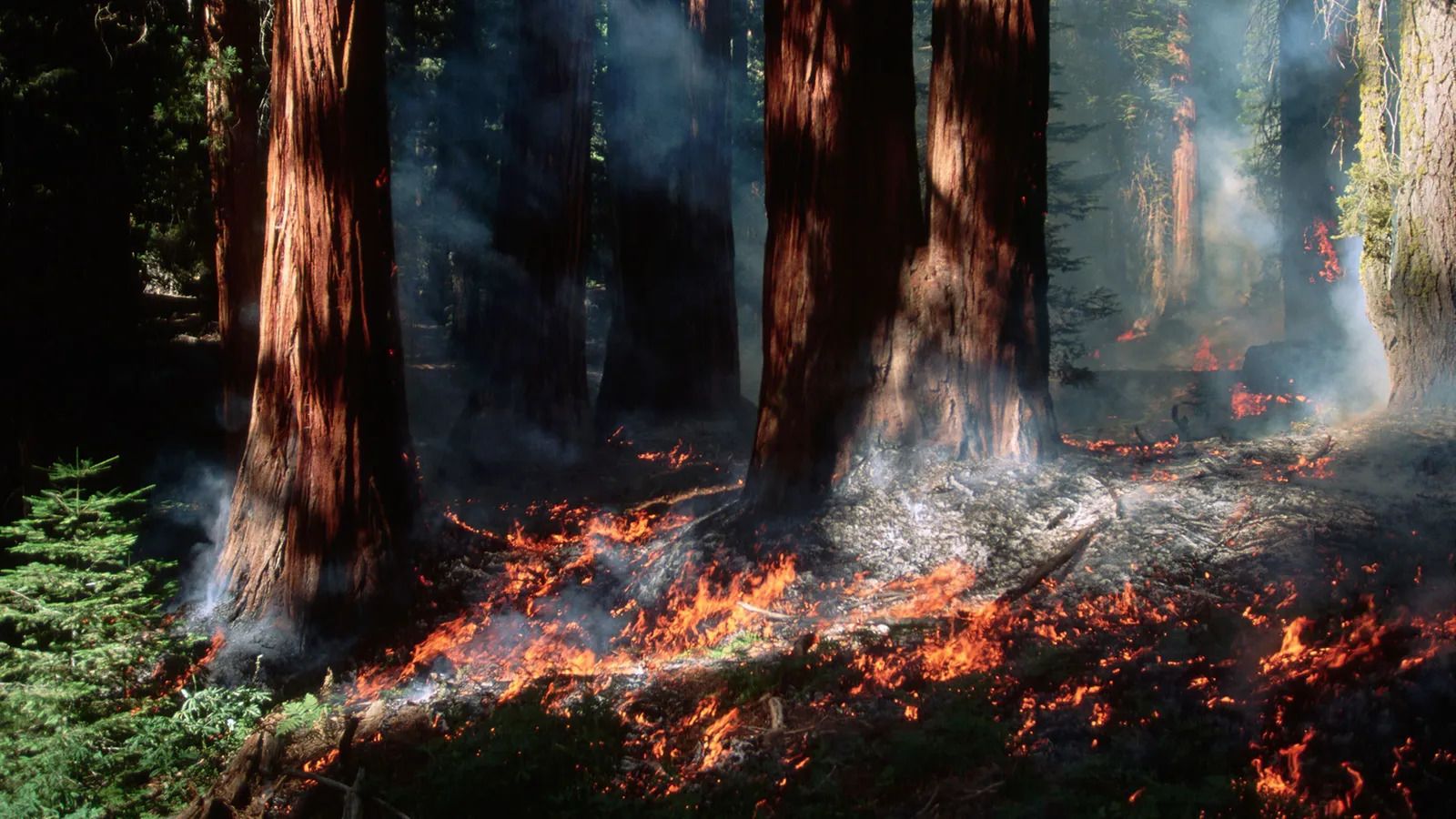 A controlled burn at the General Sherman tree in Sequoia National Park
removes white firs and decayed matter without harming the sequoias
A controlled burn at the General Sherman tree in Sequoia National Park
removes white firs and decayed matter without harming the sequoias
Back in the 1990s, a father and son team in rural northern Michigan hatched a plan to clone the largest trees of each species in the US.
It was home-spun scheme called the Champion Tree Project. David Milarch is a fourth-generation farmer who raises shade trees. He looked up the largest tree of every species in the National Register of Big Trees, a list maintained by American Forests, a non-profit in Washington, DC. He and his son Jared would drive to the champion tree and ask the owner if they could take some cuttings.
They'd unload the ladder from the back of their pick-up truck and Jared would climb the tree to take a few small branches. The cuttings were sent to a nursery to have copies grown. Then Milarch and his son would plant the clones in various settings – cemeteries or parks – in what Milarch called a living archival library. The idea was to preserve the genetics of 800, 2,000 or 5,000-year-old trees in places around the world, in case the original tree died.
"The genetics of the big trees is disappearing," he told me when I reported on the scheme back in 2001. "Someone's got to clone them and keep a record. No one knows what they mean."
A 2,000-year-old tree knows a thing or two about survival – David Milarch
Milarch's project has come to focus primarily on America's oldest, most iconic trees: the redwoods and sequoias. Over two decades ago now, I watched as his team climbed some of the biggest trees in the world so they could cut needles from high up, the best material for cloning. Among them was the magnificent Waterfall Tree, a sequoia in a privately owned grove in central California, a whale of a tree with reddish-orange bark that dwarfed humans. A photo of it became the cover of my book, which told the story of the shade tree farmer's quixotic efforts to clone the world's largest trees and plant them around the world.
I went on to other things, but in the summer of 2021 my two decade-old experience with Milarch came rushing back. Fires swept through the famous sequoias in California, killing a fifth of them. One of them was the Waterfall Tree – burned to a crisp.
Long thought of as indestructible, these trees have been dying in increasing numbers in recent years. "What we are seeing now is that wildfire is capable of incinerating large giant sequoias in large numbers," said Christy Brigham, chief of resource management and science for Sequoia and Kings Canyon National Parks. "The primary driver is the 100-year history of fire suppression, but it's being made worse by climate change-driven hotter drought."
The disappearance of giant sequoia genetics is also a concern. "We don't know what we may have lost," said Brigham. "But we are talking about a species that has already gone through a genetic bottleneck and is only found in 78 groves. Now we have these wildfires that have burned up 19% of the adult large-tree population. In one grove, 80% of the grove is gone."
Milarch's organisation, now called Archangel Ancient Tree Archive, is still cloning trees, and they are now heading to California to search for, and hopefully clone, a "lost" grove of sequoias that Milarch believes may set a new record for size.
They are also planting old growth groves. "We planted 75 redwoods cloned from old growth trees at the Presdio," he told me recently, referring to a former army base that has since become a park. "And we've planted sequoias in 41 cities in the Puget Sound area as part of assisted migration."
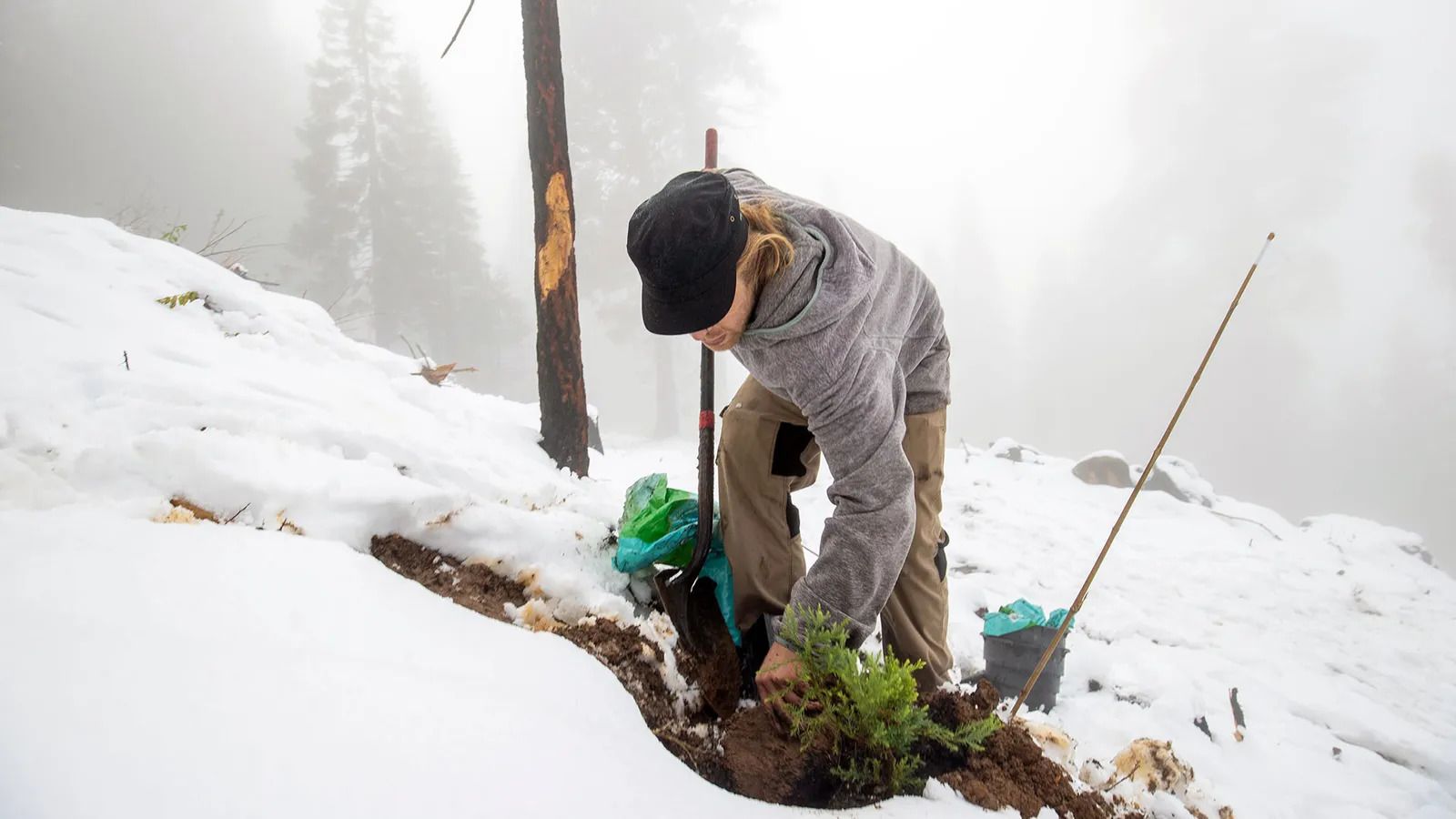 Jesse Ketchum from Archangel Ancient Tree Archive plants a sequoia
The Archangel Ancient Tree Archive's philosophy is that while these 2,000-year-old trees can't move, their genetics can. While cloning them and planting them to create a new forest doesn't save the trees, it does perpetuate their old growth genetics. In autumn 2021, the organisation, which grows cloned trees in its own greenhouse, planted clones of the Waterfall Tree and others, as well as seedlings, on the site where forests were destroyed by this summer's fires, as well as further north where the climate may be more conducive to sequoias in a warmer future. "A 2,000-year-old tree knows a thing or two about survival," Milarch says.
The potential importance of old growth genetics inspired composer and music producer Timothy Smit to grow 49 clones from the Archangel Ancient Tree Archive sequoia collection at his Eden Project in Cornwall, UK, which houses thousands of plant species from around the world. "They went in as 3ft (0.9m) high babies and are now some 15ft (4.6m) tall," he told me recently. "All have survived."
These ancient trees represent individuals that established and survived through long cycles – Chuck Cannon
After two decades of cloning on faith, a study published this year validates Milarch's approach of preserving the genetic of old trees. It concluded that old and ancient trees radically boost genetic diversity and thus contribute to the long-term resilience of the surrounding forest and its ability to adapt.
"These ancient trees represent individuals that established and survived through long cycles," says Chuck Cannon, co-author of the study and the director of the Morton Arboretum's Center for Tree Science in Illinois. "The particular combination of genetics they contain can bridge over the intervening centuries and contribute genes that are beneficial under environmental extremes that have not been present for hundreds of years. They are vital to a forest long-term adaptive capacity."
Despite this, very little research on old trees' genetics has been done, because old trees are both rare and hard to identify, says Cannon. That's why he thinks Archangel Ancient Tree Archive's cloning of old growth trees matters so much.
"Learning to propagate these living materials could be invaluable so that we do not lose the unique genetic combination represented by these trees,” he says. Essentially, creating this ark of old tree material could help other forests to increase their genetic diversity and ability to adapt to our rapidly changing world.
When I walk across my property these days it is heartening to see that the offspring of my departed pine trees are coming back on their own. No replacement for the grandfather trees that once stood here, but the mountain forests in this part of the world are not giving up the ghost, at least not yet.
But forests and trees are something we can no longer take for granted. Their existence is increasingly fragile and their loss would be incalculable.