

The coming collapse of the ‘Five Eyes’ club of nations
Some foreign political observers have long predicted the coming collapse of China or at least the Chinese communist state, which, of course, would amount to the same thing.
But, in the current context of the rivalry between China and the West, we are much more likely to see the break-up of some members of the so-called Five Eyes spying club of English-speaking nations: the United Kingdom, the United States and Canada.
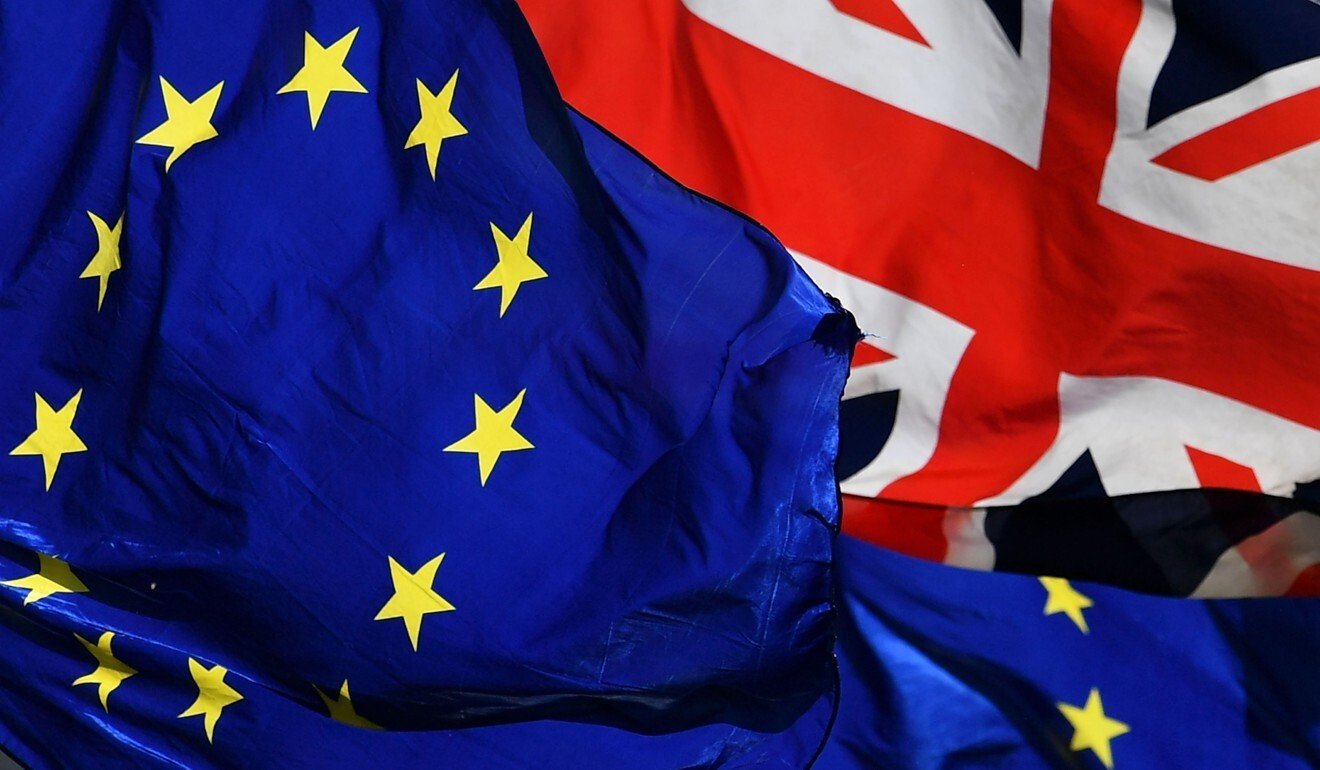
Of the three, the UK is in the most obvious danger, thanks to its “successful” Brexit. In new polls conducted by The Sunday Times of Wales, Northern Ireland, Scotland and England, secessionist sentiments run high.
In Scotland, 49 per cent support independence compared to 44 per cent against – a margin of 52 per cent to 48 per cent if the undecided are excluded.
Scottish First Minister Nicola Sturgeon, of the nationalist Scottish National Party, is fighting for a referendum on independence regardless of Westminster’s consent.
The same polls reveal that a majority of people in the UK, regardless of their own political preferences, believe Scotland will become independent within the next decade.
In Northern Ireland, 42 per cent favour unification with the rest of the Irish nation, while 47 per cent prefer to stay in the Union. However, 51 per cent support a referendum on a united Ireland within the next five years, compared to 44 per cent against. Both Northern Ireland and Scotland see Brexit as England’s wilful negation of their clear preference to stay in the European Union.
The break-up of the UK will, of course, have enormous consequences not just for its people, but for the world at large. Without going into such complicated issues as global security, economy and cultural influence, just imagine the proud Union flag, which represents the four nations. It will have to be dropped and replaced.
When people talk about Canada and separatism, they usually think of Quebec. The reality today is rather different. Most likely, if federalism were to fall apart, it would be from the western provinces. “Wexit”, as it is sometimes called, will be led by resource-rich Alberta and breadbasket Saskatchewan. However, they may well be followed by Quebec and the First Nations of natives.
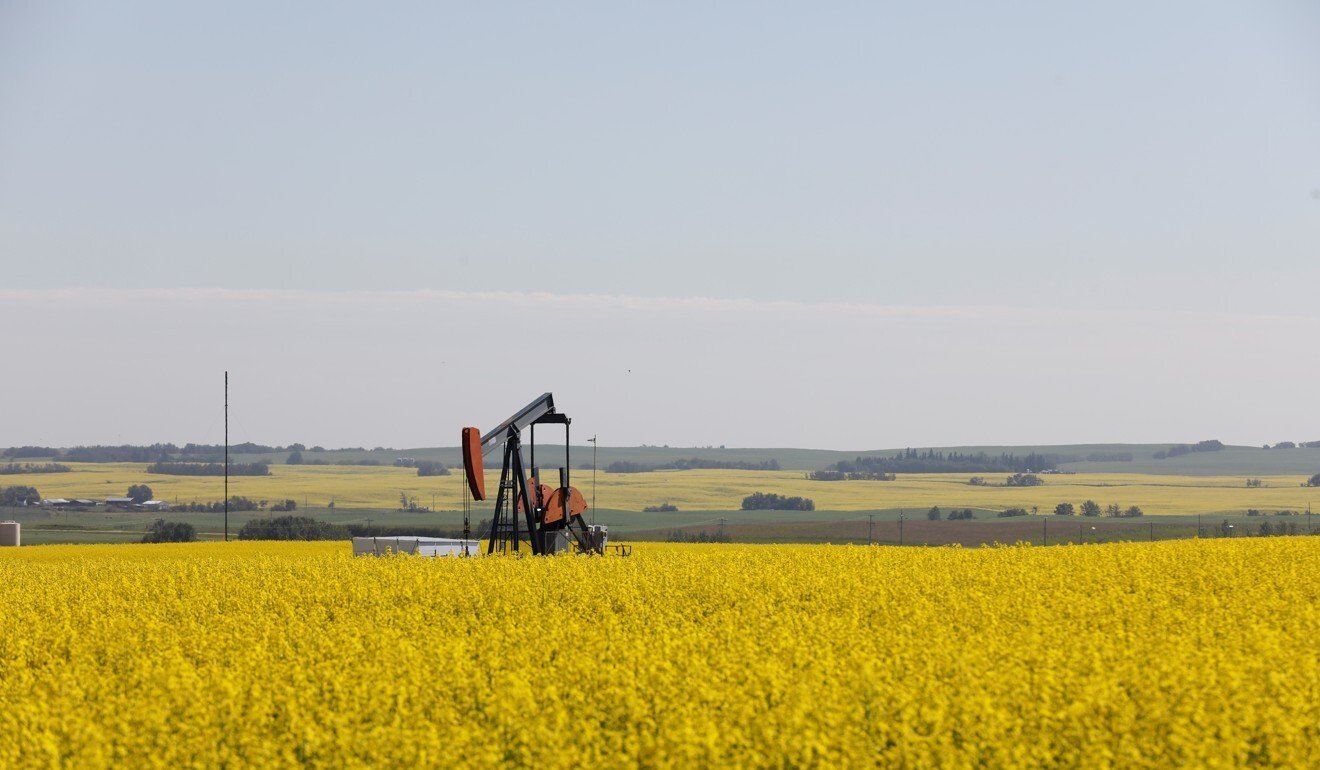
An October 2019 survey by Ipsos, the market research and public opinion specialist, found that a third of Albertans think their province would be better off separated, up from 25 per cent from the previous year. That is about the same as the 26 per cent and 27 per cent who back separation respectively in francophone Quebec and Saskatchewan.
Quite simply, Alberta’s economy depends on oil and natural gas production; it also sends more money to Ottawa than it receives in terms of tax transfers.
To add insult to injury, many Albertans think Ottawa wants to kill their energy industry, especially with the environment-friendly policy of the Liberal government under Prime Minister Justin Trudeau. Last week’s statement by Canada’s energy minister, Seamus O’Regan, has been especially infuriating.
He said Canada must “respect” US President Joe Biden’s decision to kill the controversial Keystone XL pipeline project and rejected demands from provincial politicians to pursue punitive measures against the United States.

“It was an important campaign promise from candidate Biden. It’s the one he kept as President Biden,” he said.
The perception is that Ottawa cares more about Washington than one of its most important revenue-generating provinces.
Indeed, the federal government has been ambivalent about the Keystone XL project, which aims to transport a massive amount of tar sands oil from Alberta to Texas, the dirtiest type of fossil fuel because of the technical difficulties in extraction and processing.
Trudeau had run on a platform of environmental protection.
According to the US World Population Review in 2019, Alberta produces a shocking 62 tonnes of carbon dioxide equivalent per person per year, compared to about 17 tonnes per person by another giant oil producer, Saudi Arabia. But if your entire livelihood depends on oil sands, you may not care too much about global warming.
As a voter, though, you would care that more of your taxes go to the federal government than benefits you receive from it.
The latter point, of course, is not so simple. As Donald Savoie, an academic at the Universite de Moncton, has argued in Democracy in Canada: The Disintegration of Our Institutions, the province actually received a greater bang for its buck from federal spending than would be revealed by a simple accounting of the transfers of payments and benefits. But in politics, perception is all.
National break-ups don’t always have to be violent, though they often are. In the 1990s, Yugoslavia collapsed into a savage civil war that killed more than 150,000 people. However, Czechoslovakia divorced peacefully following referendums. If break-ups were to happen, the UK and Canada may end up closer to the Czechoslovakia scenario.
But there is no guarantee, given the fault lines between the Catholics and Protestants, and the long-standing antagonism between former members of the Irish Republican Army and the British establishment, in Northern Ireland.
The break-up of the US will almost certainly be brutal, given the country’s history and culture of violence, not the least of which is legal gun ownership. There is much similarity between Americans who stormed the US Capitol and Congress early this month and Hongkongers who committed mayhem for six months in their own city.
The mainstream US media and political class glorified the Hong Kong rioters as pro-democracy activists but demonised the Washington agitators. Domestic terrorism, coup, insurrection and right-wing extremism are just a few words thrown at those Americans and their movements, effectively condemning them to the same status as al-Qaeda and Islamic State.
The full force of the US domestic security apparatus has fallen on many of them, with mass arrests and official encouragement of friends and relatives to rat on each other.
The discourse of “us vs them” has never been clearer. Indeed, Republicans and Democrats, red states and blue ones, are so hostile to each other that at times, they don’t share the same universe of discourse, nor acknowledge the same realities. Your fake news is my truth.
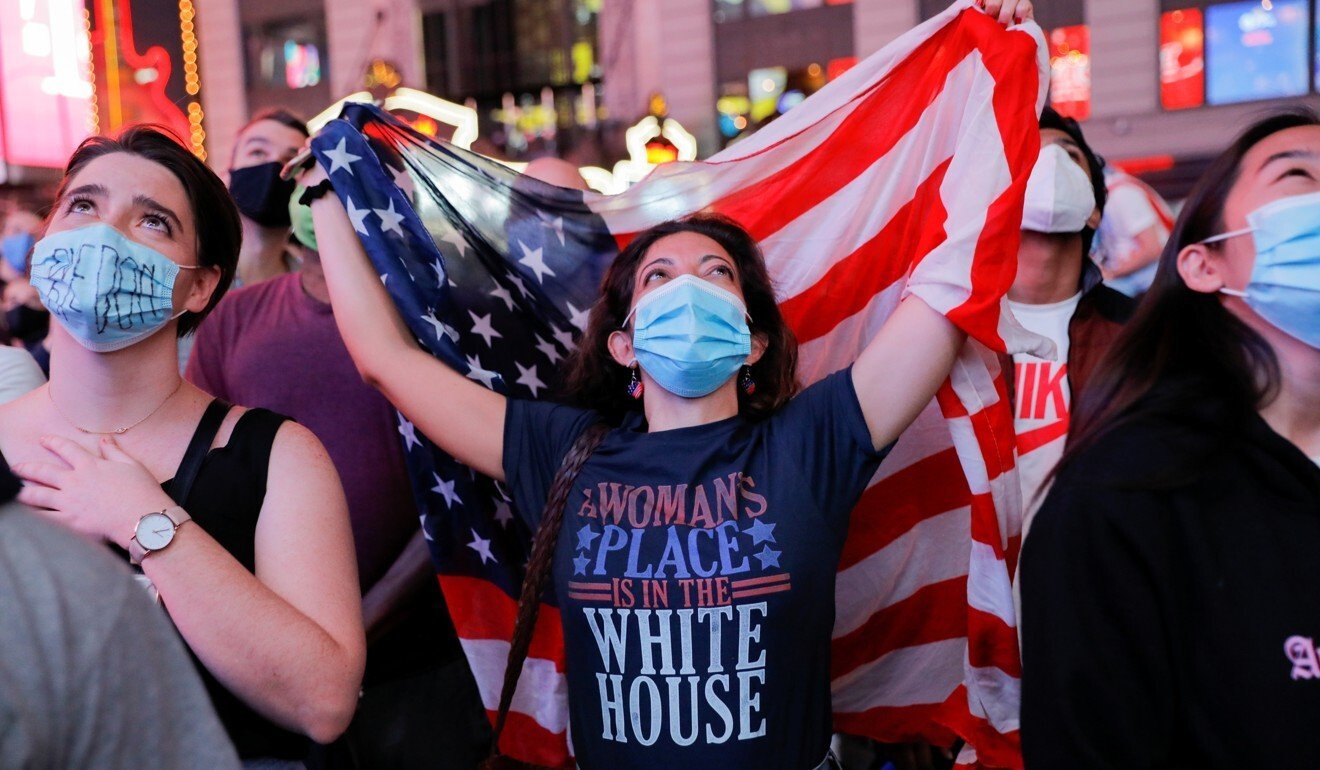
A new joint survey this month by Axios-Ipsos finds that four-fifths of Americans, whether Republicanor Democrat, agree that America is falling apart. And of course, they are the cause of it because they often don’t even admit commonalities that are the very basis of civil discourse and interaction.
The willingness of Americans to kill each other has never been more apparent, from frequent deadly mass shootings and police killings of civilians.
Here are some recent headlines, even before the Washington storming.
A headline in The Washington Post reads: “In America, talk turns to something not spoken of for 150 years: civil war”. In National Review, a conservative publication, the writer asks: “How, when, and why has the United States now arrived at the brink of a veritable civil war?”
A survey published in June 2018 by Rasmussen Reports, a public opinion pollster, found that 31 per cent of voters thought the US could have a second civil war in the next five years. According to a more recent poll, released in October, 61 per cent of Americans had concerns about their country sliding into another civil war while 52 per cent had stockpiled food and essential materials in case of civil unrest.
It may be time for American pundits such as Gordon Chang, who first published The Coming Collapse of China in 2001 and has been repeating the same prediction every year, to turn his critical lens on his own country.