Strategic Calculations Drive Emerging Somalia–Saudi Arabia Military Cooperation
Security pact reflects Red Sea geopolitics, counterterrorism priorities and Riyadh’s expanding regional defence footprint
A new military cooperation agreement between Somalia and Saudi Arabia is drawing attention across the Horn of Africa and the Gulf, underscoring shifting security alignments along one of the world’s most strategically significant maritime corridors.
The deal, announced following high-level talks between officials from Mogadishu and Riyadh, is expected to focus on defence training, equipment support and intelligence sharing.
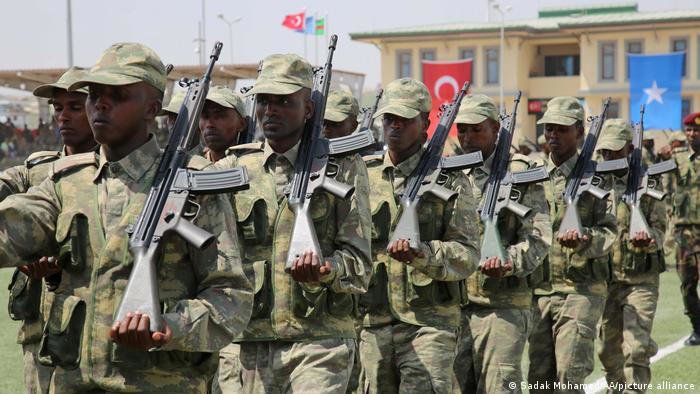
Somali authorities have framed the agreement as part of a broader effort to strengthen national security institutions as the country continues its campaign against extremist groups and works to stabilise territory reclaimed from insurgent control.
For Saudi Arabia, the partnership aligns with its growing emphasis on Red Sea security and the protection of maritime trade routes that connect Europe, Asia and the Middle East.
The Bab el-Mandeb strait, located between the Horn of Africa and the Arabian Peninsula, is a critical chokepoint for global shipping and energy flows.
Riyadh has in recent years expanded naval cooperation and security engagement with coastal states bordering the Red Sea.
Somalia, emerging from decades of conflict and political fragmentation, has prioritised rebuilding its armed forces and professionalising its security sector.
International support — including from Gulf states, the United States and European partners — has played a central role in training and equipping Somali units tasked with combating al-Shabaab and securing coastal waters.
Analysts say the Somalia–Saudi agreement reflects converging interests: Mogadishu seeks sustained financial and military backing, while Riyadh aims to consolidate influence in the Horn of Africa amid competition from regional and global powers.
Gulf states have increasingly invested in ports, logistics hubs and infrastructure projects across East Africa, reinforcing the link between economic engagement and security cooperation.
The development also comes against the backdrop of broader regional realignments, as African and Middle Eastern states deepen defence ties to address piracy, arms trafficking and transnational militant networks.
While details of the pact remain limited, officials in both countries have described it as a step toward long-term institutional collaboration.
Observers caution that implementation will be key.
Effective oversight, transparency and coordination with existing international missions will determine whether the agreement translates into measurable improvements in Somalia’s security environment and contributes to stability across the wider Red Sea basin.
The deal, announced following high-level talks between officials from Mogadishu and Riyadh, is expected to focus on defence training, equipment support and intelligence sharing.
Somali authorities have framed the agreement as part of a broader effort to strengthen national security institutions as the country continues its campaign against extremist groups and works to stabilise territory reclaimed from insurgent control.
For Saudi Arabia, the partnership aligns with its growing emphasis on Red Sea security and the protection of maritime trade routes that connect Europe, Asia and the Middle East.
The Bab el-Mandeb strait, located between the Horn of Africa and the Arabian Peninsula, is a critical chokepoint for global shipping and energy flows.
Riyadh has in recent years expanded naval cooperation and security engagement with coastal states bordering the Red Sea.
Somalia, emerging from decades of conflict and political fragmentation, has prioritised rebuilding its armed forces and professionalising its security sector.
International support — including from Gulf states, the United States and European partners — has played a central role in training and equipping Somali units tasked with combating al-Shabaab and securing coastal waters.
Analysts say the Somalia–Saudi agreement reflects converging interests: Mogadishu seeks sustained financial and military backing, while Riyadh aims to consolidate influence in the Horn of Africa amid competition from regional and global powers.
Gulf states have increasingly invested in ports, logistics hubs and infrastructure projects across East Africa, reinforcing the link between economic engagement and security cooperation.
The development also comes against the backdrop of broader regional realignments, as African and Middle Eastern states deepen defence ties to address piracy, arms trafficking and transnational militant networks.
While details of the pact remain limited, officials in both countries have described it as a step toward long-term institutional collaboration.
Observers caution that implementation will be key.
Effective oversight, transparency and coordination with existing international missions will determine whether the agreement translates into measurable improvements in Somalia’s security environment and contributes to stability across the wider Red Sea basin.