

‘Nationalists are on the rise’: How protests in Kazakhstan turned violent & why Russia feels it can’t stay silent
What’s behind the current violent unrest in Kazakhstan and why is political stability in this huge former Soviet republic of such great importance to Russia?
Events in Kazakhstan are unfolding at breakneck speed, with the situation changing on an hourly basis. Initially, it seemed that protests against soaring energy prices would not turn into anything more serious. Since then, however, the country has asked for help from the Collective Security Treaty Organization (CSTO), a Russia-led military bloc, and its soldiers have engaged in fierce street battles with armed marauders.
Kazakhstan has always been viewed as one of the most stable post-Soviet countries, with the transition of power from its first president to his successor, managed by the local elites, initially seen as smooth and efficient. However, today the country is perhaps facing its toughest challenge since it became independent 30 years ago. RT has analyzed the reasons behind the unrest in Kazakhstan.
Footage of protests in Kazakhstan has spread all over the world. Demonstrators are forcing their way into public buildings, driving away military vehicles, and disarming soldiers. They have set on fire the mayor’s office in Almaty, the country’s largest city and second capital, which has now turned into the epicenter of the protest movement.
The unrest, however, appears to be mostly spontaneous and uncontrolled. It seems there are no leaders to organize the crowds, nor has any political party spearheaded the protest movement yet. The government simply does not know who to negotiate with, while the demonstrators are gaining control of many of Kazakhstan’s public buildings, as well as storming and destroying the offices of the Nur Otan ruling political party and national television channels.
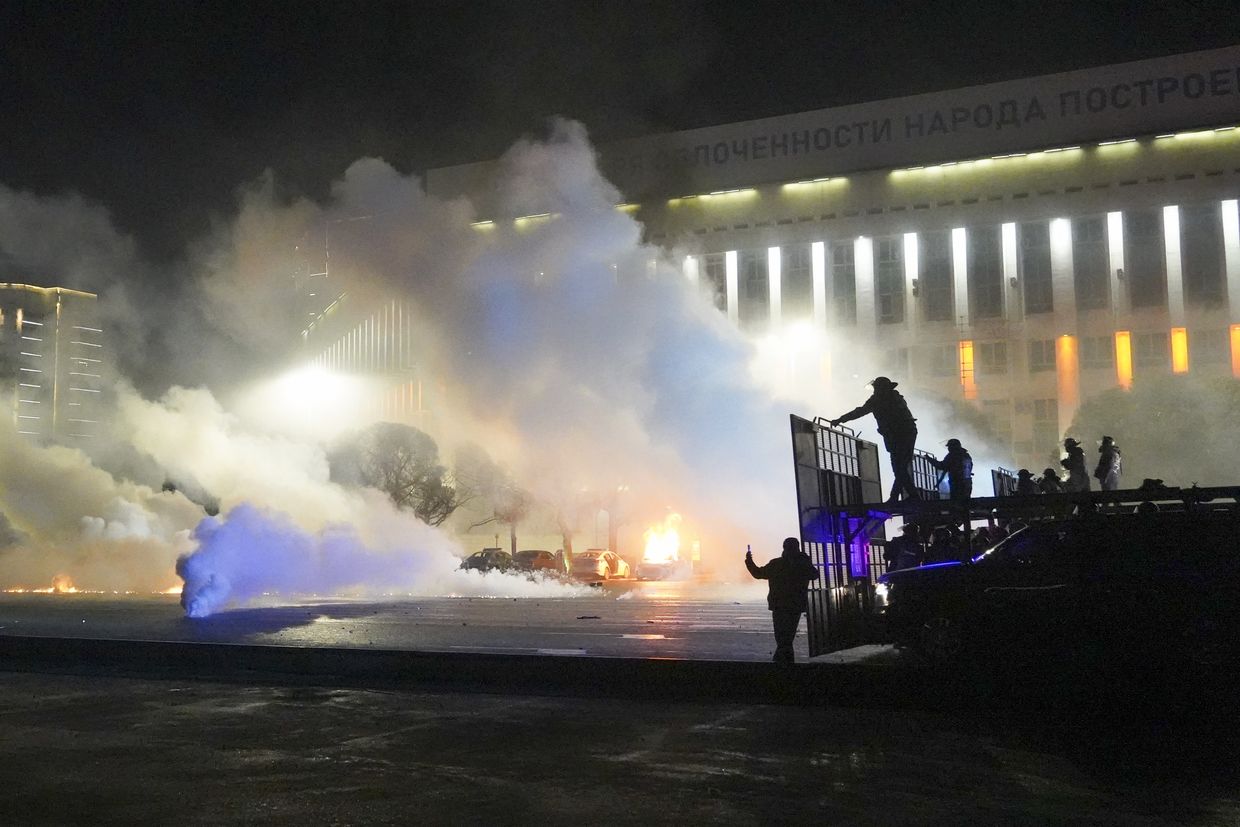 Riot police prepare to block protesters in the center of Almaty, Kazakhstan, Wednesday, Jan. 5, 2022.
The protests started on January 2 in western Kazakhstan when the price of fuel went up. Liquefied Natural Gas (LNG) is used by most local citizens as car fuel instead of gasoline. The government refused to continue subsidizing its price and made it clear that, from then on, the cost of LNG will be controlled solely by the market. And it doubled immediately – from 60 to 120 tenge per liter (from $0.14 to $0.28). The government believes that this step will “allow for the obtaining a balanced gas price based on demand and supply” as well as “attracting investment” for new production capacities. The authorities claim that the old model resulted in gas producers being constantly at a loss – the business was unprofitable for them.
Protests flared up in the town of Zhanaozen and quickly spread to the west and north of the country. Demonstrators blocked traffic in the central parts of Kazakhstan and demanded that LNG prices be brought down to previous levels. Many also wanted to face those public officials, residing in Nur-Sultan, who were responsible for the gas price surge. In the beginning, the protests were mostly peaceful, there were no clashes with the police. However, the situation changed and 69 people were detained by law enforcement on January 2 and 3.
The protests went on and Kazakh President Kassym-Jomart Tokayev instructed his government to address the matter of soaring gas prices. Soon the state press service revealed that an investigation had been launched against owners of Kazakhstani gas stations, aimed at identifying price-fixing cartels, and the government promised to “introduce a set of measures in order to regulate the price of gas.” They also said that some of the local owners had decided to reduce the gas price from 120 to 85-90 tenge (about $0.21) per liter, as required by a social responsibility edict for businesses.
But this was not enough to calm the protesting crowds, who resorted to even more radical actions. On the evening of January 4, violent clashes with law enforcement officers started in many Kazakh towns, which lasted throughout the night. Policemen used batons, tear gas and rubber bullets against protesters, who responded by setting official cars and specialized vehicles ablaze.
In an attempt to soothe the demonstrators, President Tokayev agreed to comply with one of their demands and dismissed the government. Later, there were rumors that early parliamentary elections would be held. However, this second concession again failed to appease the street movement. This may be explained by the make-up of the new government, which did not significantly differ from the previous one. Alihan Smaiylov was appointed head of the new government. In the previous cabinet, he held the post of first deputy prime minister.
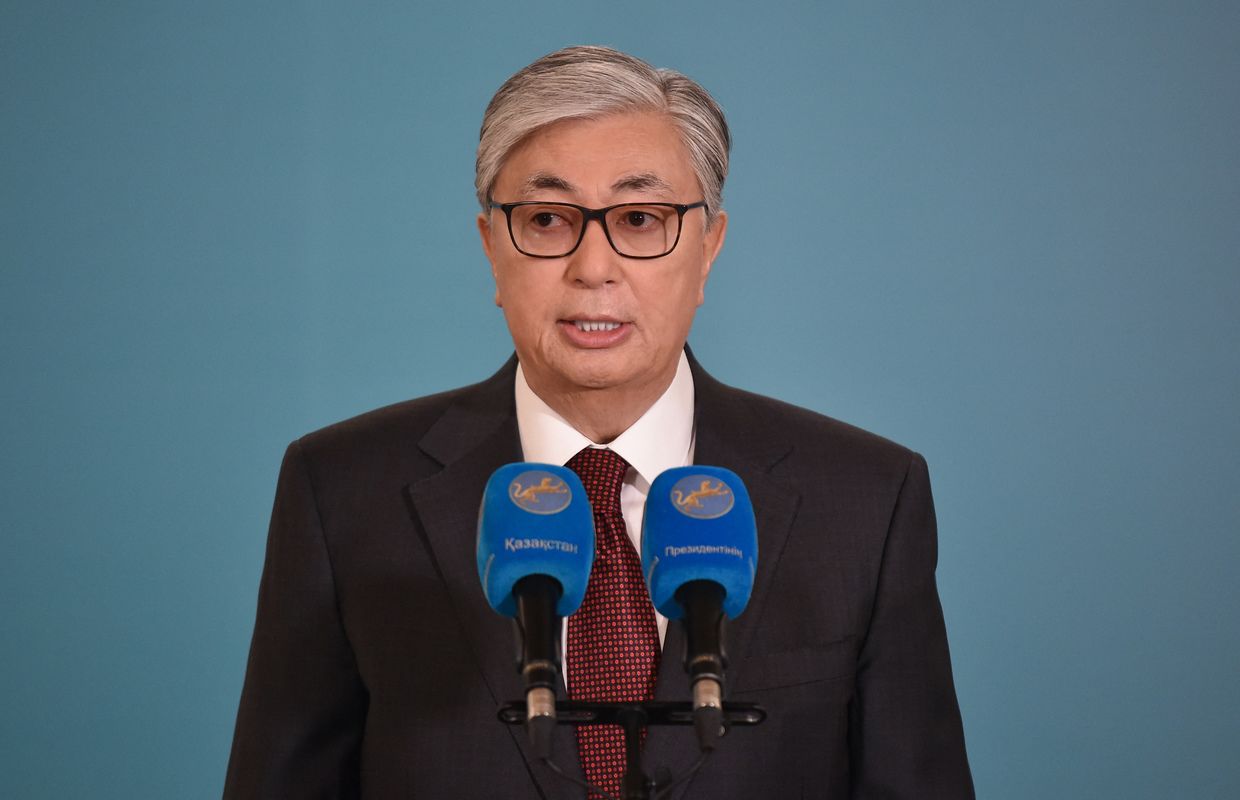 Kazakh President Kassym-Jomart Tokayev.
It was as if all the concessions only angered the crowds even more. On January 5, they went on to attack and set fire to administrative buildings. At the same time, the police were often reluctant in trying to disperse the demonstrators. Some of them were even seen changing sides.
These protests are drastically different from any previous demonstrations Kazakhstan has seen. The mass movement of 2019, which marked the power transition from longtime leader Nursultan Nazarbayev to Tokayev, were dispersed very quickly and in a violent manner – unlike what we see happening in the country today. A casual onlooker can get the impression that the situation in Kazakhstan grew so tense and exploded in a matter of days, and the government is partly paralyzed.
The head of Moscow's Eurasian Analytical Club, Nikita Mendkovich, believes the reasons behind these mass protests include not only the country’s difficult economic situation, but also the government’s attempts at flirting with nationalists.
“Over the past year or two, we have seen government attempts at flirting with nationalists and pro-Western groups by introducing anti-Russian measures. By this, the ruling elite antagonized Kazakhstan’s Russian-speaking population, which supports Russia and constitutes the majority in Kazakhstan. As a result, the ruling party lost over one million votes at the parliamentary elections in January 2021. But the nationalist opposition interpreted this as a sign of the ruling regime’s weakness and strived to finish it off,” the analyst said.
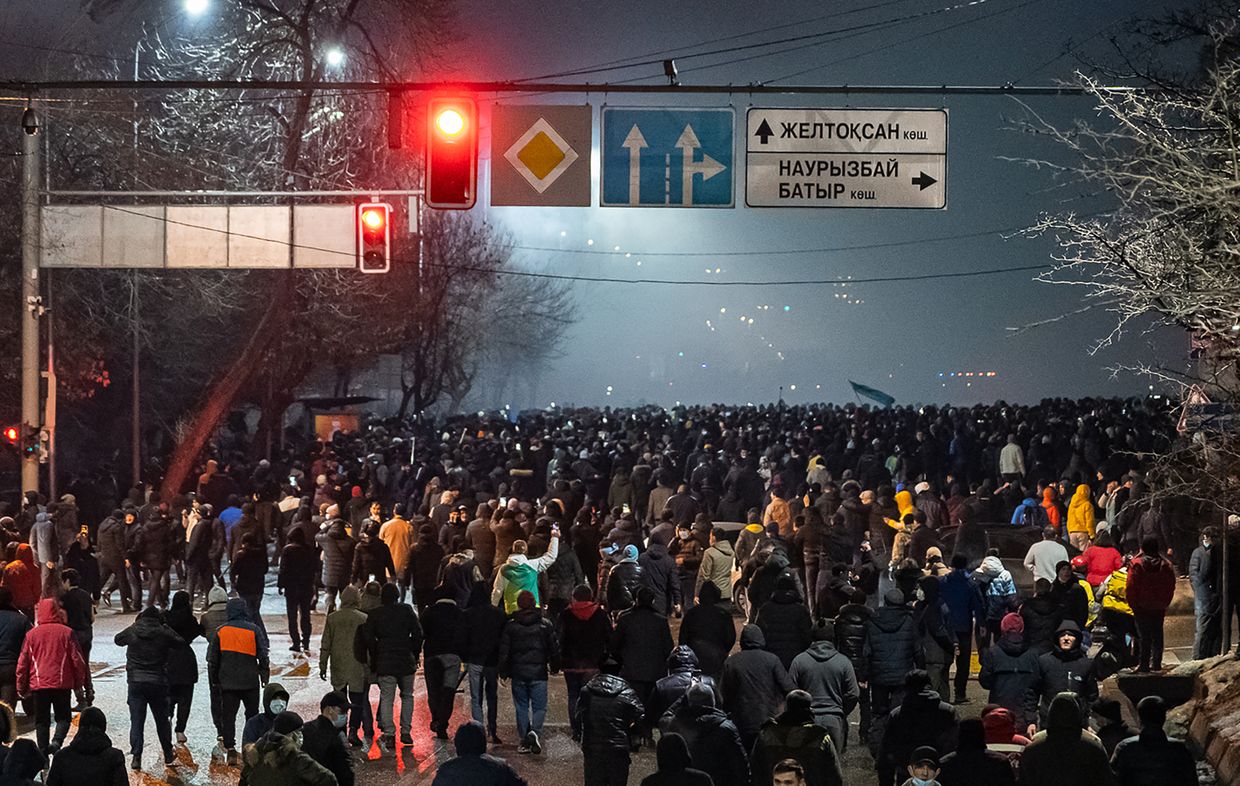 Protesters attend a rally in Almaty on January 4, 2022.
As he pointed out, at the moment, the Democratic Choice of Kazakhstan (DVK) and Oyan, Qazaqstan (OQ), which are pro-Western opposition groups, are actively trying to head the protests and use them to promote their own agenda. According to Mendkovich, this is exactly why the government’s willingness to comply with the protesters’ economic demands failed to put an end to the unrest, but, on the contrary, seems to have further radicalized the demonstrators and motivated them to put forward purely political demands.
Roman Yuneman, a Russian political figure who spent the first 18 years of his life in Kazakhstan, agrees with Mendkovich that local nationalists are the basis of the protest movement. “It’s not the liberals, or hipsters, who are protesting – it’s the nationalists and patriots. That’s why you can see so many of them holding the national flag, and some are even singing Kazakhstan’s anthem,” he said. Yuneman points out that today’s protests have the largest scale in the history of independent Kazakhstan.
He believes that other factors at play here are the prolonged economic crisis and the Covid-19 pandemic that only aggravated the situation. “When I was leaving Kazakhstan for Russia, life there was no different from any Russian region, except perhaps Moscow, but now the quality of life there is much lower,” Yuneman recalls. The government recently introduced a new package of anti-pandemic measures, and that might have given a lot of people a reason to take to the streets.
Yuneman also commented on the opinion expressed by a number of experts, who have said it may be the case that President Tokayev is not too keen on crushing the protests, in order to use them to get rid of his political “godfather” Nazarbayev, who still wields enormous influence in the country’s politics. Yuneman believes that no one in Kazakhstan, including the protesters, perceives Tokayev and Nazarbayev as real opponents and that even if Tokayev were to make any official moves against the former president, that wouldn’t clear him of anything or pacify the protesting crowds.
Yuneman is convinced that the demonstrations were prompted by frustration with prolonged economic and social crises and are not the result of a power play within the country’s top circles. He believes that even Tokayev’s decision to take over Nazarbayev’s seat on the country’s Security Council could have been in fact sanctioned by Nazarbayev himself, since it absolves him of any blame or responsibility for the government cracking down on protesters.
Yuneman suggests that Tokayev’s talk about future political reforms is what’s important here, and that a lot will depend on whether, and how, he will follow through on his statements. “If Tokayev goes on to challenge Nazarbayev’s Leader of the Nation title as part of these reforms then it will be clear we’re looking at a coup d'etat here, and that these protests are being exploited to make a political play even if they weren’t orchestrated from the very start.”
Russia has already made a public statement saying it considers the current developments to be Kazakhstan’s domestic business and strongly believes the country’s government is capable of controlling the situation, but, in case the protests continue, Moscow will surely pay more attention to its neighbor in the south.
The border between Russia and Kazakhstan stretches for almost 7,000km, which makes it the world’s longest continuous international land frontier and a key factor in Moscow’s security strategy. Political stability in Kazakhstan is of utmost importance to Russia, since instability there makes it open to all sorts of threats from the south due to the fact that the border is not only vast but stretches mostly through sparsely populated grassland plains and therefore is extremely hard to control.
Another important factor at play is Baikonur, which is rented by Russia and is home to the famed Cosmodrome. Russia’s other space facility, Vostochny, was built recently and has been used to launch only unmanned missions so far. Until it is ready to replace Baikonur’s capacities fully, Russia will need both Baikonur and the political stability in Kazakhstan that is essential to operating the site.
Sary Shagan, a testing range important to Russia’s security, is also located in Kazakhstan. It is the first and only site in Eurasia for testing anti-ballistic missile (ABM) systems. Since the collapse of the USSR, some facilities at Sary Shagan have been leased to Russia, while others were transferred to the Kazakhstan National Center for Radioelectronics and Communications. The ability to use this testing site plays a key role in Russia’s defense capability.
Kazakhstan also has a large Russian community: 3.5 million ethnic Russians account for 18.4% of the country’s total population. Among them are the descendants of the Cossacks, who are known to have lived in the territory of present-day Kazakhstan since at least the 16th and 17th centuries. Imperial Russia used to exile many political opponents of the regime to Kazakhstan, while the USSR later used to assign some of its best experts in industry and agriculture to help develop the region. The safety of the Russian community in Kazakhstan, with its rich history, is of great concern to Russia.
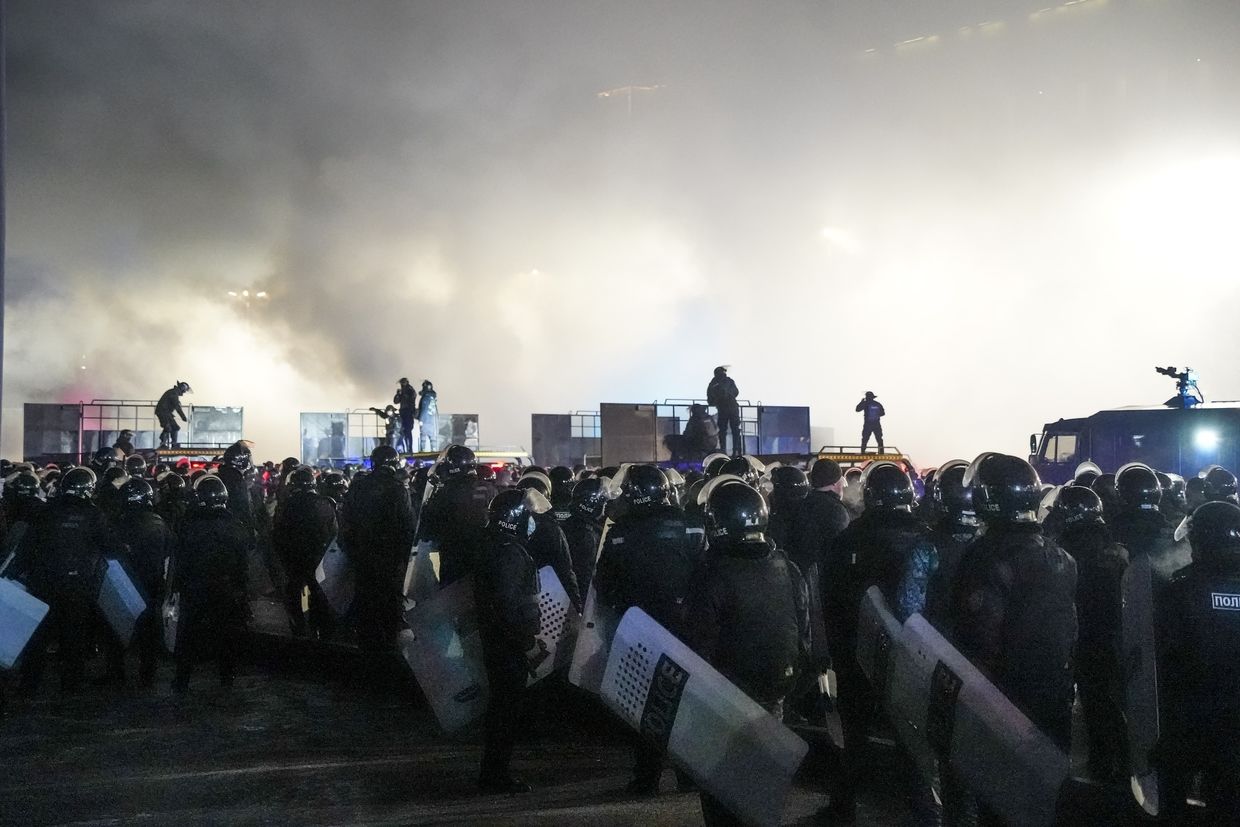 Riot police block protesters in the center of Almaty, Kazakhstan, Wednesday, Jan. 5, 2022.
Mendkovich told RT that Russia is already part of the narrative around the current events in Kazakhstan. “As relations between the countries have been gradually deteriorating in 2020 and 2021, the government has been losing popular support. The nationalist movements are on the rise and many believe that the authorities will have a hard time securing Moscow’s support and, therefore, are getting bold and eager to fight and win,” he said.
The analyst believes the level of tensions is high in Kazakhstan due to the fact that the government has been too lenient towards the nationalists and did little to keep them under control, and this may be fueling the protests.
Yuneman, on the other hand, points out that “although the situation concerns the entire nation, there are no Russians on the streets among the protesters, who communicate in Kazakh, not Russian.” At the same time, Yuneman believes that the protests are unlikely to become anti-Russian, since there is more friction with China in Kazakhstan today than with Moscow. However, though unlikely, such a scenario is not entirely impossible.
The protests in Kazakhstan are of importance to Russia both in terms of its domestic and foreign policies. Russian media and politicians have been talking about the growing popularity of nationalist movements in Kazakhstan throughout 2021. Moscow is sure to be watching the developments there closely, as the situation in Kazakhstan is key to both Russia’s internal and international security, and to preserving the status quo in the post-Soviet space.