

Have European countries made a mistake in halting AstraZeneca shots?
France, Spain, Germany, Italy and more than a dozen other countries have paused rollout of the shot, calling it a precautionary measure following concerns that it could be linked to blood clots; decisions that go against the advice of global health agencies.
A few countries have stood by the vaccine -- including the United Kingdom, where more than 11 million doses have already been administered, and where real-world data has shown vaccines are reducing infections and hospitalizations.
The actions of European governments have surprised experts, and caused a myriad of questions among people who have had or are in line to get the shot.
But the pervading message from health experts is one of calm; when placed in context the reported cases of blood clotting are rare and no greater than numbers would be in the general population, while the vaccine has been proven to work in reducing Covid-19 cases.
"At the minute, I'm just not seeing any reason at all why any country would pause the AstraZeneca vaccine. It doesn't really make much sense to me," Michael Head, senior research fellow in Global Health at the University of Southampton, told CNN.
"These vaccines are to protect against a pandemic virus. There is an urgency to the rollout," he added. "So pausing a vaccine campaign without a very good reason at this point in time just seems a bad move."
How we got here
Europe has taken a muddled stance towards the AstraZeneca vaccine since it was first approved for use in the European Union in late January.
In the space of a few weeks, several EU countries have angrily rebuked the firm for failing to provide its full amount of promised doses; cast doubts about its efficacy in older people only to then revert their stance; blocked shipments of the vaccine from leaving the continent; and now paused their rollouts over concerns around links to blood clots.
"The AstraZeneca candidate vaccine does seem to have been a bit of a political football, for reasons I don't really understand," Head said.
"It's all been a bit unedifying to watch from a scientific point of view," he added. "In terms of the science behind the vaccine, it's safe, it's effective, it's a very good vaccine."
The latest episode began last week when Denmark put a two-week pause on the vaccine -- citing a few reports of clotting in people who had received the shot, including one fatal case. Norway soon followed, later citing reports of three clotting cases, including one death reported on Monday.
Those incidents have not been confirmed to be linked to the vaccine.
Since then, virtually all of western Europe has stopped using the shot, but countries are reminding citizens that those decisions are precautionary while they wait on the European Medicines Agency (EMA) to review the incidents.
The agency will meet on Thursday, and the World Health Organization (WHO) is analyzing the reports on Tuesday -- but both bodies have said there is currently no evidence of a link with blood clotting, with the EMA adding that the benefits of the vaccine outweigh the risks.
How many cases are there -- and are they serious?
No cases of clotting have yet been linked to the vaccine -- that's what the EMA and WHO are analyzing, and the EMA are expected to issue their advice to countries on Thursday.
But even the reported cases of clotting in inoculated people are very few and far between. In Denmark, one fatality prompted the initial wave of suspensions.
After giving out 1.7 million AstraZeneca doses, Germany has uncovered just seven cases of blood clotting -- though a more rare kind known as cerebral vein thrombosis, a blood clot on the cerebral vein in the brain -- Dirk Brockmann, an epidemiologist at the Robert Koch Institut, said on Monday.
The Norwegian Medicines Agency said that three patients currently in the hospital "present a rare disease picture," due to the patients having an unusual combination of low platelet counts, blood clots in small and large vessels and bleeding. Similar combinations of symptoms have not been seen in people who had other vaccines, it said.
An employees handles vials of the AstraZeneca vaccine on the production of line at the Serum Institute of India.
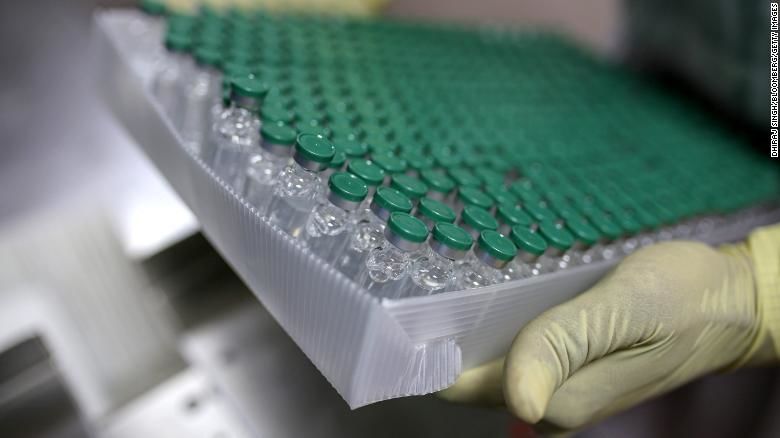 An employees handles vials of the AstraZeneca vaccine on the production of line at the Serum Institute of India.
A Dutch lab has received 10 reports of blood clots in vaccine recipients, but with a different set of conditions to those in Norway.
Those reported incidents are not numerous enough to be causing concern among health experts.
Last week, the International Society on Thrombosis and Haemostasis (ISTH) recommended that all eligible adults continue to receive their Covid-19 vaccinations. "The small number of reported thrombotic events relative to the millions of administered COVID-19 vaccinations does not suggest a direct link," the society said in a statement.
It added that "based on all available data, the ISTH believes that the benefits of COVID-19 vaccination strongly outweigh any potential complications even for patients with a history of blood clots or for those taking blood thinning medications."
Jon Gibbins, director of the Institute for Cardiovascular and Metabolic Research at the University of Reading agreed that the number of clots reported was small.
"The numbers involved are tiny, and also probably no more than you would expect in a population anyway," he told CNN. Multiple experts have said the same.
Blood clotting, or thrombosis, occurs for a variety of reasons and venous thrombosis is relatively common -- affecting 1 to 2 in 1,000 people -- explained Gibbins, adding that risk of thrombosis increases with age, and that there are additional risks for some underlying health conditions.
And that makes it hardly surprising that a few isolated cases of clotting would occur in people who have had the vaccine.
"When you then start immunizing millions of people, it's inevitable this is going to happen every now and again," Gibbins said. "But it doesn't demonstrate causality, it doesn't demonstrate that the vaccine is actually responsible."
"From what we've seen from the millions of doses of AstraZeneca, serious side effects are quite literally the proverbial one in a million," said Southampton expert Head.
But Gibbins highlighted that the cerebral clotting cases in Germany were notable. "Cranial Sinus Vein Thrombosis (CVST) is a rare type of thrombosis affecting five in one million patients," he said, adding that the specific circumstances around those cases are still not clear.
Paul Hunter, a professor in medicine at the University of East Anglia, agreed that the association needs to be thoroughly investigated, but highlighted that the risk of dying from Covid-19 was substantially higher than from CVST.
What does the data show?
AstraZeneca doubled down on the safety of its shots Sunday, saying that a careful review of the 17 million people inoculated with it in the EU and Britain found again that there was "no evidence" of a link with clots.
It found that of those millions of people, there have been 15 events of deep vein thrombosis (DVT) and 22 events of pulmonary embolism reported after vaccination; lower than the number that would be expected to occur naturally within that population size.
"The big picture lesson is that the vaccines are providing an excellent level of protection," Gibbins said.
It's also important to note that the people receiving AstraZeneca vaccines could be more likely to suffer blood clotting anyway.
"The people being vaccinated, particularly across Europe where they're still early on in their rollouts, are mostly older populations and clinically vulnerable people. So you would expect to see higher rates of blood clots in those populations," Head said.
And, crucially, the vaccine provides protection against a disease -- Covid-19 -- that itself causes blood clots. "One thing we are absolutely certain of is that infection with Covid, and particularly in individuals who are hospitalized with Covid infection, carries with it a substantial risk of having blood clots," Gibbins said.
"The biggest risk of this is that we reduce the uptake of vaccines generally -- and as a consequence increase the risk of people getting blood clots simply because they become infected with Covid-19," he added.
Could the vaccine have caused the clotting?
Experts agree that it is highly unlikely, but not impossible, that the vaccine may have caused the cases -- but so could any number of other factors.
"They're probably not caused by the vaccine. There's no obvious biological mechanism that would indicate that these are caused by the vaccine," Head said.
Some vaccines have, in the past, been shown to have rare but serious side effects. For example, concerns over side effects were raised during the 2009 H1N1 swine flu pandemic, where one of the vaccines used was eventually found to have an association with narcolepsy.
But even if this were the case here, the data so far shows "such low levels that I wouldn't see any reason to pause a rollout," Head said.
And the remote possibility doesn't outweigh the risks of halting vaccinations, experts said.
"I would argue that it's far more beneficial to vaccinate people against Covid than it is to pause the vaccine because of a very, very, very unlikely association with clotting disorders," Stephen Griffin, head of the Antivirals & Viral Oncology research group at Leeds University, told CNN.
"The risks of Covid in the population are far, far higher than any possible side effects of any vaccines," he said.
The immediate consequence of the rollout could be greater, with people missing vaccination appointments or seeing delays to their immunizations.
"People will be infected who wouldn't need to be infected" as a result of the suspensions, Head added. "Even if the pause is short -- just a few days -- that still means the rollout hasn't reached as many people as it should do, including high-risk people."
What do global health bodies say?
We'll hear more from the EMA and the WHO this week, but both agencies have said countries should continue administering AstraZeneca shots while reviews take place.
"While its investigation is ongoing, EMA currently remains of the view that the benefits of the AstraZeneca vaccine in preventing COVID-19, with its associated risk of hospitalization and death, outweigh the risks of side effects," the agency said.
The WHO added that vaccination campaigns should continue.
"As of today, there is no evidence that the incidents are caused by the vaccine and it is important that vaccination campaigns continue so that we can save lives and stem severe disease from the virus," the global agency said in a statement to CNN on Monday. The organization added it was assessing the latest reports, but said any change in its recommendations would be "unlikely."
The WHO is meeting on Tuesday to review the data, and the EMA is currently reviewing the evidence and is expected to issue its verdict on Thursday.
In the UK, where more than 11 million doses of the vaccine have been given out, health officials are similarly steadfast in their confidence.
"We are closely reviewing reports but the evidence available does not suggest the vaccine is the cause," Phil Bryan, the vaccines safety lead at Britain's medicines regulatory agency, said in a statement on Monday.
"People should still go and get their COVID-19 vaccine when asked to do so," he said.
Why are European countries suspending the vaccine, then?
The countries that have suspended the vaccine have said the moves are precautionary. And while experts are surprised at the step, they note that it is not uncommon for medicines and vaccines to be reviewed once they're in use.
"It's part of the normal process. This would be happening normally, it's just that no-one would really know about it because we wouldn't be in the middle of a pandemic," Gibbins said of the reviews into the vaccine's safety.
The countries will wait to hear guidance from the EMA, but many have expressed desire to continue the rollout soon.
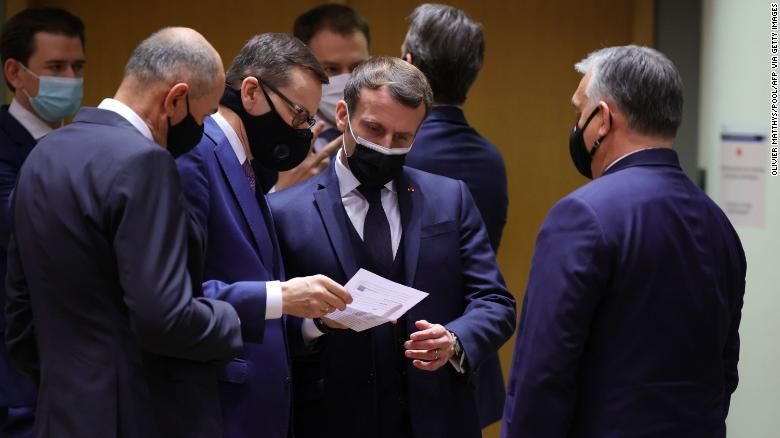
Irish Prime Minister Micheál Martin told CNN he would like the questions around the AstraZeneca vaccination to be brought to a conclusion by the end of this week and he believed the country could "catch up fairly quickly in respect to those vaccinations that have had to be postponed."
And French Health Minister Olivier Véran tried to reassure people who have received the shot in the past, stressing they "are not in danger."
Could the concerns cause vaccine hesitancy?
Experts generally expect European countries to be rolling out AstraZeneca vaccines again soon, but the longer term impact of the episode is causing worry.
"I am concerned about vaccine hesitancy around Europe," Head said, calling earlier comments made by French Prime Minister Emmanuel Macron about the AstraZeneca shot's efficacy in older people "unhelpful," and stressing that the latest blood clot fears could compound the problem.
"A scare like this has the potential to increase vaccine hesitancy," he said. Skepticism towards Covid-19 vaccines is particularly high in France and has been towards other vaccines in recent years, studies have shown.
And even concerns about one specific shot could slow down the world's route out of the pandemic. "What we don't want is people to say, I'm going to wait for another vaccine," Head said.
"Not enough people will be protected, it will hinder the rollout, and there'll be more cases of Covid-19 than there need to be."