

Global shipping was in chaos even before the Suez blockage. Shortages and higher prices loom
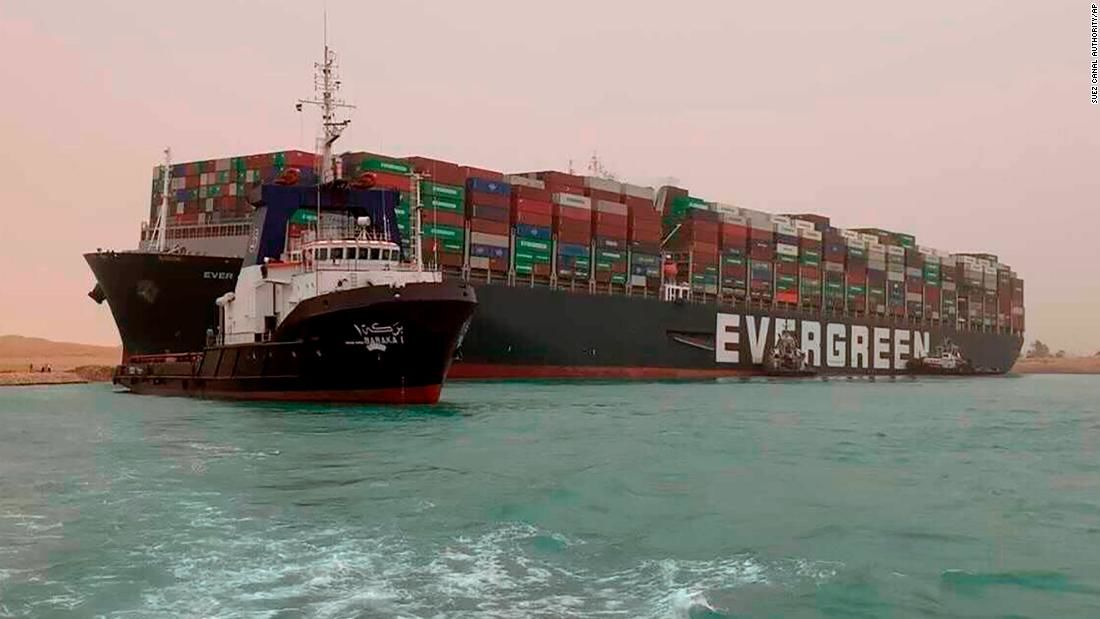
But even before the Ever Given ran aground in the Suez Canal earlier this week, global supply chains were being stretched to the limits, making it much more expensive to move goods around the world and causing shortages of everything from exercise bikes to cheese at a time of unprecedented demand.
A prolonged closure of the key route between West and East could make matters much worse. Costly delays or diversions to longer routes will heap pressure on businesses that are already facing container shortages, port congestion and capacity constraints.
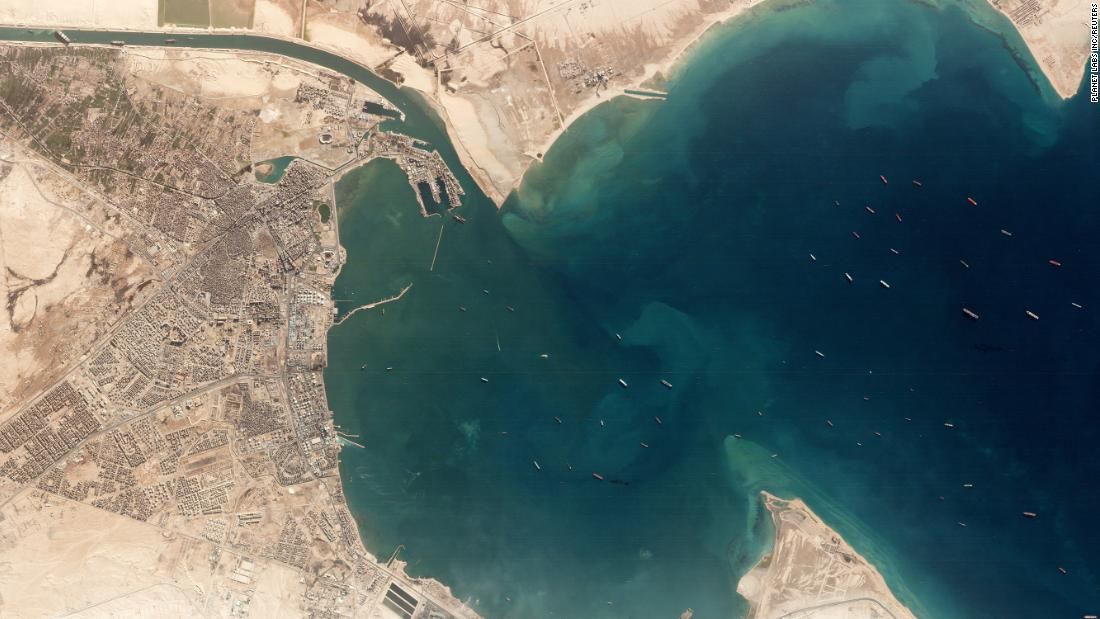
The grounding of the Ever Given is delaying shipments of consumer goods from Asia to Europe and North America, and agricultural products moving in the opposite direction. As of Friday, some 237 vessels, including oil tankers and dozens of container ships, were waiting to transit the canal, which handles about 12% of global trade.
"There's been a great convergence of constraints in supply chains like I've never seen before," said Bob Biesterfeld, the CEO of C.H. Robinson, one of the world's largest logistics firms. The bottlenecks are widespread, affecting transport by air, ocean and road, Biesterfeld told CNN Business in an interview. "It really has been unprecedented."
Freight costs soaring
More than 80% of global trade by volume is moved by sea, and the disruptions are adding billions of dollars to supply chain costs. Globally, the average cost to ship a 40-foot container shot up from $1,040 last June to $4,570 on March 1, according to S&P Global Platts.
Those costs add up. In February, container shipping costs for seaborne US goods imports totaled $5.2 billion, compared to $2 billion during the same month in 2020, according to S&P Global Panjiva.
These expenses could soon mean higher prices for consumers, adding upward pressure to rising inflation — a nightmare scenario for Wall Street, which is already fearful that a spike in prices could force the Federal Reserve to hike interest rates sooner than expected.
"At the moment a lot of these costs are within the supply chains," said Chris Rogers, a research analyst at S&P Global Panjiva. "I think it's inevitable that it will be passed on to consumers — it's just going to take time," he added.
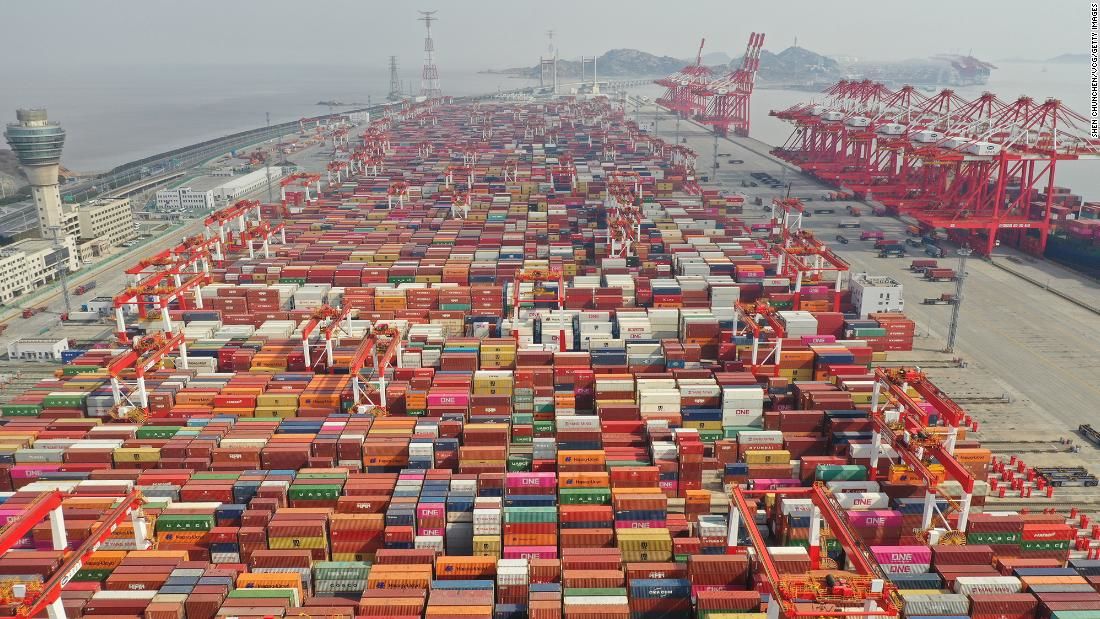
The coronavirus wreaked havoc on global supply chains last year, as lockdowns temporarily closed factories and disrupted the normal flow of trade.
Economic activity slowed dramatically at the start of the pandemic, and the rapid rebound in trade volumes that followed caught companies off guard.
A pickup in manufacturing and seemingly insatiable demand from housebound consumers for goods such as televisions, furniture and exercise bikes has stretched suppliers and made it difficult for consumers to find the products they'd like to buy.
Manufacturers have also struggled to secure crucial components. Major carmakers, including Ford (F) and Volkswagen (VLKAF), have been forced to idle factories because of a shortage of computer chips caused by high demand for smartphones, gaming systems and other tech gadgets.
"One year ago, global trade slowed to a crawl as the Covid-19 pandemic first hit China and then spread worldwide," Gene Seroka, executive director at the Port of Los Angeles, said in a presentation this month. "Today, we are in the seventh month of a historic import surge, driven by unprecedented demand by American consumers," he added.
US seaborne imports were nearly 30% higher in February than the same month last year and 20% up on February 2019, according to S&P Global Panjiva.
The import surge in the United States and elsewhere has led to a worldwide container shortage. Everything from cars and machinery to apparel and other consumer staples are shipped in these metal boxes. The factories that make them are mostly in China and many of them closed early in the pandemic, slowing down the rate at which new capacity was coming on stream, according to Rogers.
Containers are in all the wrong places
China's exports recovered fairly quickly compared to the rest of the world. At the same time, major shipping lines had canceled dozens of sailings to respond to the earlier lull in trade. The result was that empty containers piled up in all the wrong places and couldn't meet the sudden demand in Europe and North America for Asia-made goods.
Hapag-Lloyd (HPGLY), one of the world's largest container shipping lines, has deployed about 52 additional vessels just to move hundreds of thousands of empty containers to where they're needed most. In more normal times, there would be fewer than 10.
"That's in reality about a ship a week that's doing nothing more than moving empty containers," CEO Rolf Habben Jansen told investors on a call last week.
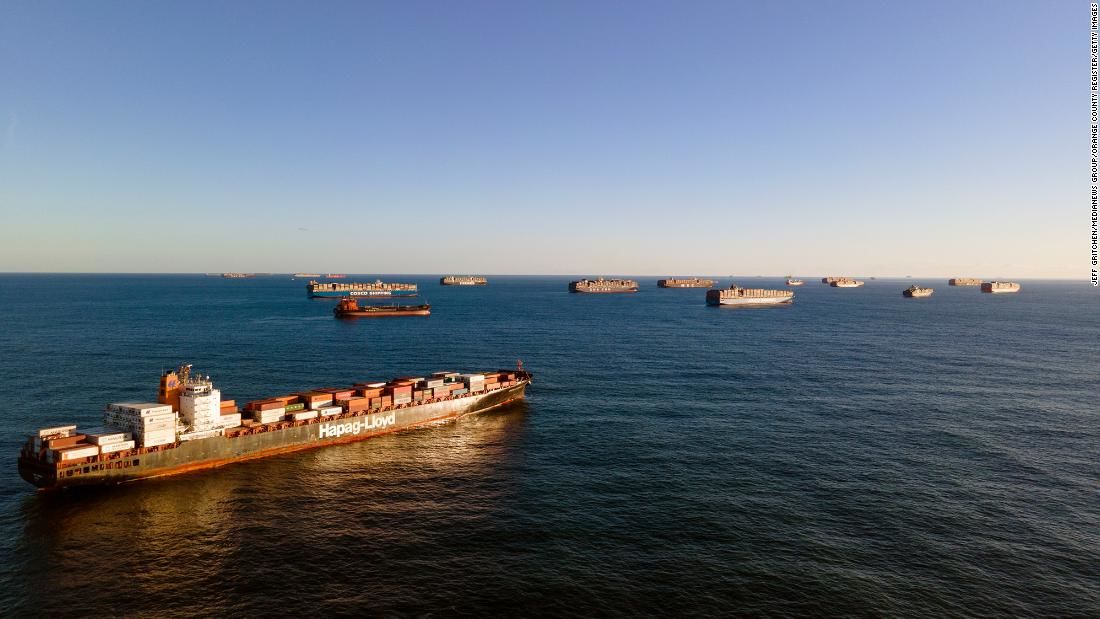
The influx of imports has compounded problems at choked up ports, which are contending with labor shortages due to Covid-19 and a slowdown in operations caused by social distancing measures and quarantines.
On Wednesday, there were two dozen vessels at anchor awaiting entry into either the Port of Los Angeles or the neighboring Port of Long Beach, according to Port of Los Angeles spokesperson, Phillip Sanfield.
"At the Port of Los Angeles, we are actively working on an additional 17 container ships," Sanfield told CNN Business. "Pre-pandemic, we would be working about 10 container ships with no container ships waiting to enter."
The port processed the equivalent of nearly 800,000 20-foot containers last month — the busiest February in its 114-year history.
Companies feel the strain
Companies from Under Armour (UA) and Hasbro (HAS) to Dollar Tree (DLTR), Urban Outfitters (URBN) and Crocs (CROX) have all warned about the supply chain crunch recently, pointing to container shortages, port congestion, rising shipping costs and logistics challenges.
Costco (COST) said earlier this month that it was having trouble stocking imported cheeses because of a shortage of shipping containers and bottlenecks.
An analysis of 7,000 company earnings calls globally in January and February by S&P Global Panjiva found that more than a quarter mentioned "freight," 37% mentioned "logistics" and half discussed supply chains.
"We know that the freight pressure across retail is here to stay and we've built that into our future plans," Mark Tritton, the CEO of Bed Bath & Beyond (BBBY), told investors in January.
Aston Chemicals, a UK company that supplies European manufacturers of personal care products, said its shipping costs were 6.5 times more expensive in January compared to November.
"We paid almost $14,000 for a container in January," said managing director Dani Loughran. That was for a shipment from Malaysia to the port of Felixstowe in England, which just two months earlier had cost $2,100.
Peloton blamed US West Coast port delays for causing "longer than acceptable wait times" for the delivery of its high-end exercise bikes. The company told shareholders in February that it's investing over $100 million to expedite deliveries by air and sea over the next six months to improve delivery times.
It's not the only firm resorting to airplanes to move goods that would ordinarily come by boat, as companies scramble to keep up with customer demand.
According to Biesterfeld of C.H. Robinson, a number of durable goods typically transported in shipping containers are being carried in planes, such as toys and games. Companies are "choosing air freight because inventories are so low," he said.
Air freight is more expensive than ocean freight even under normal circumstances and therefore reserved for high-value goods. These costs are even higher at the moment because fewer flights carrying travelers means less available capacity to transport goods, a chunk of which are typically carried in the bellies of passenger planes.
That will only add to the costs facing businesses and could trickle down to consumers before long.
Higher prices on the way
Companies have so far said very little about how they plan to respond to soaring freight rates but there are early signs that import prices are rising.
According to the Bureau of Labor Statistics, US import prices experienced their largest monthly increase in January since March 2012.
"We anticipate strong demand from consumers to continue over the next couple of months and don't see meaningful change in capacity over that short time period," said Biesterfeld.
The cost to move goods by air, ocean, truck and train is now "structurally up" on 2019 and contracts reflect that, he added. "I do think the costs are real and eventually will manifest themselves for consumers," he said.
The extent to which this feeds through to consumer prices will vary from one product to the next. Goods that rely more heavily on imported components will likely cost more. At the same time, if the cost of imported goods rises significantly or these products become less readily available, that could give domestic producers more leeway to increase prices, said Joanna Konings, a senior economist at ING.
Commerzbank analysts said in a note to clients on Friday that the Suez snarl up could cause oil to become more expensive for consumers because of higher tanker rates as a result of the incident.
For Aston Chemicals, the cost increases were so severe that the only option was to pass them on to their customers: businesses that make everyday products such as shampoos, moisturizers and cosmetics.
If those companies in turn decide to hike prices for their customers, in this case retailers, consumers could start to feel the pinch soon, said Konings.
"Most prices along the supply chain have gone in one direction, and that's up, so it has to appear somewhere."