76 Years of Displacement: The Nakba and the Ongoing Crisis in Gaza
On Wednesday, Palestinians will commemorate the 76th anniversary of their mass displacement from what is now Israel, an event known as the "Nakba" or "catastrophe." In 1948, during the Arab-Israeli war following Israel's establishment, approximately 700,000 Palestinians were forced to flee or were driven from their homes.
Israel prevented their return, resulting in a refugee community of around 6 million, mostly living in poor conditions in Lebanon, Syria, Jordan, and the West Bank.
Nearly three-quarters of Gaza's population are descendants of these refugees.
The text discusses the ongoing conflict between Israel and Palestinians, specifically focusing on the issue of Palestinian refugees and their right of return.
This has long been a contentious point in peace negotiations, with Israel's rejection of this right leading to militancy in refugee camps.
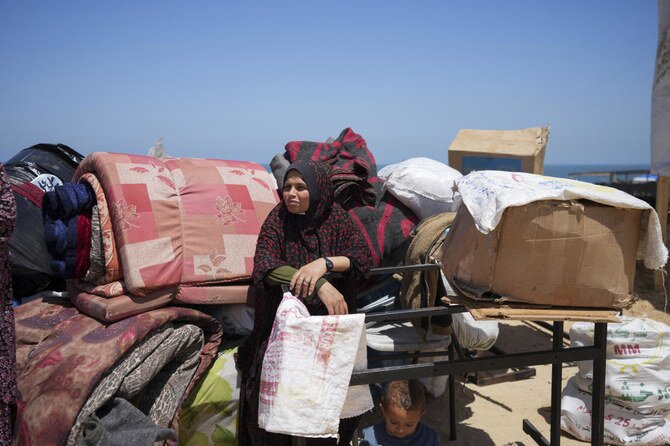
With the current conflict in Gaza, many Palestinians are once again being displaced and fear a repeat of the painful history from 1948.
The text includes personal accounts of Palestinians who experienced the mass evacuations during that time and compares the current situation to historical photographs.
Al-Gazzar, a Palestinian great-grandfather, was forced to flee again over the weekend to a squalid camp in Muwasi due to the ongoing conflict in Gaza.
The conditions are worse than in 1948 when the UN agency for Palestinian refugees provided regular essentials.
Al-Gazzar, who lived through the 1948 conflict, now only hopes to survive.
The war, triggered by Hamas' attack into Israel in October, has killed over 35,000 Palestinians and forced 1.7 million Palestinians, around three quarters of the population, to flee their homes.
The initial Hamas attack killed around 1,200 Israelis.
The text discusses the ongoing crisis in Gaza, specifically the issue of Palestinians leaving or being forced to leave the region.
Since the latest conflict, over 60,000 Palestinians have fled, more than double the number during the 1948 war.
Israel has sealed its borders, and Egypt has allowed only a small number of Palestinians to leave.
The international community opposes mass expulsion of Palestinians, while far-right members of the Israeli government have suggested this as a solution.
Israel has historically called for refugees to be absorbed into host countries and argues against their return, citing the hundreds of thousands of Jews who came to Israel from Arab countries.
Many Palestinians fear they will never be able to return to their homes or live in the destroyed territory.
The UN estimates that it will take until 2040 to rebuild homes destroyed during the 1948 war between Israel and neighboring Arab nations.
During the conflict, Jewish militias were mainly armed with lighter weapons like rifles, machine guns, and mortars.
After the war, hundreds of Palestinian villages were demolished, and Israelis moved into Palestinian homes in cities like Jerusalem and Jaffa.
In more recent times, Israel's military campaign in Gaza has caused extensive damage, with entire neighborhoods reduced to rubble and plowed-up roads, littered with unexploded bombs.
The World Bank estimates that $18.5 billion in damage has been inflicted on Gaza, which is roughly equivalent to the gross domestic product of the entire Palestinian territories in 2022.
This damage was inflicted during the early days of Israel's ground operations in Khan Younis and before it went into Rafah in January 2023.
The text discusses the ongoing conflict between Israel and Palestinians, specifically focusing on the experiences of Palestinians.
Even before the war, Palestinians have felt the displacement, or Nakba, as Israel gradually takes control of territories they desire for a future state, including Gaza, the West Bank, and east Jerusalem.
This process began during the 1967 war.
Palestinians argue that Israel's policies, such as home demolitions and settlement construction, are discriminatory and amount to apartheid.
Major rights groups support this claim, but Israel denies these allegations.
Nearly three-quarters of Gaza's population are descendants of these refugees.
The text discusses the ongoing conflict between Israel and Palestinians, specifically focusing on the issue of Palestinian refugees and their right of return.
This has long been a contentious point in peace negotiations, with Israel's rejection of this right leading to militancy in refugee camps.
With the current conflict in Gaza, many Palestinians are once again being displaced and fear a repeat of the painful history from 1948.
The text includes personal accounts of Palestinians who experienced the mass evacuations during that time and compares the current situation to historical photographs.
Al-Gazzar, a Palestinian great-grandfather, was forced to flee again over the weekend to a squalid camp in Muwasi due to the ongoing conflict in Gaza.
The conditions are worse than in 1948 when the UN agency for Palestinian refugees provided regular essentials.
Al-Gazzar, who lived through the 1948 conflict, now only hopes to survive.
The war, triggered by Hamas' attack into Israel in October, has killed over 35,000 Palestinians and forced 1.7 million Palestinians, around three quarters of the population, to flee their homes.
The initial Hamas attack killed around 1,200 Israelis.
The text discusses the ongoing crisis in Gaza, specifically the issue of Palestinians leaving or being forced to leave the region.
Since the latest conflict, over 60,000 Palestinians have fled, more than double the number during the 1948 war.
Israel has sealed its borders, and Egypt has allowed only a small number of Palestinians to leave.
The international community opposes mass expulsion of Palestinians, while far-right members of the Israeli government have suggested this as a solution.
Israel has historically called for refugees to be absorbed into host countries and argues against their return, citing the hundreds of thousands of Jews who came to Israel from Arab countries.
Many Palestinians fear they will never be able to return to their homes or live in the destroyed territory.
The UN estimates that it will take until 2040 to rebuild homes destroyed during the 1948 war between Israel and neighboring Arab nations.
During the conflict, Jewish militias were mainly armed with lighter weapons like rifles, machine guns, and mortars.
After the war, hundreds of Palestinian villages were demolished, and Israelis moved into Palestinian homes in cities like Jerusalem and Jaffa.
In more recent times, Israel's military campaign in Gaza has caused extensive damage, with entire neighborhoods reduced to rubble and plowed-up roads, littered with unexploded bombs.
The World Bank estimates that $18.5 billion in damage has been inflicted on Gaza, which is roughly equivalent to the gross domestic product of the entire Palestinian territories in 2022.
This damage was inflicted during the early days of Israel's ground operations in Khan Younis and before it went into Rafah in January 2023.
The text discusses the ongoing conflict between Israel and Palestinians, specifically focusing on the experiences of Palestinians.
Even before the war, Palestinians have felt the displacement, or Nakba, as Israel gradually takes control of territories they desire for a future state, including Gaza, the West Bank, and east Jerusalem.
This process began during the 1967 war.
Palestinians argue that Israel's policies, such as home demolitions and settlement construction, are discriminatory and amount to apartheid.
Major rights groups support this claim, but Israel denies these allegations.
Translation:
Translated by AI