

World Hijab Day and the women who are breaking boundaries and stereotypes
The hijab has long evoked strong feelings, both within Islam and among non-followers of the religion.
World Hijab Day was created in an effort to promote personal freedom of religious expression and improve cultural understanding by inviting women from all walks of life to experience the hijab for one day, on 1 February.
This year marks the 11th annual celebration and aims to encourage "progression, not oppression", supported by the #UnapologeticHijabi hashtag on social media.
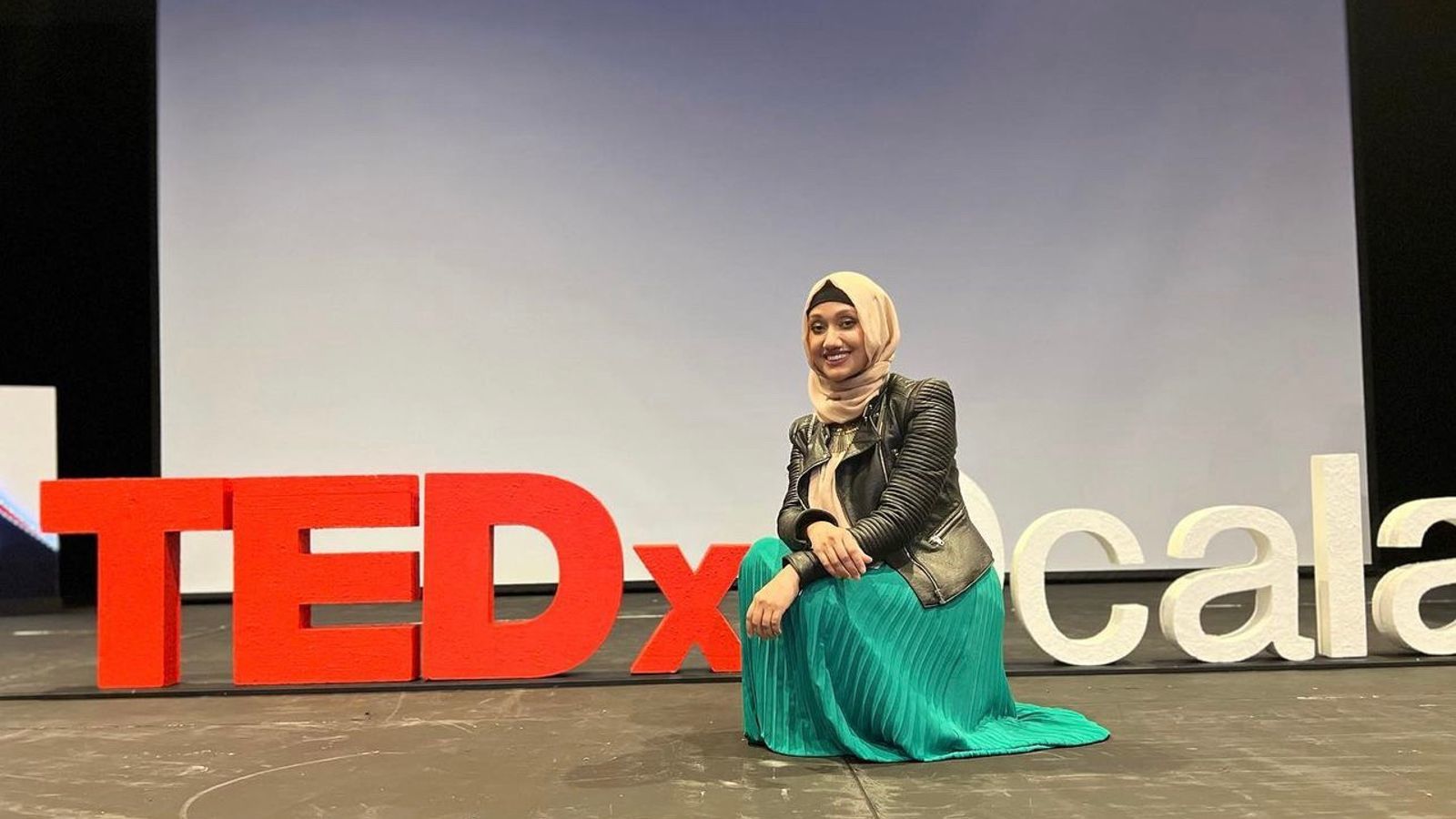 Nazma Khan.
 How it all began
Nazma Khan launched World Hijab Day in 2013 after realising she was far from alone in facing prejudice simply because she chose to cover her hair.
She travelled to the United States from Bangladesh with her family at the age of 11 and moved into her new home in the Bronx, New York.
She began to wear the hijab soon after moving, and said she had faced intolerance from some since that point.
"Women in different parts of the world were also subject to abuse and discrimination for wearing the hijab," she told Sky News.
Advertisement
"My parents came to America to give us a better education and I didn't want to disappoint them."
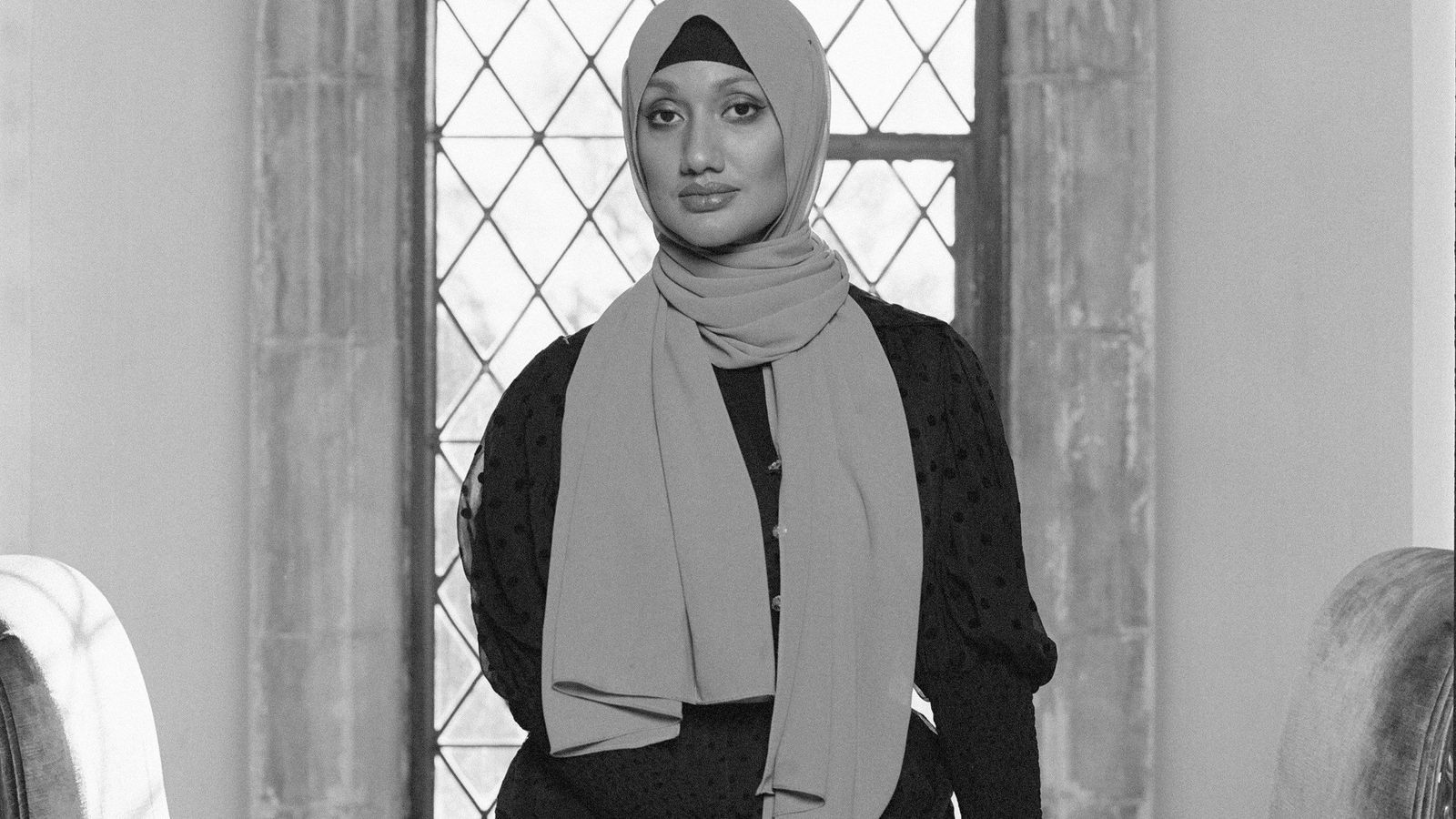 World Hijab Day founder, Nazma Khan.
As she began to build a life in a country that was foreign to her and her family, she said she was faced with many challenges and unwelcoming comments.
'Kids would wait for me outside of school to surround me and spit at me'
Describing her encounters and transitions into a new town and school, Ms Khan said students would often mock and insult her because of her hijab.
"They would call me names such as 'batman', 'ninja' and 'Mother Teresa'," she said.
She said children "would wait for me outside of school to surround me and spit at me", and would often threaten to remove her hijab.
'I felt like someone had taken my identity'
Public life post-9/11 was difficult for many Muslims in the US and Ms Khan, who was attending college at the time, said it made her life much worse.
"I was chased down the streets of New York City and labelled as a terrorist for being a visibly Muslim woman," she said.
"I was so scared to step out of my home."
The racist abuse and chants led her to remove her hijab.
"I thought maybe this would be easier, but it wasn't," she said.
"I walked into college, feeling uncomfortable, I clung onto my clothes and wanted to cover myself."
Becoming tearful, Ms Khan said: "I felt like someone had taken my identity away."
After a day without the hijab, she said she decided that life without it was not what she wanted, and that she chose to challenge her strength in the face of racism and discrimination.
"After removing my hijab and wearing it again, it felt as though I was renewing my intentions with my hijab," she said.
She said the move felt empowering; the racist chants no longer discouraged her and instead became a source of strength.
The Facebook page that would become a global movement
In 2013, Ms Khan created a Facebook page titled "World Hijab Day".
It was designed as a platform where people could gather to tell their hijab stories and show support for one another.
Ms Khan said it also provided the opportunity for non-hijabis and non-Muslims to walk "in my shoes for one day".
"I wanted to help my sisters to ease their situation by bringing greater awareness of the hijab," she said.
"So, I asked women from every background and faith to wear a headscarf on February 1st in solidarity with Muslim women."
She said that by 2014, the World Hijab Day page had reached more than 44 million people and that it became a trending topic on Twitter the following year.
Ever since its launch 10 years ago, the movement has had many milestones, including being recognised by the states of New York and Michigan and being featured on Meta's official Instagram page.
TIME Magazine recognised 1 February as World Hijab Day in 2016.
Non-muslim women now get involved in the event by wearing a hijab on 1 February, taking selfies and attending events.
Freedom of choice
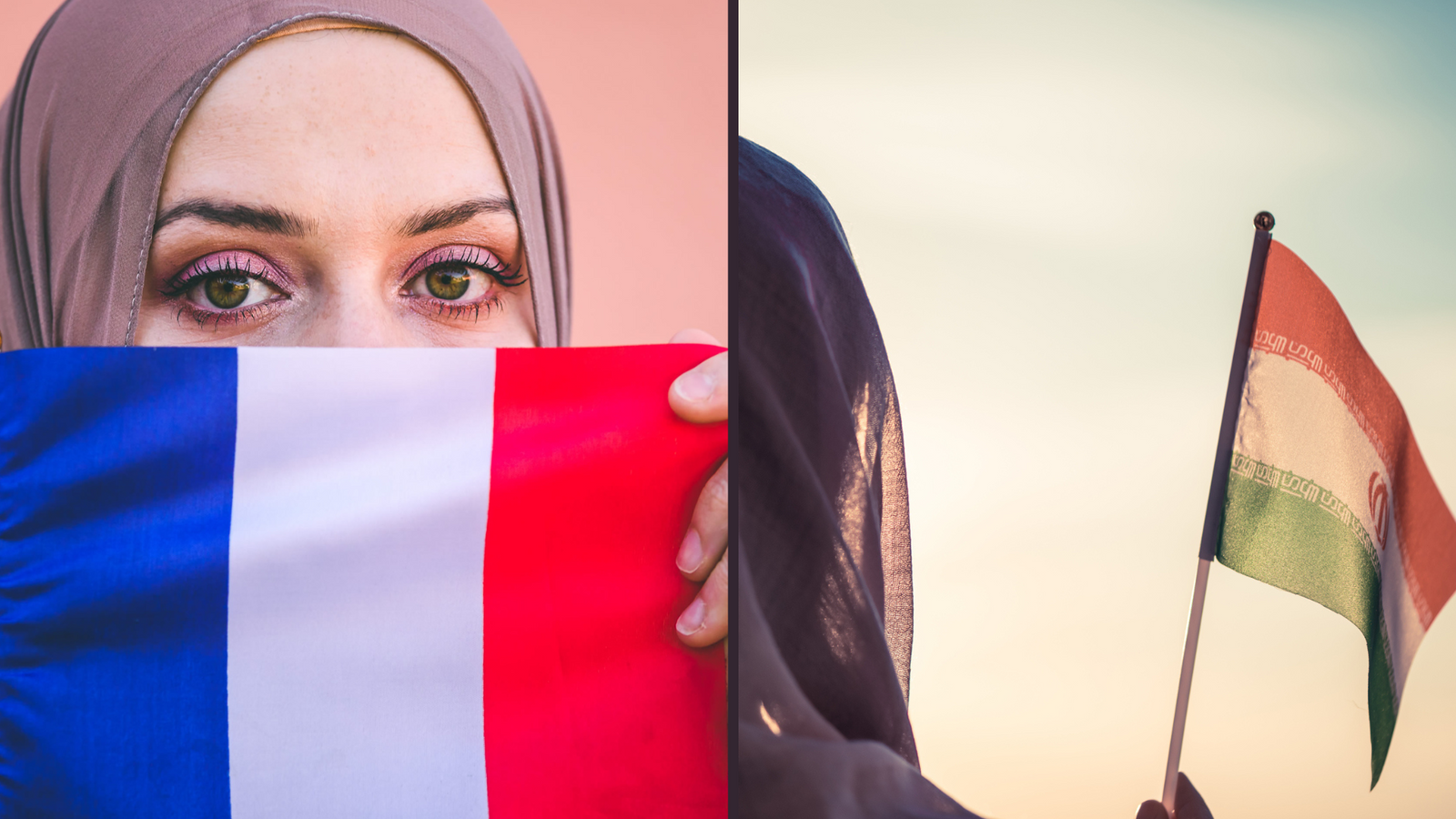
While recognising the empowering benefits of the hijab to many, it is also important to acknowledge that it has taken on a very different symbolism in some parts of the world.
In Iran, women have been fighting for their freedom and the right to choose how they dress.
The death of Mahsa Amini in 2022 caused outrage across the country.
The 22-year-old had been arrested by Iran's so-called "morality police" for allegedly not wearing the hijab in accordance with the nation's strict laws.
Her death in custody prompted many Iranians to take to the streets to demonstrate against the government and their rules around hijabs.
In France, however, while hijabs themselves are not banned, regulations also govern how women are allowed to dress.
The country made it illegal to wear a face-covering veil or other masks in public spaces through a law passed in 2011.
And in 2022, a French court ruled that women in the city of Grenoble should not be allowed to wear full-body "burkini" swimsuits in public pools.
Understanding the hijab
The term hijab, in Arabic, refers to a partition or curtain - both in a literal and metaphorical sense.
It is also the name given to a garment worn by Muslim women to cover their hair, which many Muslims believe is obligatory in Islam for all females who have reached puberty.
The hijab is often worn as an act of worship in the Islamic faith.
It has become a sacred form of attire for many Muslim women and the piece is worn in various ways, in different styles and colours.
The hijab, for some, is a sign of resilience, hope and progress.
For many women and girls, it is a part of their identity and there has been significant change to the way the hijab and Islam are seen.
From the worlds of media to politics, the hijab and the women who wear it have made strides over the years to break down boundaries and re-write stereotypes associated with it.
Apsana Begum
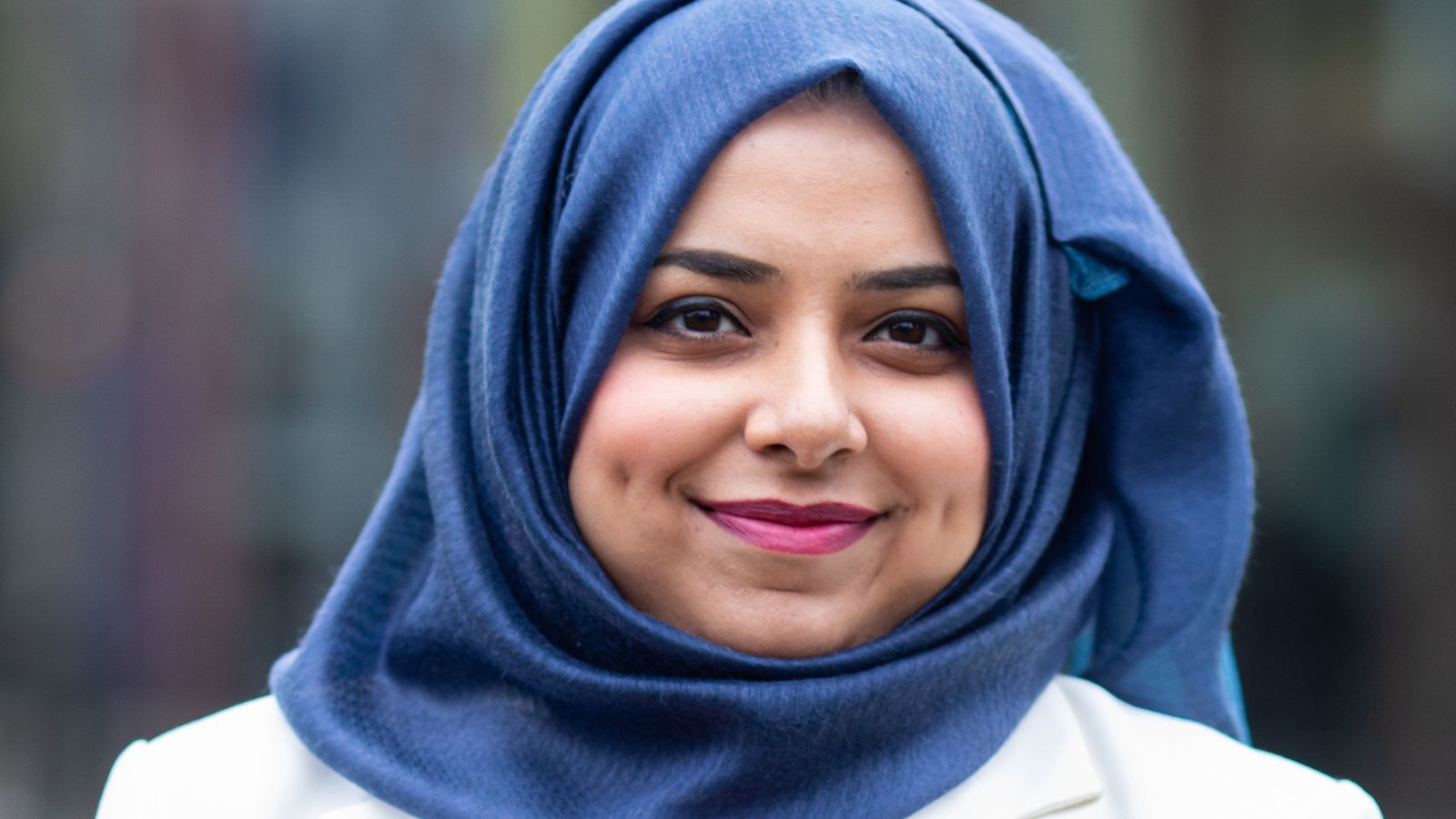 Apsana Begum is the Labour MP for Poplar and Limehouse.
Apsana Begum, 32, was the first hijab-wearing member of parliament, after being elected as a Labour MP for Poplar and Limehouse in 2019.
Talking to Sky News about her journey, she recalled first entering the parliamentary chamber.
"It was a full house and I remember seeing heads turn from the opposite benches," she said.
"I stood out and realised the gravity of what we had achieved with me being elected."
Ms Begum said she felt this paved a path for other hijabi women in the UK who also had ambitions in politics.
"It has been incredible to give people a sense of hope and a sense of aspiration," she said.
She also spoke about the specific challenges she faced when she was first elected.
"The context in which we were at the time with the election and with the former prime minister Boris Johnson's 'letterbox' comments... It was tough," she said.
The hijab, for Ms Begum, is a symbol of togetherness, and she said she felt it was at the "core" of who she is as an individual.
Fadumo Olow
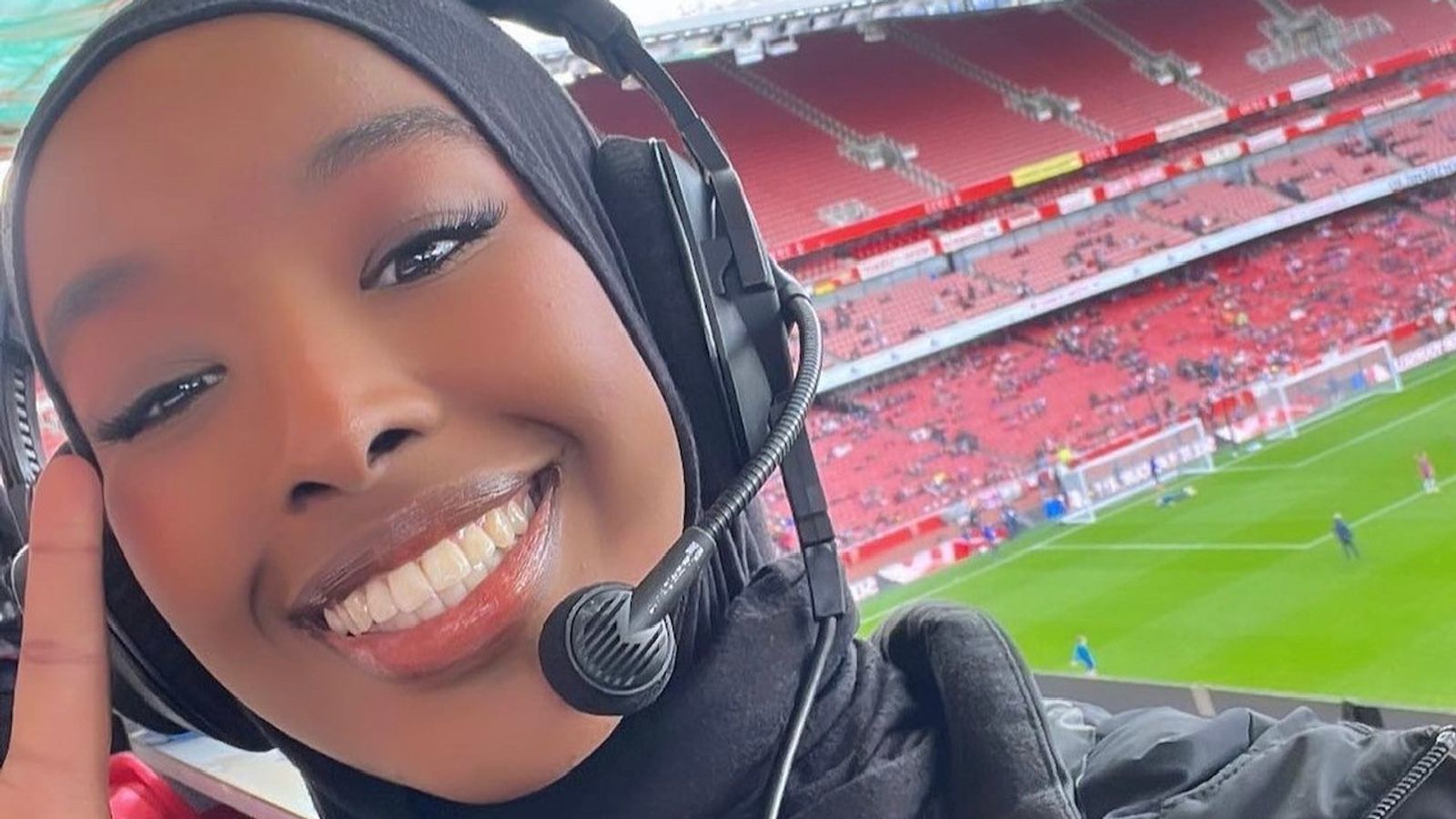 Sky Sports reporter Fadumo Olow.
Fadumo Olow, 27, is a sports reporter at Sky Sports who first started wearing the hijab around the age of 11.
She told Sky News her hijab journey was influenced by seeing her community members, family and friends wearing it.
Speaking on her connection to the hijab, she said that before the age of 16 she was "very relaxed with it, maybe not understanding it too much" but later "made a conscious effort to understand the hijab".
Ms Olow said that as she grew up, she learned about the "importance of the hijab in Islam, but also the value it holds for Muslim Women around the world".
"After the age of 16, I took it more seriously and it brought me closer to my faith," she said.
She says the hijab helps "uplift" her "more than the average person probably thinks", adding that it was the reason she started wearing it in the first place.
Ms Olow said the hijab made her feel "a sense of empowerment, peace and comfort".
When asked about the industry she works in, she said: "It is rare to see women who wear the hijab on sports news.
"However, the steps taken towards visual representation in this industry show there is space for everyone and we are walking in the right direction.
"The hijab makes me more conscious and at ease and I hope to carry it in the best way."
Furvah Shah
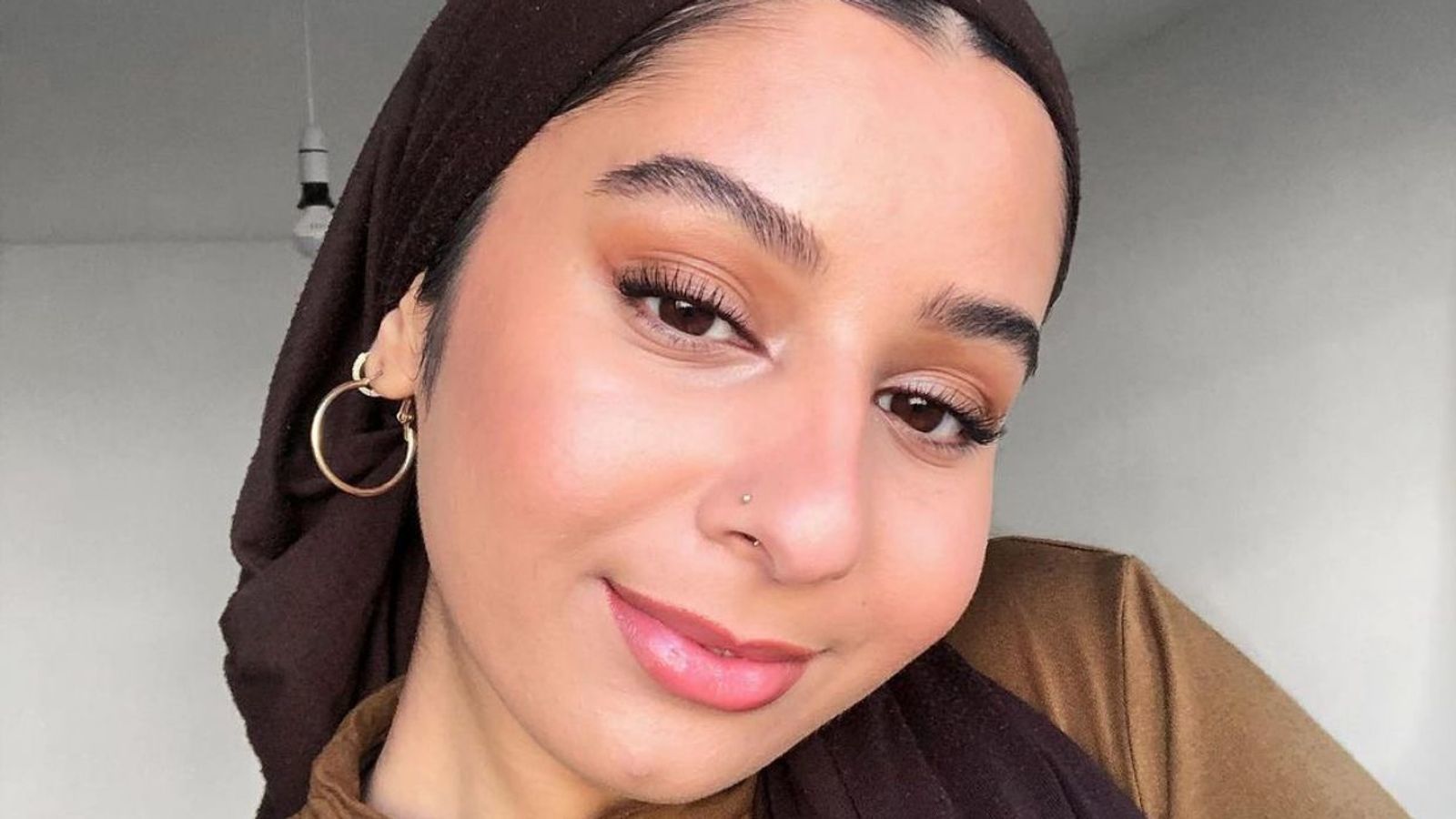 Furvah Shah is a 23-year-old journalist.
Furvah Shah is a 23-year-old journalist who started wearing the hijab at the age of 15.
She told Sky News that when she first started wearing the garment, she was faced with many difficulties.
"People I'd known for many years began to treat me differently," she said.
She also highlighted the abuse she dealt with as a result, experiencing Islamophobic comments and uncomfortable stares.
Choosing resilience over hatred, Ms Shah did not allow the negativity to feed into her hijab journey.
She said that she felt the hijab brought a "sense of community", and was a chance for her to represent her faith in a positive light and change the negative images people associate with Islam.
"The hijab, for me, is belonging and empowerment," she added.
So what next for Ms Khan and World Hijab Day?
Speaking about her future plans, Ms Khan said: "We want to create a job training and mentorship program for those women who are struggling with their hijab."
She and her team are working to create workshops within educational institutions and workplaces.
They will offer women the chance to seek help and guidance if they do feel their hijab is being threatened.
Ms Khan told Sky News that in order for people to understand Islam and the hijab, "we need to have a dialogue to change the world, we need to bridge the gap, extending our heart and hand to others.
"It's our job to go out there and teach, so people can understand us".